MLB Rumor Buy or Sell: Does Bryce Harper want to play for the Cubs?
Bryce Harper will be a free agent following the 2018 season

By
Dayn Perry
•
5 min read

Welcome to CBSSports.com's Rumor Buy or Sell. With the July 31 trade deadline slowly approaching, we'll break down any various trade (free agency) rumors that come your way during the summer months.
The Rumor
During an appearance on 670 The Score, a CBS Sports Radio station, veteran baseball scribe Peter Gammons dropped this bomb on the unsuspecting listener:
"I have people tell me that Bryce Harper, really, would prefer to play for the Cubs."
Well then. That seems notable.
Hmmm ...
Bryce Harper in a Cubs uniform? ð¤ pic.twitter.com/zi3zMFTJmQ
— 120 Sports (@120Sports) June 3, 2017
Let's dig in, shall we?
The Background
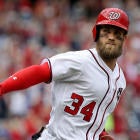
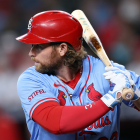
Harper, of course, is presently a superduperstar outfielder for the Washington Nationals, but he's eligible for free agency after the 2018 season. Given that he'll be just 26 when he hits the market and given that he's once again playing at an MVP level, it's highly likely he's going to fetch a contract worth well more than $400 million. As such, it's likely his serious suitors will be limited to those clubs with deep coffers.
On that front, the Cubs certainly qualify. This season, they had the sixth-highest Opening Day payroll in baseball, and there's no doubt they can afford to go much higher. Simply put, the Cubs were already one of the strongest and most lucrative brands in sports before they won the 2016 World Series. Now, they may lag just the Yankees and Dodgers in MLB when it comes to potential spending prowess.
As for Harper, he's a Scott Boras client, and Boras clients almost always hit the market as soon as possible. That likely means no extension with the Nationals before he hits free agency. It's not impossible, of course, but it's not likely.
When it comes to the winter of 2018-19, the Cubs will have some structural payroll increases. Kris Bryant, Kyle Hendricks, and Addison Russell will each be in his second arbitration year. Given the goodness-to-greatness of that trio, that's going to be a hefty outlay for the Cubs (even if they wind up extending one or more of them). Meantime, Javier Baez and Kyle Schwarber will each be in his first year of arbitration eligibility. So that's another significant cost increase.
The big issue may be Bryant's free agency horizon. He's not eligible for free agency until after the 2021 season. As a fellow Boras client, Bryant, like Harper, is probably disinclined to sell away any of those free agent years with a hometown extension. So the Cubs may wind up going year to year with him. That'll be costly, yes, especially with Bryant's likely super-two status (and thus a fourth year of arbitration-eligibility), but it's obviously not a long-term commitment on the part of the Cubs. When it comes to signing Harper, Bryant's service time clock is probably more "serious consideration" than "obvious impediment."
As for the Cubs' outfield situation, Jason Heyward will still be under contract following the 2018 season (assuming he doesn't opt out), and Ben Zobrist will be in the final year of his deal. Albert Almora and Ian Happ will still be in their pre-arb years, and Schwarber, as noted, will be arb-eligible (whether Schwarber can be a regular outfielder remains an open question). Perhaps Heyward is still capable of pinning down center by that point, or perhaps Harper would be willing to shift back to left in order to let Heyward, by far the superior defender, remain in right. Or maybe Heyward shifts to left in deference to the incoming free agent. Elsewhere, it's a matter of figuring out whether Zobrist is still a viable regular in his late thirties. Of course, Schwarber, Almora, and/or Happ may no longer be in the organization should the Cubs, say, deal for starting pitching at some point between now and this reasonably far-off juncture.
Speaking of starting pitching -- and circling back to the matter of the Cubs' payroll -- that particular intersection could be of note when it comes to Harper. Jake Arrieta is a free agent after the current season, and given his decline it seems unlikely that the Cubs will go long with him. A pillow contract for 2018 seems possible, but absent some kind of skills regrowth, the Cubs probably won't throw nine figures at him, or even anything close to it. Jon Lester is locked up through at least 2020, and Hendricks, as noted, will be arb-eligible when Harper becomes a free agent. Beyond that, the Cubs, if they choose to do so, can still have Eddie Butler and Mike Montgomery in the fold (Montgomery's presently a bullpen workhorse, but he does have starting experience).
That's not an ideal state of affairs for a team with designs on contention. As such, you can probably be sure the Cubs, beginning with the run-up to this year's non-waiver trade deadline, will be active in acquiring multiple veteran pitchers via trade and free agency. This coming winter brings us the likes of Yu Darvish, Johnny Cueto (assuming an opt-out), Masahiro Tanaka, and Michael Pineda as free agents. When Harper hits the market the following offseason, he'll be joined by starting pitchers Clayton Kershaw (assuming opt-out), David Price (assuming opt-out), Dallas Keuchel, Garrett Richards, Patrick Corbin, and Drew Smyly, among others. Given the Cubs' deep and obvious near-, mid- and long-term needs in the rotation, they may be poised to spend a lot of blood and treasure on starting pitchers. If that's the case, then they may think better of committing to Harper at the going rates.
The Verdict
Buy, to an extent. Yes, it makes sense that Harper would want to play for a high-revenue organization that's well-positioned to contend for years to come. Also, if the Marlins can afford to devote $325 million to Giancarlo Stanton, then any team of substantial means can afford Harper.
It comes down to willingness. Harper's a generational talent, and the Cubs can use him, can make space for him in the lineup, and can pay him.
The Yankees, though, are going to claw their way under the luxury tax threshold and will be looking to make a big splash just in time for Harper to be available for hire. They'll be in the mix. The Phillies have plenty of resources, and they have exactly $5.35 million in long-term commitments for the winter of 2018-19. As such, they can probably outspend anyone during that offseason. As is always the case, other serious bidders will emerge, especially since we're roughly 18 months out.
Yes, the Cubs and Harper make mutual sense, but you should always take the field when predicting where a premium free agent will wind up. The Cubs are in the mix, but it's still a mix.