
MLB's playoff field is larger than ever, but just trying to get there should not be enough for teams
The Mariners recently said they're trying to win 54% of games; it's part of a mindset that's hurting baseball

By
Dayn Perry
•
4 min read
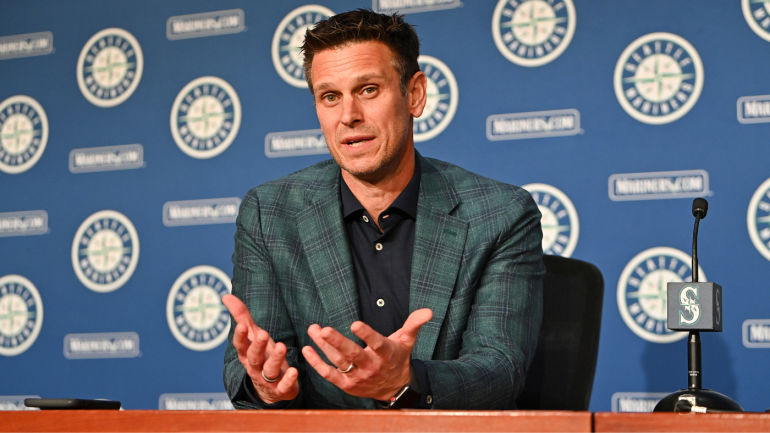
A decision can be both informed by reason, at least from a certain perspective, and also be ultimately harmful. This kind of thing is what Seattle Mariners general manager Jerry Dipoto got at with his recent all-too-candid remarks.
Not long after his M's came up short in their bid to return to the postseason, Dipoto said the following, per MLB.com:
"We're actually doing the fanbase a favor by asking for their patience to win the World Series while we continue to build a sustainably good roster."
There's really no way to parse this other than to read it as, We're not trying to build the best roster possible right now, and you should be grateful for that. There's more, of course. Dipoto also said this:
"If you go back and you look in a decade, those teams that win 54% of the time always wind up in the postseason. And they, more often than not, wind up in the World Series. So there's your bigger picture process. Nobody wants to hear the goal this year is, 'We're going to win 54% of the time.' Because sometimes 54% is -- one year, you're going to win 60%, another year you're going to win 50%. It's whatever it is. But over time, that type of mindset gets you there ... If what you're doing is focusing year-to-year on, 'what do we have to do to win the World Series this year?' You might be one of the teams that's laying in the mud and can't get up for another decade."
In his own words, the goal is to win 87 games a season, which is what 54% is. In the same sequence, he dismisses the value of operating with a goal of winning the World Series in a given year. You can characterize this as saying the quiet part out loud or letting the mask slip a bit or some similar turn of phrase, and it indeed hints at an all-too-prevalent reality these days. That reality is that front offices and owners are disinclined to put forth their best efforts.
The point of the entire baseball endeavor is to win games – as many as possible – and ultimately the World Series, not increase the value of a larger investment portfolio. Those are the cultural conditions of team ownership: stewardship and effort, uber alles. This is a mindset that is all too lacking among today's suite of owners and their lead team executives who often put their paymaster's interests over those of the on-field product and the fans who cheer for it. Yes, it's a business, is a predictable and facile retort when this state of affairs is lamented. Sure, you can call it a business. It's a protected monopoly propped up by billions upon billions of public dollars and the coffer-stuffing appeal of which flows from a rich historical tradition and position of prominence in (North) American society. It's a business that reaps the benefits of a public trust but with a vanishing adherence to the obligations of a public trust.
These days, teams can get by on such half-measures – or less – because they have so many guaranteed revenues that aren't dependent upon attracting paying customers. That's especially the case for clubs on the revenue-sharing dole such as those in Pittsburgh, Cincinnati, and Cleveland. All the money they get for merely existing and the lack of any accountability attached to those inflows lets too many owners do nothing much of anything and still reap the immense profits and capital gains upon selling. Again, some "business."
The leading bastion of this approach is of course A's owner/saboteur John Fischer, who orchestrated a deeply cynical pending move to Las Vegas solely because he wants to solidify his standing as a revenue-sharing recipient by moving to what would be the tiniest and wee-est market in MLB and get corporate welfare for a new stadium and surrounding real-estate development. The (suburban) Atlanta Braves got their handouts for just such a thing, and so entitlement to the same courses through the owner class like this scarcely earned dollars already do. Nothing eludes Fisher's capacities like long-term thinking, so we'll have to see if he happens to fall backward into what he wants or if his ham-fisted efforts come to grief. However it plays out, this goes deeper than Dipoto and his excessive candor. If you wish to tailor it to the current playoffs, then look no further than the swept Rays and imperiled Orioles and their manifest reluctance to spend on fortifying the roster for the postseason.
Now for that "informed by reason" part mentioned at the outset. You can squint your eyes, possibly to the point of blindness or physical discomfort, and see why team operators think like Dipoto. Playoff expansion and the layers of rounds that have been added make it difficult for the great teams to replicate that greatness in the postseason. Baseball already has a great deal of structural parity and native randomness, which means it's already designed for chaos across the tiny samples of October. The added rounds relative to pre-Wild Card days just make it more likely that the best regular-season teams will get bounced before they can hoist the trophy. In that light, yes, it makes a certain horse-sense to aim lower – at, say, 87 wins – just get into the playoff fray, cash those playoff checks, and see if the fates favor you.
That's the precise mindset of Dipoto and so many other teams. From their isolated perspective, it's understandable, but it's bad for the league and for fans. It shouldn't be too much to ask owners and front office decision-makers to have, say, half the competitive spirit of the players they employ, but, well, that's plainly asking too much of this over-coddled group of "leaders" across the sport.