Randy Johnson enters Hall of Fame after long and winding path
Johnson was a 6-foot-10 wild man early in his career, but a dogged work ethic and a strong belief helped turn him into one of the best pitchers of all time.
By
Dave Brown
•
4 min read

Dave Dombrowski was general manager of the Montreal Expos in 1989 when the team tried to improve its chances of making the playoffs by trading for an ace pitcher, Mark Langston. Part of the price was a 6-foot-10 left-hander of signficant promise and consternation, 25-year-old Randy Johnson. On May 25 when the deal went down, Johnson had accumulated 26 strikeouts in 29 2/3 innings for Expos. Along with 26 walks. Johnson could reach in the upper 90s on his fastball, but commanding and controlling all of his pitches was a work in progress.
Remembering the trade recently, Dombrowski told USA Today:
"We liked him, but nobody said we were trading a Hall of Fame pitcher."
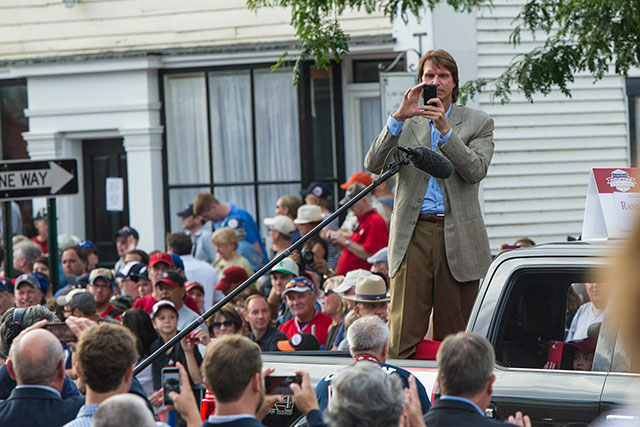
Johnson makes the adjective official Sunday, when ceremonies begin for Hall of Fame inductions at Cooperstown. Johnson is joined by Pedro Martinez, John Smoltz and Craig Biggio in one of the richer classes in years.
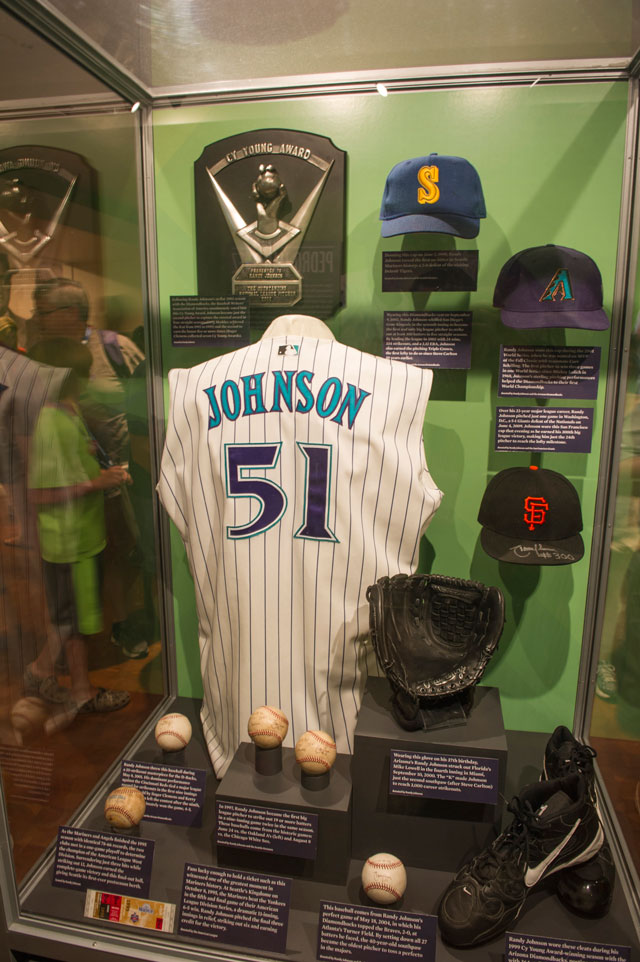
So how did Johnson transform from a talented but highly erratic 20-something into one of the very best pitchers of all time? As they say about performers wanting to get to Carnegie Hall, "Practice." There's more to it. The talent had to be there, the work-ethic had to be there. There's some luck involved, because humans standing 6-foot-10 aren't meant to be pitchers, Johnson told the Phoenix New Times.
"The average height is maybe 6-1 to 6-3. Repeating your mechanics is critical in order to throw strikes.
"I was able to do that, but not consistently. Therefore, my performances had peaks and valleys."
In each of Johnson's first three full seasons with the Mariners, he led the league in walks. And we're talking a lot of walks -- an average of 139 -- from 1990 to 1992. Still, he made the American League All-Star team in 1990 -- throwing his first no-hitter that June -- and he led the league in strikeouts with 241 in '92. By 1993 as he turned 29, he became a contender for the Cy Young. Johnson said one of the life events that helped him focus was the death of his father in 1992. It's why he started pointing to the sky after strikeouts.
"If you're going to put your name on something," Johnson said his dad told him, why not do the best that you possibly can?"
But he was still an anomaly and curiosity to others. When Johnson faced John Kruk at Camden Yards in one of the more memorable All-Star moments ever, it looked like something happening in a three-ring circus.
Funny, but it also made a point about where Johnson was in his career development: We still weren't really sure where the ball might be going. But, he kept working. Two years later, Johnson seemed to put it all together, leading the league in strikeouts and ERA, and helping the Mariners reach the American League Championship Series. He also won the AL Cy Young Award. The Big Unit had achieved greatness.
But doubts would return the next season, with Johnson being sidelined because of a back injury that eventually would require three surgeries; he made just eight starts in 1996. People of his height had back problems. Would they cut short his career? Maybe Johnson was right, and 6-foot-10 humans aren't supposed to pitch?
Johnson returned in 1997 and was dominant again, but the Mariners must have kept some doubts because they traded him to the Astros for the stretch run in 1998, with free agency coming the following offseason.It wasn't until 1999, when Johnson had reached his mid-30s and joined the Arizona Diamondbacks, that he became a finished product.
Johnson's ability to refine his mechanics into something close to perfection, and his ability to keep cutting down on his walks without losing velocity or desired movement on his pitches, transcended a pitcher simply harnessing his talent. Johnson was making it work for him. Throwing consistent strikes became something Johnson just did. He cut his walks into the 70s, while striking out batters at around 350 per season. He won four straight Cy Youngs with the D-backs, and helped them win a World Series in 2001. In 2004, when Johnson was 40 years old, he had one of his best seasons, striking out 290 and walking just 44. He allowed less than one batter per inning to reach base for the only time in his career. He also threw a perfect game.
Johnson had made up for lost time like few -- if any -- pitchers ever had. Not only had he compiled a Hall of Fame career, but he would be one of the best pitchers in Cooperstown, were he to be elected. And here we are.
Johnson says he's going in wearing a D-backs cap on his plaque because that's where he did his best work. But he also acknowledges that it's a painful to him to leave the Mariners out of it, because that's where Johnson evolved into an all-time great. He told Larry Stone of the Seattle Times:
Johnson opted not to take the easy way out, like Greg Maddux and Tony La Russa, and eschew an emblem altogether.
“I feel I owe it to one or the other, Seattle or here,’’ he said. “So then I decided, it’s got to be Arizona. It wasn’t easy, but looking at my body of work, I hope people would understand that. That means a lot to me. I love Seattle. I wouldn’t be in the Hall of Fame if it wasn’t for my Seattle years.”
Johnson says his biggest regret about Seattle is that he didn't take more pictures. In a second career that also began blossoming later in life, Johnson is becoming quite a photographer. You could find him at NASCAR events, big rock concerts and out in the African bush. As good as some of Johnson's protography is, it's going to get better. It's going to be great. Because it's Randy Johnson taking the pictures, after all. Just give him some time.