Should MLB allow trades during 2020 season? The cases for and against having players swap clubhouses
If safety is the No. 1 concern, letting players change clubhouses doesn't seem like a great idea

By
Mike Axisa
•
6 min read
For the first time since the COVID-19 pandemic forced Major League Baseball to shut its doors two months ago, there appears to be momentum toward launching the 2020 baseball season. MLB and the MLBPA are currently working through several shutdown-related issues, chief among them personnel safety, and if all goes well the regular season could begin in early July.
MLB's proposal includes an 82-game regular season with a regional schedule (the two East divisions would only play each other, etc.) and an expanded postseason field. Because there is unlikely to be a minor-league season this year, each team would carry a 30-man active roster and a 20-man taxi squad. That ensures injury replacements and call-up candidates will stay at the ready.
What we don't know is how MLB will handle in-season transactions once roster movement resumes after the shutdown. For example, will the 40-man roster expand to a 50-man roster this year? Do players on the taxi squad collect service time and MLB pay? Does moving a player from the active roster to the taxi squad burn a minor-league option? Those are all unanswered questions right now.
We also don't know how MLB will handle trades during the 82-game season. Will the trade deadline remain July 31, giving teams only a month or so to evaluate their roster before the deadline to make changes? Remember, there is a single trade deadline now. August trade waivers are no more. Perhaps bringing them back would make sense during the shortened season.
Beyond the mechanics of in-season transactions, there's another question MLB and the MLBPA have to answer: should trades even be allowed this season? The regional schedule is designed to limit travel and also limit risk. Less travel means less opportunity for the virus to spread around the country. But what about moving a player from one clubhouse to another?
There are reasons to allow trades and reasons to prohibit trades during a shortened season and during these adverse times, and I am certain MLB's (and the MLBPA's) decision will be unpopular no matter what. It's a no-win scenario, so the two sides simply must do what they believe is best for the sport. Let's break down the cases for and against allowing trades in 2020.
The case for allowing trades
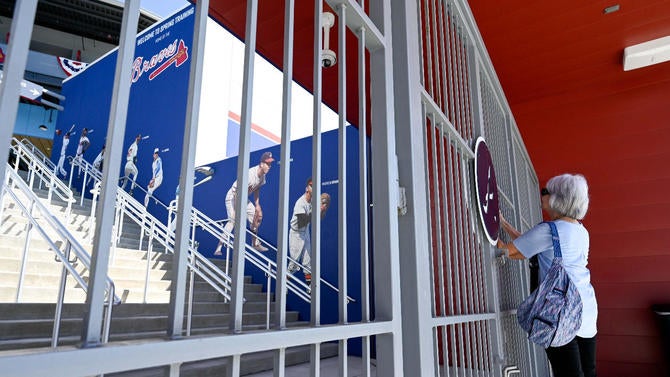
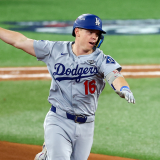
I think the best argument for allowing trades is the entertainment component. Baseball is the entertainment business and trades (and trade rumors) are fun and exciting. Trades push fans to engage on social media, to buy merchandise (how many Mookie Betts Dodgers jerseys were sold in the first week after the trade, you think?), and to pay more attention to the sport. That's all positive.
To put it another way: no trades would be really boring. There would be no build-up, no rumors or speculation, nothing like that. At a time when MLB will need to work hard to cultivate new fans (or even lure casual fans back to the game) because no one will be allowed into the ballpark, giving people one less thing to talk about is a bad idea. Trades generate headlines and fan engagement.
Beyond the entertainment component, if MLB is going to play a competitive season and crown a champion, teams should be given an opportunity to improve. It's only fair, no matter whether they want to cover for an injury or simply upgrade a position. No roster is perfect. There are always ways to get better and contenders should be allowed to try to get better during the season.
Don't forget about the rebuilding teams either. The Pirates would surely love to send impending free agent closer Keone Kela to a contender for prospects. Ditto the Royals and Ian Kennedy. What about Nolan Arenado and Francisco Lindor? They were regulars on the trade rumor circuit over the winter. The Rockies and Indians could look to move them to set themselves up for the future.
Simply put, trades improve the MLB product. Part of that is getting people excited about rumors and prospective deals, most of it is fans getting to see their favorite team bring in new players, regardless of whether that team is a contender that's added a star or a rebuilder that's acquired young prospects. Baseball exists to entertain us and trades contribute to that.
The case against allowing trades
Safety. That's the single biggest reason to prohibit trades in 2020. Taking a player from one clubhouse and moving him into another increases the likelihood of a COVID-19 outbreak. It may be only a small increase, but it is an increase, and if there are a dozen trades around the league this year, that small increase has grown exponentially.
MLB submitted a work-in-progress 67-page plan to the MLBPA covering safety protocols last week. The thoroughness of the plan is impressive and shows how seriously the two sides are taking safety. That thoroughness is also a reminder MLB and the MLBPA are trying to thread a very fine needle here. Pulling all this off without a hitch will take a minor miracle.
The safety plan calls for multiple daily temperature checks and multiple COVID-19 tests per week. Those tests will be processed at a lab in Utah, with results available in 24 hours. So, in theory, there could be an asymptomatic player potentially spreading the virus for a full day before anyone knows it. Now imagine if that player changed teams in the interim. See the problem?
MLB and the MLBPA could agree to trade protocols. Extra tests for a traded player, maybe even a quarantine period before he can join his new team, something like that. Daily point-of-care testing, which would provide immediate results, would be ideal, though it's unclear whether that is even feasible at this point. As is, the proposed testing protocol has some vulnerabilities.
Also, I think there's a human aspect to consider here. Getting traded sucks, especially during the season. No player like to change teams at midseason and have to uproot his family or leave them behind for a few months. Here's what veteran right-hander Dan Haren told FanGraphs about the experience of being traded:
"I've been traded both in the offseason and at the trade deadline. Obviously, being traded at the deadline is much more difficult, especially with family. (In July 2015), I found out while driving to the field in Miami. My wife and kids where there for the summer, so they had to fly home to California immediately. The Cubs were in Milwaukee, so there's just no way they were going there and then dealing with finding a hotel with all the suitcases, etc."
The players are already taking an extraordinary risk by playing. They're putting their health at risk and the health of everyone they're around at risk, including their families and other team personnel. Players are human beings with fears and anxieties like the rest of us. Subjecting them to stress of a trade (or even just trade rumors) during a makeshift 82-game season is almost cruel.
That all said, getting traded comes with the territory, and the primary concern with allowing trades will be safety, not hurt feelings. MLB and the MLBPA will ask players to jump through all these hoops to play games, and then simply allow players to change clubhouses at a moment's notice? Seems unwise. Out of an abundance of caution, prohibiting trades in 2020 is the way to go.
My hunch is MLB will allow trades in 2020. Perhaps the league will push the trade deadline back to Aug. 31, but trades will be allowed, and I suspect there will be additional safety protocol for the players involved, including additional testing and a quarantine period. What that means for the player's family, I honestly don't know, but it is something that has to be resolved before trades can happen.
Nothing about the 2020 season will be normal and there's no sense in pretending it will ever feel normal. Prohibiting trades and forcing teams to get through the season with their current roster may be unfair, but you know what? It's also the safest thing. We've all had to adapt to life during the pandemic. MLB clubs not being able to make trades for a few months wouldn't be fair, but it wouldn't be the end of the world either.