The Breakout Brigade: MLB's biggest performance jumpers for 2016
The annual Breakout Brigade takes a look at players who are poised to emerge as serious difference-makers in 2016.

Welcome to the 2016 edition of the MLB Breakout Brigade! Last year, I touted Xander Bogaerts and Danny Salazar for big leaps (woooo!)...and also Marcell Ozuna and Drew Hutchison (boooo!).
Before we get to this year's picks for big jumps in performance, let's cover the Breakout Brigade ground rules:
1. A player with remaining rookie eligibility can't be considered a breakout candidate, even if he has already racked up a few at-bats or innings pitched in the big leagues. That disqualifies otherwise worthy youngsters such as Corey Seager, Steven Matz, and Byron Buxton.
2. A player who has already made the leap can't put up a breakout season, unless his projected numbers are so far above his previous career bests that he looks like a double-breakout star (like Jake Arrieta was last year). That disqualifies many already accomplished young players who could continue to perform at a comparable level, including Starling Marte and Mookie Betts.
3. This is about real-life value, not fantasy value (You can go here for those). If David Hernandez runs with the Phillies closer job and saves 25 games, it won't really be a breakout season in any realm other than your 12-team roto league, since at age 30 Hernandez is what he is in terms of underlying pitching skills. The same goes for a player who moves to the cleanup spot and drives in 120 runs (or to the leadoff spot and scores 100) while putting up other numbers similar to his prior results. A bump in team-dependent counting stats isn't the same thing as a meaningful jump in real-life value.
With those disclaimers established, let's break down six players who could be in store for big(ger) things this season:
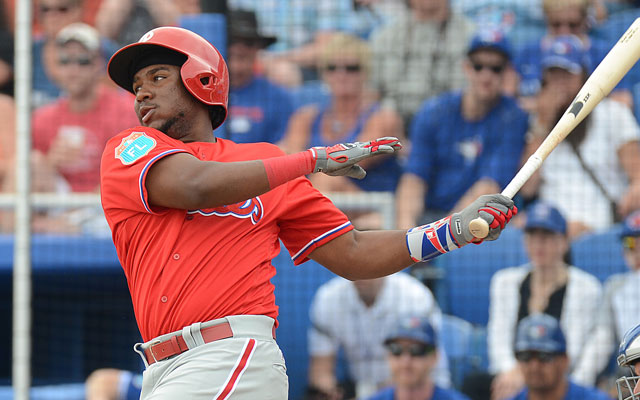
Maikel Franco, 3B, Philadelphia Phillies
The Phillies were atrocious last year, losing 99 games and finishing with the worst record in baseball -- and they're probably not going to be that much better this season. The good news is that Philadelphia will have a handful of intriguing young players on the roster in 2016, none likely to be more productive than Franco. In his rookie campaign last year, Franco swatted 14 homers and 22 doubles in just 80 games, posting a batting line of .280/.343/.497 that on a park-adjusted basis would've ranked 16th in the National League if he's amassed enough plate appearances to qualify for the batting title.
Franco's combination of power and contact-hitting ability portend potential stardom: According to Fangraphs, only seven players record 300-plus plate appearances, an isolated power (slugging percentage minus batting average) figure above .200, and a strikeout rate below 16 percent last year: Jose Bautista, David Ortiz, Edwin Encarnacion, Manny Machado, Anthony Rizzo, Albert Pujols...and Franco.
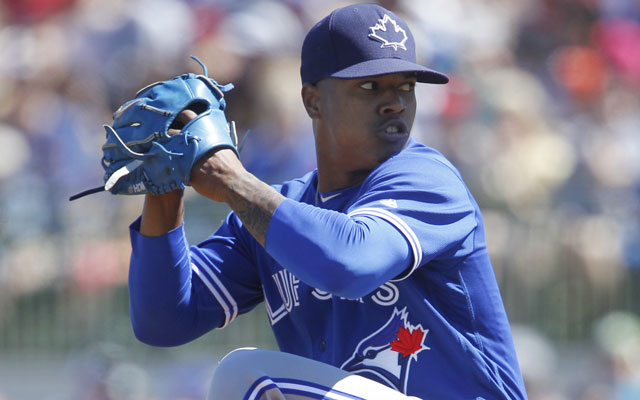
Marcus Stroman, SP, Toronto Blue Jays
2015 was supposed to be the year that Stroman took the next step, after an impressive rookie season that produced 130.2 innings, a 4-to-1 strikeout-to-walk rate, and a gaudy groundball rate just shy of 54 percent. Instead, a spring training knee injury shoved him to the disabled list, where Stroman figured to remain for the duration of the season. But a startlingly fast recovery got Stroman back to the mound in September, where he made four impressive starts, then showed more flashes of greatness during the Blue Jays' run to the ALCS.
Now 100 percent, look for Stroman to take over the mantle of staff ace following the departure of David Price, leveraging his five-pitch repertoire, excellent command, and worm-burning (or at least turf-burning) tendencies into big results for Toronto.
Miguel Sano, RF, Minnesota Twins
Like Franco, Sano played in 80 games in his rookie season, and frequently crushed baseballs. Sano's power was actually more prolific, though: His .262 isolated power ranked ninth among all AL hitters with 300 or more plate appearances, and his 18 homers pro-rated over a full season would equal 37, placing him in a virtual tie with David Oritz for ninth in the majors in 2015. He's crushing baseballs again this spring, he's flashed upper-upper deck power since he was a teenager, and at 25-to-1 on one major betting site, you could do a lot worse than place a couple of Gummi bears on the kid to win this year's home-run title.
Taijuan Walker, SP, Seattle Mariners
Walker's 2015 season was a study in factors a pitcher can control well, and factors he can't. The two most basic stats you look for when analyzing a pitcher's contributions to his team -- independent of the defense behind him -- are strikeouts and walks. On those fronts, Walker excelled, fanning nearly a batter an inning, and nearly four batters for every one walk.
His biggest downfall last season was how he fared in high-leverage situations: Opponents batted .287 against him with runners in scoring position vs. just .207 with the bases empty, which caused Walker's strand rate to plummet and his ERA to swell. Nothing in his history suggests he has particularly nasty problems with runners on base, which leads you to figure those results will regulate, and his runs allowed total will shrink. Combine one of the nastiest fastballs in the game with some better fortune in those high-leverage spots and a few more flyballs landing in gloves (his 13 percent home run-per-flyball rate also ranked among the game's worst) and Walker could easily slice a run or more off his ERA this year.
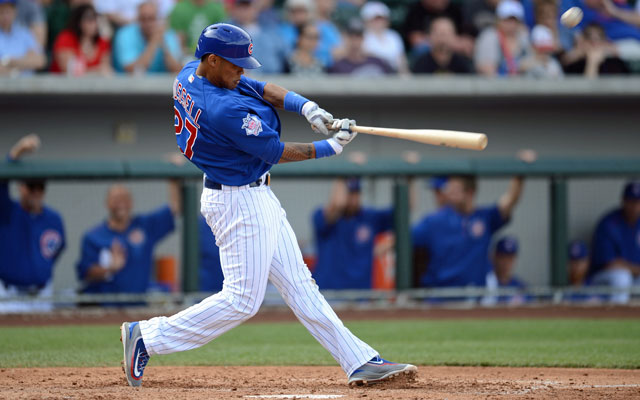
Addison Russell, SS, Chicago Cubs
Yes, it's another second-year player, but when you're coming off a season that featured the greatest rookie class in MLB history, this is what you get. Russell struggled early in his debut season, posting an ugly .226/.296/.354 line in the first half. He turned it on in the second half, though, batting .259/.318/.427 despite his luck on balls in play holding steady. The even bigger reason for optimism is his minor league track record: Russell smashed opposing pitchers at a .301/.377/.520 rate over 1,087 minor league plate appearances, showing an impressive blend of power and patience. And while he did take advantage of some hitter-friendly parks, he was also mashing before he even turned 20. Now entering his age-22 season, he stands poised to become one of the best-hitting middle infielders in the game.
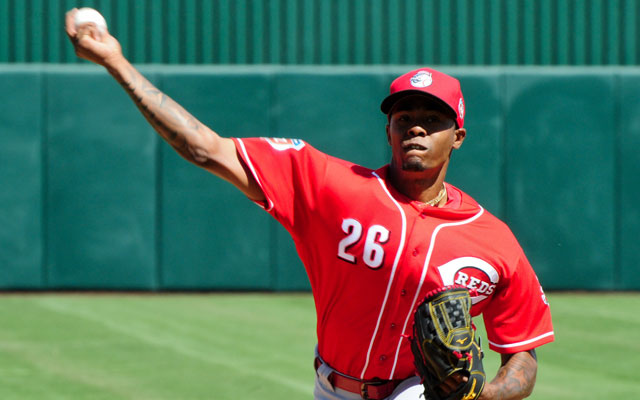
Raisel Iglesias, SP, Cincinnati Reds
His rookie season lasted just 95 1/3 innings, but Iglesias quickly established himself as one of the most vexing pitchers in the league last year for opposing hitters. Firing a wicked sinker-slider combination from multiple arm angles, Iglesias struck out 26.3 percent of the batters he faced last year, the 10th-highest K rate among the 73 National League pitchers with as many innings pitched as he had. His biggest weakness was his ability to keep pitching well deep into games. In innings one through three, he held opposing batters to a paltry .191/.259/.295 line; in innings four through six, a brutal .263/.333/.467. If he can sustain his performance deeper into games, the side-slinging Cuban could be poised for a big sophomore season.