
Everybody in Milwaukee is mishandling the Giannis Antetokounmpo trade saga
Instead of a quick and amicable split, the potential end of Giannis' time with the Bucks is getting messy

By
Sam Quinn
•
6 min read
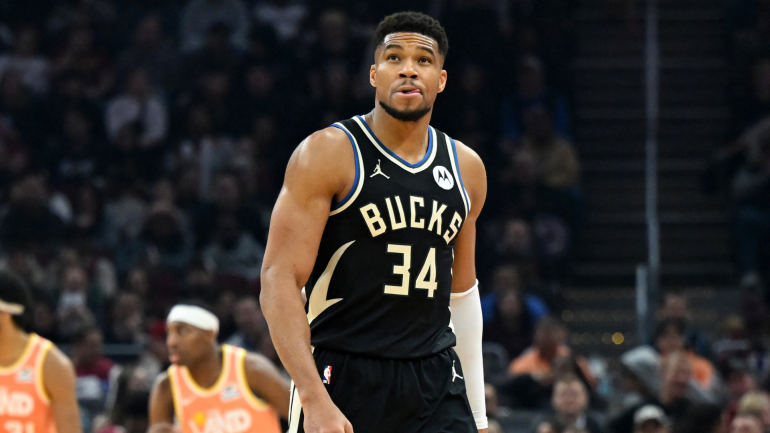
Contrary to popular belief, trade requests don't have to become spectacles. Players can act with discretion. Teams can move quickly. When deals are carried out this way, splits tend to be amicable and both sides tend to walk away satisfied. Think about Paul George and the Thunder. Oklahoma City acted quickly and quietly and was rewarded with a possible dynasty, while George got to join a contender in his hometown. The Mikal Bridges situation seemingly played out similarly. He wanted the Knicks. The Nets got a monster package of picks. Everyone was happy.
You'd think the league would learn from these examples, but they are very much the exception. Most trade requests are ugly, drawn-out affairs. They start with vague reporting about a player's dissatisfaction. A team is deficient in some way. The player wants a better situation. Everyone pretends things are fine when they clearly aren't. There's sniping in the press and maybe even the locker room. They might even make a desperation move to appease the star, like a couple having a baby to save their marriage. The player's value drops more and more the longer this dance plays out. The ultimate deal is worth less than the fan base hope. A sour taste is left in everyone's mouth. Jimmy Butler and De'Aaron Fox lived versions of this story last season. Damian Lillard is another recent example. This is the default, and it's a mostly unproductive one.
Superstars are important, and they're rare. Teams are understandably hesitant to give them up. But there is no greater virtue in NBA front offices than self awareness, and far too often, these teams delude themselves into thinking broken situations are fixable. How often can you ever recall a team turning one of these situations around? The only really obvious example would be 2008 Kobe Bryant, and think of how many factors were working in favor of reconciliation. Yes, if you've established three championships worth of equity with your player, exist in the league's most desirable market and manage to pull off one of the great trade heists in league history to bolster his supporting cast, you might be able to turn things around. This obviously usually isn't the case.
It probably isn't for the Bucks right now. Giannis Antetokounmpo has one championship in Milwaukee. He wants a second, and, well, there isn't a soul outside of the Deer District who believes that is remotely feasible for the Bucks as they presently exist. Antetokounmpo has played his entire career in Milwaukee, but Chris Haynes has noted his interest in seeing some more sunshine, and Giannis himself has sung the praises of bigger markets. The Bucks are reportedly looking for win-now upgrades to try to convince Antetokounmpo to stay. There's not a Pau Gasol out there right now. Any substantial improvement would require taking on onerous contracts or giving away what meager draft picks the Bucks have left.
The Bucks are seemingly resisting Giannis Antetokounmpo trade talks, so is there a win-now move to make?
Sam Quinn
Doing so would be irresponsible under their current circumstances. Milwaukee is 11-18. Antetokounmpo remains injured. They're currently outside of even the Play-In Tournament in the weakest Eastern Conference in recent memory. It's over. This team is not fixable. The time to start planning for the future, on all sides, is long overdue.
Yet the Bucks continue to bat away all incoming trade calls. They won't make a move until Antetokounmpo forces them to. And Antetokounmpo is seemingly hesitant to do so. Every few months, a new batch of reporting paints a trade request as imminent, and soon after, Antetokounmpo finds a way to walk it back.
The ways in which this is going to be detrimental to the Bucks are pretty obvious. The longer the Bucks put this trade off, the less control they'll have over the return. Say we get to the offseason and Antetokounmpo decides he is not willing to sign a contract extension in Milwaukee. At that point, he'll have the leverage to effectively deny trades to most interested parties. At his price point, nobody is trading for him without believing he'll re-sign long-term. If he says "I'll only play for one team" or "you have three options, pick one," there's not much the Bucks can do to stop him. Bucks fans have scoffed at the idea of a Knicks trade since the offseason. They don't think New York has enough to trade. Last summer, when Antetokounmpo had two years of team control remaining, the Bucks would have been able to drum up a real bidding war among smaller-market teams. Next summer, they may have no choice but to take what the Knicks -- or whoever else he prefers -- can offer whether they like the package or not.
Could that work in Antetokounmpo's favor? Frankly, yes. The less his new team has to give up to get him, the more it will have to surround him with in pursuit of his second championship. But this isn't just a basketball consideration. It's a personal one. If Antetokounmpo does indeed leave Milwaukee, he'll be leaving the only organization, American city and NBA fan base he's ever known. He seems sensitive to that, and is trying hard not to be the bad guy. His most recent tactic has been distancing himself from the rumors by shifting blame towards his representation.
"If my agent is talking to the Bucks about it, he is his own person. He can have any conversation he wants about it," Antetokounmpo said at a recent media availability. "At the end of the day, I don't work for my agent, my agent works for me. There's going to be conversations that are going to be made between him and the Bucks and him and his other players and him and other teams and other GMs, executives around the league." The distinction here is irrelevant. He said it himself: his agent, Alex Saratsis, works for him. If he's talking to the Bucks about possible trades, he's doing so at his client's behest. It's 2025. Fans are media literate enough to know that.
This approach is ultimately doing more harm than good. Antetokounmpo's reputation in Milwaukee cemented his legacy in the city to such an extent that, had he quietly asked for a move last summer and gotten it, there probably wouldn't have been any bad blood. The team was doomed after Lillard's torn Achilles. They would have gotten a haul back for him. Nobody would have blamed him. What fans probably will blame him for is the sorry state the team will likely be in after his delayed departure. Enough to override the championship? Of course not, but a partnership this productive shouldn't end on a bad note.
And that's where this is headed, because neither side was proactive enough to handle this situation as the Thunder did with George or the Nets did with Bridges. While those partnerships carried nowhere near the sentiment that Antetokounmpo's career-long Bucks tenure does, they did offer a very helpful blueprint for how everyone could have gotten what they'd wanted. Antetokounmpo could be contending for a title right now. The Bucks wouldn't have to be stuck with all of that dead Lillard money or a potentially damaging Myles Turner contract. They could have loaded up on assets and avoided whatever they'll need to pay if they make a shortsighted, short-term trade now. They even could have tanked this year, taking advantage of how bad the Pelicans are to assure themselves a high draft pick even if Atlanta's swap rights meant it might not necessarily have been their own.
Instead, this is playing out like a pretty standard NBA divorce. It's slow. It's messy. And it will inevitably wind up costing everyone more than it would have if they'd just agreed to an amicable separation once their differences proved irreconcilable.