Jason Collins announces he is battling stage 4 brain cancer: 'I'm going to fight it'
Collins was the first openly gay active player in NBA history when he came out in 2013

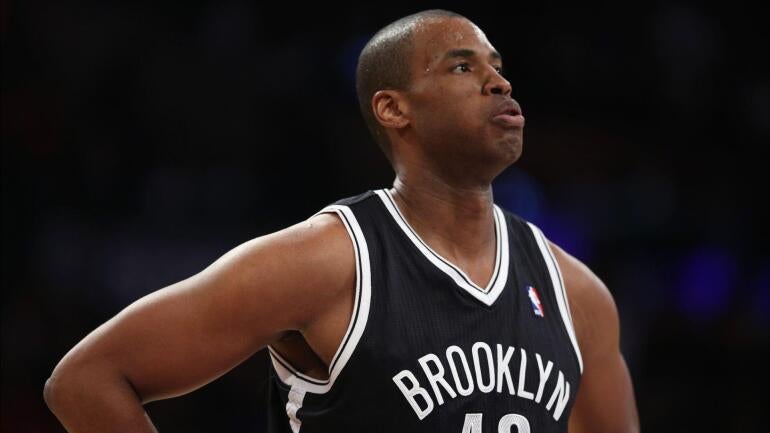
Jason Collins, whose NBA career spanned 13 years and six different teams, announced on Thursday that he has Stage 4 brain cancer. Specifically Collins has glioblastoma, a common form of brain cancer that spreads aggressively and quickly.
In an open letter published by ESPN, Collins detailed what led to the diagnosis. He shared how he had difficulty focusing, was struggling to complete simple tasks due to brain fog, and his short-term memory was declining. He underwent a CT scan at UCLA that uncovered the brain tumor.
"What makes glioblastoma so dangerous is that it grows within a very finite, contained space -- the skull -- and it's very aggressive and can expand," Collins said. "What makes it so difficult to treat in my case is that it's surrounded by the brain and is encroaching upon the frontal lobe -- which is what makes you, 'you.'"
The NBA released a statement in September to share the news of Collins undergoing treatment for what was called a brain tumor. Collins said the statement was purposefully vague, as his family wanted to give him privacy while he was dealing with the diagnosis.
Now, though, he wants to share his journey in hopes that it can help someone else dealing with the same diagnosis.
"When my grandmother got sick with Stage 4 stomach cancer, she didn't like people saying the word "cancer," Collins said. "She never wanted that word being spoken. I am on the opposite end of the spectrum. I don't care if you say the word. I have cancer, but just like my grandmother fought it, I'm going to fight it."
Collins has been undergoing radiation to slow the growth of the brain tumor, as well as targeted chemotherapy in Singapore that is geared towards fighting the specific type of tumor he has.
"The goal is to keep fighting the progress of the tumors long enough for a personalized immunotherapy to be made for me, and to keep me healthy enough to receive that immunotherapy once it's ready," Collins said.
Though Collins had a lengthy NBA career, he became a trailblazer in the sports world for being the first active openly gay player in league history when he came out in 2013. Just as Collins paved the way for gay athletes after him, he hopes that by sharing his story about his brain cancer, he can also help others.
"After I came out, someone I really respect told me that my choice to live openly could help someone who I might never meet," Collins said. "I've held onto that for years. And if I can do that again now, then that matters."