NBA on TNT's new VR technology isn't a gimmick, it's an education
Intel has brought VR to the NBA, and it will help fans learn more about the game than they ever have

•
3 min read
With all the advanced stats, film breakdowns and and endless stream of social media information, NBA fans now have the ability to educate themselves in a myriad of different ways should they so choose.
But there was always one place you couldn't go: On the court.
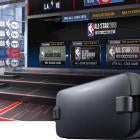
Now, thanks to the NBA on TNT's partnership with Intel True VR, fans can actually get right into the action during live NBA games from the comfort of their own homes. Using a Samsung Gear VR or Google Daydream View, fans can watch live games from behind the basket, on the sideline, or from multiple different perspectives throughout the game.
Besides being incredibly cool and signifying that the future is actually here (despite the noted absence of hoverboards and flying cars), the new technology provides limitless opportunities when it comes to fan education. Turner Sports broadcaster and former NBA All-Star Steve Smith did commentary on several NCAA Tournament games that were broadcast in VR last year. He was visibly excited when describing the difference between broadcasting in VR as opposed to the traditional view.
"In virtual reality, you can see so much develop off the ball," Smith told CBS Sports over All-Star Weekend. "And then to have that control. And as a former player, being able to watch the game and say, 'Oh, he came off the screen this time,' and you can see coaches saying, 'Don't let him come off the screen.' Just to be able to tell you as a viewer, 'Watch off the ball. I understand on the ball, but this is really a play that's going to be off the ball.' You have no knowledge of that when you're watching the standard broadcast."
Smith also recalls a time when West Virginia coach Bob Huggins was getting animated on the sideline during their Final Four game. Smith noticed, and quickly told the viewers to switch to a view where they could see Huggins.
"He was going completely … Bob Huggins -- I won't give it a name," Smith said. "I didn't know why. There wasn't a ref down there, but he was in his chair. He had his chair up there. And I just asked everybody to go to that. It was so funny, people were excited on social media. It was like, 'thanks,' because you're following the ball -- which we all do -- but that action was totally off the ball, not even on the ball on that side of the court."
Intel and Turner Sports began broadcasting VR NBA games over the weekend with the Rising Stars Challenge, All-Star Saturday night and Sunday's All-Star Game. They will continue to do so on selected dates throughout the season, including Thursday's matchup between the Los Angeles Clippers and Golden State Warriors. Here's the schedule of VR broadcasts for the rest of the season:
- Thursday, Feb. 22 - L.A. Clippers at Golden State, 10:30 p.m. ET
- Thursday, Mar. 1 - Philadelphia at Cleveland, 8 p.m. ET
- Thursday, Mar. 8 - Boston at Minnesota, 8 p.m. ET
- Tuesday, Mar. 20 - Houston at Portland, 10:30 p.m. ET
- Thursday, Mar. 29 - Oklahoma City at San Antonio, 8 p.m. ET
- Thursday, Apr. 5 - Washington at Cleveland, 8 p.m. ET
- Tuesday, Apr. 10 - Boston at Washington, 8 p.m. ET
The VR experience really is like a virtual toy store for avid NBA fans. You can choose to watch the game from certain angles, follow certain players or rewind plays to see them from different perspectives. There are also stats overlayed onto the screen while you're watching the game, and occasionally you can even see what it feels like to get dunked on by Karl-Anthony Towns.
It clearly provides the opportunity for fans to see things on the court that they don't normally see, but Smith says one thing makes the VR experience stand out is control. In an on-demand world where people increasingly consume their content where and when they want to, VR provides NBA fans the ability to have the experience they want to have while watching the games.
"People have their own way of watching the game," Smith said. "I know for me, watching the game in VR, I would love to watch the ball coming up from the back stanchion. Once it crosses halfcourt, I'm going to the other stanchion. And then obviously when the play goes off to one side, that's the way I would watch it. But now it's almost like a la carte. You're in control."