Willie Cauley-Stein's true potential unlocking every day, and it's scary
Willie Cauley-Stein went from a bit of an afterthought at Kentucky to one of the best defensive prospects ever. He's sure he's prepared for what's ahead of him in Sacramento.

•
17 min read

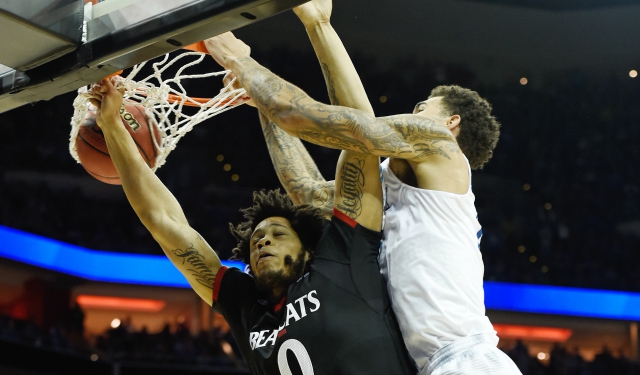
Imagine the most violent dunk you can. Picture a 7-footer with a guard’s grace catching a pass near the elbow, stepping hard toward the rim and obliterating a guy. The crowd roars, the poor defender falls to the floor. Put yourself in the dunker’s shoes for a second.
If you’re Willie Trill Cauley-Stein and you’re playing in the NCAA Tournament for Kentucky, the proper reaction here is a total stoneface. You essentially posterized the rest of college basketball. No need for histrionics.
The 21-year-old big man pointed out postgame that he was looking down at the victim’s head, wondering why on Earth anyone would even think about jumping. Correctly, he called it “nasty” and noted that Cincinnati didn’t put the dude back into the game. Then he went back to the hotel and — more on this later — proceeded to do something his roommate on the road, walk-on Tod Lanter, would never forget.
As a walk-on, Lanter barely played for Kentucky, but Cauley-Stein never let him feel anything but equal in his three years there. He wants Sacramento Kings fans to understand how much this "raw-talent athlete" improved at Kentucky and know that the idea their new center doesn’t love the game is "asinine." The two of them ran 6 a.m. sprints, helped each other with classwork and, in five years, if Lanter visits his old friend in Sacramento, he expects an air mattress at his place rather than a hotel room and a limo.
On draft night, an ESPN story mentioned Cauley-Stein’s "quirky personality" like it was a flaw, and asserted that the Kings’ choice at No. 6 would "either be brilliant or a disaster." This sentiment had been repeated so often that it seemed self-evident -- to those who didn’t know him, anyway.
Speaking from Las Vegas, where he was as impressive as advertised as a defender at Summer League, Cauley-Stein didn’t hesitate when asked which was more true: the time he said he didn’t mind what others said or the time he said he’d make people eat their words.
"I think they’re both accurate," Cauley-Stein said. "They kind of go hand in hand. Like, I don’t really care what they have to say. If it’s negative, it’s going in one ear and out the other. But for somebody to tell me that I can’t do anything, then that’s when I’m gonna prove them wrong."
The previous day at Thomas & Mack Center, Cauley-Stein was tripped and rolled his ankle. He limped around for a couple of possessions and tried to walk it off. Golden State Warriors forward James Michael McAdoo saw him hobbling and tried to take him to the rim. Cauley-Stein blocked the layup with two hands. It took another couple of trips down the court for Sacramento to take a foul so he could go to the bench and have a trainer look at him.
There might not be another example -- ever -- of a player doing exactly this, but Cauley-Stein saw the situation simply. "I didn’t want to give up a basket 'cause I was hurting," he said, so he went for it.
Sacramento assistant coach John Welch raised his eyebrows and his voice when the play was brought up. "Yeah, yeah!" he said. "It was just fun to watch. It’s fun to watch someone care that much and play that hard." It sounded like he was addressing more than just the reporter in front of him.
In three and a half minutes, Welch referred to how hard Cauley-Stein plays 10 times. He said the rookie’s effort was contagious and raved that he’d never seen a 7-footer with quicker feet. He’d like to see Cauley-Stein be more vocal with his new teammates, but recalled that even Tyson Chandler had to learn how to do that in the pros.
Sam Malone, another UK walk-on, watched Cauley-Stein in Vegas and said that his previous exposure wasn’t necessary to see what a gem the Kings had. In person, your eyes are drawn to him.
"Just watching him play two possessions, it’s so obvious that he is so much more athletic and has such a better feel for the game than most of these players, and is just an impact player," Malone said. "Whether he’s filling out a box score or not, his impact on the game is ridiculous because of his presence under the rim, running out in transition and just beating guys down the court. He’s on another level."
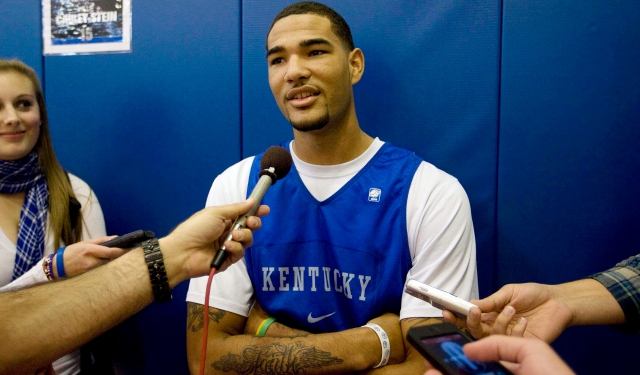
Malone remembers what Cauley-Stein looked like on the court three years ago. It’s why he brings up all the criticism of his friend unprompted as soon as his interview begins, saying that scouts only thought he didn’t work on his game enough because they didn’t realize how late he started taking it seriously.
When Cauley-Stein arrived in Kentucky he was not quite an “afterthought,” according to Kentucky assistant coach John Robic, but he was “sort of that the other guy” because of the presence of No. 1 recruit Nerlens Noel. Cauley-Stein stood out because head coach John Calipari generally goes after McDonald’s All-Americans who had prepared for this their whole lives, not guys who still played wide receiver as a senior.
“He’s crazy athletic and you could see that as soon as he walked in the door, but you could tell he didn’t have as refined of a skill set as most of the players that Cal brings in here,” Lanter said. “He’s guarding Nerlens Noel every day, and Nerlens has been working -- like, most of Nerlens’ training has been with individual instruction, learning how to do this drop step and this dribble move and things like that. And Willie, you could tell, was like, ‘What is this? This is not how I’ve ever played basketball before.’”
Cauley-Stein’s freshman season just happened to be a disaster by Wildcats standards. A record six players had been drafted after winning the 2012 national championship, and Noel tore his ACL in February. Kentucky lost in the first round of the SEC Tournament, failed to make the NCAA Tournament and had to accept being the top seed in the NIT, where it lost in the first round again. People suddenly knew who Cauley-Stein was, and he battled confidence and focus issues.
“No, I’m not going to say it came easily because there were nights when it kept him up,” Lanter said. “There were times when he deleted his Twitter. Our NIT year, his freshman year, a lot of our guys just deleted their Twitter because they were just getting publicly bashed for not stepping up to the plate because Kentucky’s supposed to be Kentucky and, when you lose a game, it’s the end of the world. That whole season was just a failure as far as everybody around here’s concerned. So, yeah, it gets to you.”
Late in his freshman year, Cauley-Stein told Lanter over dinner that he knew he wanted to go to the NBA but wasn’t ready yet. “All these people are pressuring me now,” Lanter recalled Cauley Stein saying. “Are you going to go to the draft? This time last year I was playing high-school football. I wasn’t even thinking about whether I could make money with this sport or not.”
Lanter called it weird then amazing to watch Cauley-Stein put things together afterward. Cauley-Stein didn’t stop watching cartoons -- Lanter expects he never will -- but he realized he had to go take jump shots at night, manage his time like a professional and figure out what he’d do with the big payday coming his way.
After his sophomore season, Cauley-Stein again chose to stay in school. He could’ve been a mid-first-round pick despite coming off an ankle injury, but he told Calipari that he wasn’t mature enough for the NBA lifestyle. He said he had to find himself, and he knows it was the right call. Coming of age as a professional athlete is extremely difficult — doing so at the most high-profile program in college basketball was hard enough.
“You don’t get multiple mistakes,” Cauley-Stein said. “I think that’s the biggest thing. You have to be on your Ps and Qs at all times. A lot of kids my age can make a lot of mistakes, but college athletes that are in the spotlight, you have to grow up so much faster than regular students or regular kids your age because you are a public figure so you get one shot, sometimes two.”
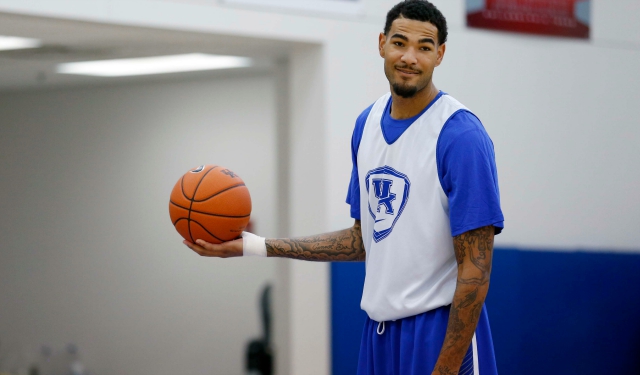
Cauley-Stein came into his own as a junior through sheer persistence. Every day he did a five-minute shooting drill where he’d take about 100 mid-range shots, Lanter said. Rim rattlers didn’t count as a make, and he wouldn’t go through this just once. “We would just shoot and shoot and shoot,” Lanter said, and the defensive marvel started taking and making jumpers during the second half of the season. His 67.1 percent free throw percentage doesn’t sound like an amazing achievement until you realize he shot 37.2 percent as a freshman.
When playing pickup with his teammates or even messing around with regular students at the Johnson Center, Cauley-Stein made it a point to work on specific moves. Sometimes he’d decide that he’d only shoot jump hooks. He readily disclosed that he misses being a point guard in junior high, where he always got to be the leader, have the ball in his hands and take game-winning shots. When the games counted, though, he understood his responsibilities and he performed them with full force.
“He had a very defined role at Kentucky and that helped us a lot, “ Malone said. “But there is a lot more to his game. Whether it’s finishing in transition, like taking the ball at halfcourt and driving all the way to the rim and finishing, that’s what people are going to see a lot. He has a little stepback jumper to his game that people haven’t really seen. And then a quick blow-by, like catching the ball at the elbow and just driving by people. That’s what people are going to see, too. And then what we saw this year, really, was about halfway through the year he just decided I can dunk on basically anyone and I can put people on posters.
“He used to just throw a little jump hook or something like that,” Malone continued. “But now when he catches in the lane, he’s cocking it back with one hand and trying to take off on someone.”
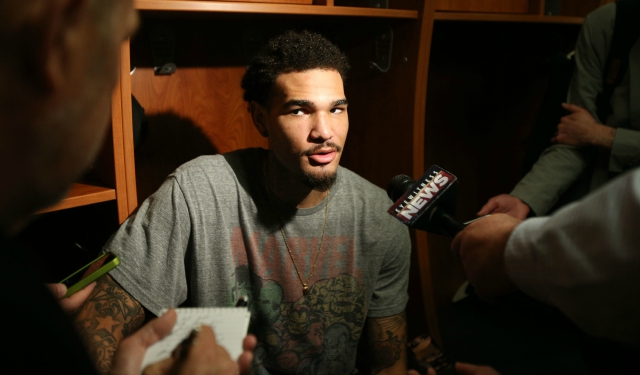
After Cauley-Stein and the Wildcats won 38 games in a row, after the streak ended against Wisconsin in the Final Four, after scores of NBA personnel salivated over his ability to switch any pick and roll and guard 1 to 5 -- “a once-in-a-lifetime thing as a coach,” Robic said -- his commitment was still called into question. Outside of Lexington, people didn’t know what to make of him. Inside, very different story.
Phoenix Suns swingman Devin Booker said the first word that comes to mind when he thinks of him is “different” and Boston Celtics guard James Young said he doesn’t think the same way most people do. Both of them volunteered that he showed them the ropes at Kentucky, and they’re on a long list of those who think he’s misunderstood.
Lanter said that Cauley-Stein relieves stress differently than most athletes would: “He’ll just go get another tattoo or he’ll change his hair or he’ll, I don’t know, start drawing or something.” Out of nowhere he dropped a class for his major, picked up a photography class, bought a camera and started taking pictures all the time.
Young, who counts Cauley-Stein as his best friend, said his favorite memory with him was when they decided on a whim to go get dreads. At the draft combine in Chicago, Cauley-Stein had to address the time he dyed his hair blonde, an eventuality he wasn’t exactly concerned about when he did it.
“He literally woke up for a nap and was like, ‘I’m bored, I think I’m going to dye my hair blonde,’” Lanter said. “And that’s just how he does things. He gets a feeling about something and he does it.
“I’ve been with him for five or six of his tattoos and he literally will walk in and say, ‘Freehand something,’” Lanter continued. “They’ll just start drawing ‘em. And that’s just, I mean, I don’t know anybody else that I’d ever met that would ever get a tattoo without knowing exactly what it was going to look like before it was done, and he doesn’t care. And I think that’s what makes him him.”
Even Kentucky fans couldn’t figure Cauley-Stein out at first, according to Lanter, because “he just comes off as weird in a lot of ways” until you get to know him. After a while, though, it got to the point where, if he jumped off a bridge, Big Blue Nation might too.
“We have this store here in Lexington called Oneness, and it’s basically like trendy clothing, I guess,” Lanter said. “They had this hat come out that said “Kentucky Life.” It was all blue with white writing. Nobody bought ‘em. They weren’t coming off the shelves, nothing, it was just some stupid idea they put in the store. Well, Willie got one and they were gone. They sold out. And then he gave it away. He was like, ‘Well, now I don’t want it anymore. Everybody’s wearing it.’”
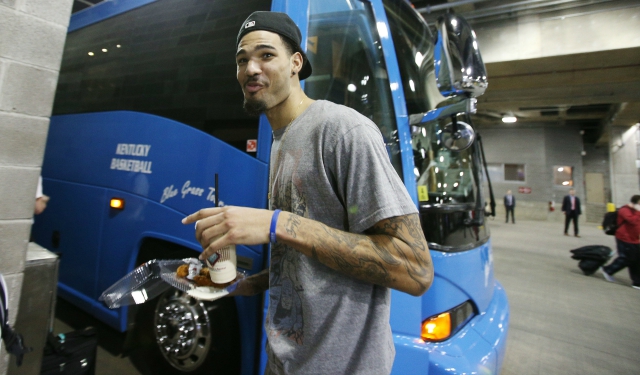
Lanter stressed that Cauley-Stein wasn’t “trying to stand out,” as that would take too much effort. Cauley-Stein described himself in bursts of words: “Super classy. Real class act. Down to earth dude. Real. Very authentic. I like authentic better than real.” Why? “I just think it sounds better.”
Less than 24 hours before a game in Arkansas, Malone received a text message. It was from someone claiming to be Cauley-Stein’s friend’s girlfriend, in need of his phone number. Malone obliged, thinking he recognized the name. The next night, Malone and Cauley-Stein’s numbers were on signs and pamphlets at the arena. It was Malone’s fault, but he never was scolded for it.
“After the game he probably had 150 voicemails,” Malone said. “And he never really got mad about it. He just kind of laughed about it.”
Even now, Cauley-Stein will say he’s really excited to be playing for money and have the city of Sacramento behind him, but he will also make draft day sound boring. Looking at out the window on the bus to Barclays, he thought, “Damn, this is the longest process ever.” There were a lot of media obligations and waiting around.
“I’m just not into all the BS,” Cauley-Stein said. “I’m really straightforward. I’m going to tell you how it is, I’m going to speak my mind. I’m real mentally strong so there’s just not a lot that people can say to get me off of my own self and lane, and my confidence.”
So what about the criticism? How much would he like that he-doesn’t-love-the-game narrative to be thrown off the edge of the world?
“I mean, I feel like it’s off there now,” Cauley-Stein said, laughing because he knew he was exactly where he wanted to be. “It don’t really matter now. Like, I’m drafted. You know? I was drafted. People can say what they want to say, but I’m on a team. I’m in a great situation. I’m ready to work and become a complete basketball player.
“The way I see it is, like, it was kind of meant to happen like that because Vivek [Ranadive] and Vlade [Divac] love the fact that I’m a bit of an artistic mind and I think outside of the box,” he continued. “They were really intrigued by that. That’s one of the main reasons why they chose me. So it worked out like that."
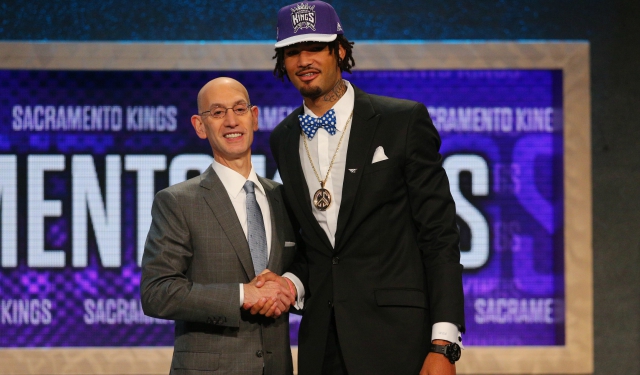
In Vegas, Cauley-Stein went out to dinner with new teammate DeMarcus Cousins multiple times. Robic coached Cousins at Kentucky, too, and thinks this is an ideal partnership -- as well as complementing each other on the court, he said they share the same mindset when it comes to wanting to win and improve.
“I’m just trying to be under his wing,” Cauley-Stein said. “He’s a franchise player. I’m trying to be a franchise player one day. He’s got a team and I want a team eventually, so I’m just trying to get under his wing and have him show me the ropes and work with him and just build all that. He’s the older brother.”
Cauley-Stein returned to Lexington for a camp at the end of July, and he went out to dinner with the coaching staff. Robic said he thought everything was still a little surreal for the first-team All American, but he had a quiet confidence about him. He’s sure of himself, and he knows he’s just getting started.
“I’ve only been working on only basketball for going on four years,” Cauley-Stein said. “Like, I did baseball, football or track -- I never really worked on a sport every day for years like most kids that hoop. Now it’s kind of like, I’m kind of a project, like now you can kind of mold me into whatever you want. Which is, that’s the cool thing about it. That’s why I say the sky’s the limit.
“I’m athletic enough to do guard stuff so if you were to mold me into having guard moves and footwork in a big’s body, that’s revolutionizing the game,” Cauley-Stein said. “That’s game-changing.”
To Cauley-Stein, going to Kentucky was “like taking a paycut.” Elsewhere, he could have taken 20 shots a game. He could have been “that dude,” as he put it. Instead, he sacrificed stats next to other great players and learned how to win. He went from an unpolished, apprehensive freshman shooting jump hooks to the fiercest dunker and defender in the country, and he didn’t let outside opinions steer him off course.
Asked when he doubted himself last, Cauley-Stein took a few seconds, then responded, “I don’t know. It’s been a while.” He bluntly said no part of him is nervous about the next step, continuing to sound completely unimpressed with himself. Which brings us back to that hotel room in the NCAA Tournament.
Hours removed from his March Madness monster dunk, Cauley-Stein talked on FaceTime and turned on the TV. Lanter watched a show on his iPad with an eye on the bigger screen, aware that a lot of other players who’d done what his roommate did would be searching their names on Twitter.
“He went from ESPN to ESPN2 to CBS, flipping through all the channels that are covering the tournament, and every time he hit next channel his highlight was on,” Lanter said. “And it happened five times in a row. Five different channels, it showed that same dunk. The next channel, it was showing it; the next channel, it was showing it; the next channel, it was showing it. And he just said out loud, ‘Where the hell is Family Guy?’ And I remember dropping my iPad and just laughing. I was like, ‘You’re the only one! You’re the only one that would ever say that!’ That’s how he is with everything.”