Brian Flores lawsuit: Mike Mularkey said the quiet part out loud but is the NFL truly ready to listen?
The former Titans coach said he was part of a 'fake hiring process' in the latest hit regarding inclusion and diversity in the NFL

•
5 min read
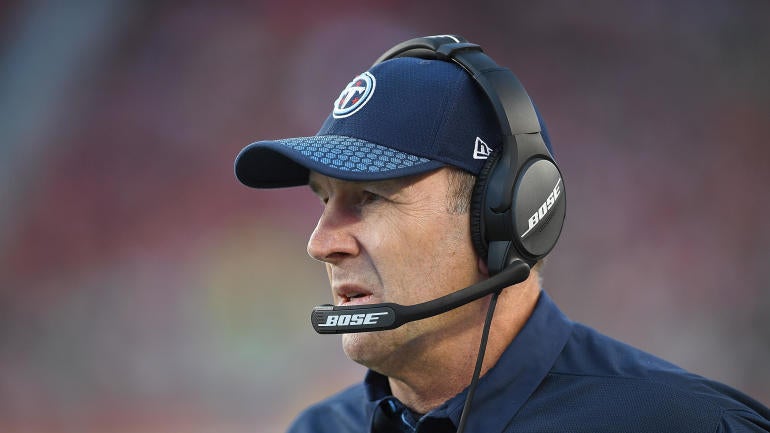
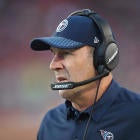
There doesn't appear to be much room for middle ground, or interpretation, in Mike Mularkey's account of his ascent from interim head coach of the Tennessee Titans to the permanent role in 2016. And it's difficult to determine what Mularkey would have to gain by lying about that process, or what motivation he would have to do so.
Mularkey's words, seemingly heartfelt as he displayed his angst and regret about playing a key role in a coaching search that Mularkey contends was structured to violate the Rooney Rule, have thrust Brian Flores' discrimination lawsuit against the NFL back into the fore. NFL execs are buzzing after longtime coordinator Ray Horton -- a coach of color who did interview with the Titans in 2016 -- added his name to the lawsuit, along with former Cardinals head coach Steve Wilks.
Team presidents and general managers and coaches are wondering how vigorously the NFL will investigate these claims. They are harkening back to other coaching searches over the past decade or so and wondering if others will step forward who believe their interviews were shams, conducting only to check a box. And, according to several league sources, the NFL itself in recent months has contacted outside consultants and operations who act as headhunters of sorts -- entities that evaluate and rank the merits of perspective coaching hires -- to mine their data over a period of at least 10 years. One would presume those overtures are part of an effort to try to discern whether or not coaches of color were being rightfully considered and, whether in some cases teams seemed to act in predetermined manner.
Regardless of what comes next, this is yet another unsightly situation for these owners on the issue of inclusion and diversity. Mularkey's words in a 2020 podcast, calling it a "fake hiring process" in which minority candidates "had no chance to get the job," felt to many coaches in this league like saying the quiet part out loud. The Titans released a statement denying this was an inside job, and that Mularkey was not informed he was going to get hired before anyone else was interviewed, which is impossible to reconcile with the coach's own depiction of the events. Several sources throughout the league asserted their belief that more coaches will join this lawsuit this offseason.
"There are a lot of people in this league (pooping) their pants right now," said a high-ranking official of one successful NFL team. "Think back to how many times it looked like someone was being used who had no real chance of getting that job? Were the Raiders really hiring anyone other than (Jon) Gruden? I don't know how hard the league will investigate, but we can't pretend this stuff doesn't happen."
And the reality is, when it happens, it almost always seems to be for a white coach. Cronyism is a difficult disease to cure, and with the decision-makers in the NFL overwhelmingly white, diversity tends to be more of a goal than an actual outcome. If Mularkey truly feels remorse and shame for the way this went down in 2016, then one would presume he would be open to cooperating with lawyers from the league and/or the lawsuit. "It was the wrong thing to do, and I'm sorry I did that," Mularkey told the Steelers Realm Podcast two years ago. Whatever evidence exists of Mularkey's claims in any form is unknown at this time, but this is far from the last we will hear of it.
When Mularkey was fired in 2018, the Titans' search wrapped up in five days, including three interviews, to replace him. Wilks, who would go on to get the Cardinals job (only to be fired after one season in which the general manager hired much of his staff) interviewed on the same day as Mike Vrabel, who was quickly hired. Vrabel and general manager Jon Robinson had worked together with the Patriots. "You could see they had a connection right away from the history they have with one another," owner Amy Adams Strunk said of Vrabel and Robinson upon the hiring.
At the very same time, Lions general manager Bob Quinn hired longtime Patriots assistant Matt Patricia to be his head coach, to the surprise of no one in league circles, after firing Jim Caldwell despite being one of the most successful coaches in franchise history. Quinn and Patricia were close from their time together in New England. The Lions interviewed "in-house" candidate Teryl Austin, who had joined the Bengals as defensive coordinator by the time Patricia's hire was made official -- itself a likely indicator of where he saw the Lions' process going -- and the Lions also spoke with longtime Packers assistant Winston Moss for the opening.
None of this, of course, means the deck was stacked. But the optics, especially now, may not be ideal.
The NFL already looked into whether or not the Raiders violated the Rooney Rule in the hiring of Gruden in 2018, when he received an industry-redefining 10-year, $100 million contract to come out of the broadcast booth. They found no wrongdoing. Owner Mark Davis, whose family has a sterling record on issues of diversity in hiring for generations, also spoke to Tee Martin, then the USC offensive coordinator (now a receivers coach for the Ravens) and their then tight ends coach at the time, Bobby Johnson (now the Giants offensive line coach), to comply with the Rooney Rule.
Did anyone then, or now, believe either of those individuals was on the cusp of potentially being the next head coach of the Raiders? This wasn't a job Gruden had to interview for; Davis had been after him for years and if he could agree to get him to take the job it was his. Is that wrong? Is that unfair? Should Davis have that right?
Are some of these coaching outcomes preordained, or predetermined barring something unforeseen falling apart at the negotiating table? Of course. Are there wink-wink agreements and things done off the grid that put such deals in motion far before anyone knows? Absolutely. Particularly when the coveted candidate is in the college ranks or in broadcasting or out of the NFL in some capacity. Does that run counter to what the Rooney Rule espouses? How could it not?
Where are the lines crossed, or blurred? And how far are the powers that be willing to dig? What can be proved? How do you judge intent? There aren't easy answers, but hopefully from Roger Goodell on down the right questions are being asked, while they are being whispered about in executive offices around the league.