
Why Kam Chancellor chose to hold out -- and why it only cost him more
Kam Chancellor's return is a shock to the Seahawks, who are glad to have him back. But what about the fines and game checks? Only time will tell.

•
7 min read

"Successful" holdouts in the NFL -- where a player sits out an extended period of time, gets significant new money and contract concessions in the process and then helps his team over the top in the standings -- are few and far between. For every one in which the player ultimately gets the cash he's seeking -- a Chris Johnson or a Sean Gilbert -- far more get closer to nothing in the end, and the upshot of their return after such a prolonged absence from team football activities tends to be a greater risk of injury.
Kam Chancellor's leverage, despite the strong safety being one of the true intimidators and tone-setters in the NFL, was always going to be mitigated by his position and that he was already being compensated at the very top of his position ($7 million a year) with three years left on his contract.
There was only so much he was going to get out of this, and thus it is no surprise that the star was the one to blink and end his holdout. The real shocker is that he was willing to miss game checks in the process -- two of them already -- and time will tell what, if anything, he gained by his absence.
The Seahawks had no prior knowledge that he was reversing course Wednesday, I'm told, and had extended all of the olive branches they intended to extend. Owner Paul Allen had reached a point after Week 1 in which he wasn't going to be making any further concessions to a player who at that point was hurting the team and contributing to losses with his absence, and who was defaulting on his contract. This thing had gotten tense and personal.
The insinuation that Allen was being cheap or petty by not simply guaranteeing another $2 million in 2016 money -- as espoused through Chancellor by some of his conduits in the media -- exacerbated the friction. This was not going to be a situation where the Seahawks set themselves up for future holdouts and discord by simply giving the safety what he wanted, regardless of his import to the team on the field or in the locker room. The fact that they were 0-2 wasn't going to whittle that resolve much; they had eight home games remaining and faith in the roster and this team expected to be back in the playoffs regardless.
What remains to be seen is what kind of contribution they get from Chancellor, and how quickly some of the bad feelings can be mended. Also, what is resolved when it comes to the two lost game checks and roughly 50 days of fines Chancellor incurred? What about the lingering issue of tinkering with the remaining years on Chancellor's contract?
As I have been reporting for weeks, none of that would be addressed further until Chancellor showed up in Seattle to at least sit down with ownership and management about his situation. Now that he is officially reporting, I anticipate that part of this equation being looked at in short order. The sense I've received is that it was beyond unlikely the team would simply waive all of the money Chancellor has jeopardized with his holdout -- we're up over $2 million at this point -- but I certainly wouldn't discredit the notion that the Seahawks will be willing to do something for him.
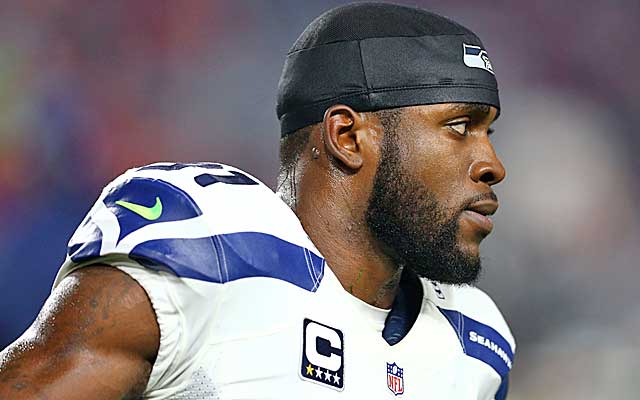
What has been lost in all of this is what I've continued to hear was truly at the crux of this holdout: Chancellor's health. He plays the game like a human battering ram, he gives of his body as freely as anyone in this league and he means much more to Seattle's rise to perennial Super Bowl contender than just his tackling and interceptions. He is the mental and emotional leader of the club, he regulates that locker room, and he keeps the knuckleheads in line. He is the Alpha Male who can tell a Richard Sherman to shut up or tell a Bruce Irvin to sit down. It's his team. And all of that has a unique worth.
When Chancellor played through the Super Bowl with a torn MCL, a knee that could certainly give him issues down the line, it crystallized just how fleeting all of this can be, sources said. It was a flash point that put into perspective what he was asking of himself every Sunday from September through January.
The risks became all the more real. And those two future years on his deal (2016 and 2017) -- unprotected with the guaranteed money in his contract already paid out by 2015 -- started to look less and less real. So at some point late in the offseason -- recall Chancellor was one of the primary figures in the Seahawks' player's-only camp in Hawaii in April and he was a regular at OTAs well into the spring -- he weighed the situation with his knee and the risks before him and decided that he wasn't going to show for camp. And that was that.
Generally, you can measure the length of such holdouts, especially so early into a new contract, on your hand in the number of camp practices missed. It's over well before the first preseason game is played, much less two games that actually count.
No one in the Seahawks' organization would ever doubt Chancellor's mettle or determination or fight. They expected this could drag on quite a while based on the man's conviction, if nothing else. And while the endgame probably won't suit him, I can't help but applaud him for having the fortitude to take this as long as he did, misguided or not.
But the problem is, the Seahawks know about that knee as well, as does every other team in the league. Strong safeties aren't quarterbacks or receivers. Seattle wasn't going to budge too much with so much left on the deal, and players have such finite periods of time to earn money playing this game, while billionaires are generally billionaires for life.
It's a stacked deck and there isn't anything else on the planet Chancellor could do and take home about $275,000 a week before taxes.
A trade was a non-starter. Seattle wasn't inclined to reward Chancellor by sending one of its best players to a potential competitor, making its roster worse, helping someone else, and getting Chancellor the $9 million per year he wants in the process. And it would be a very, very limited number of other owners in the NFL who would be willing to part with some significant assets.
Seattle wasn't going to deal Chancellor for a fifth-round pick and finding a trade partner in late September -- well after team budgets have been set and their real money has already been spent in free agency -- looked like a lost cause.
Ditto for any team giving a safety already making big money a nice raise on top of it. How many GMs could go to their owners and rightfully make the case that they were a strong safety away from a Lombardi Trophy? How many would have the guts to try it?
Chancellor would never mean as much to any other team in the league walking in cold in, say, Week 3, as he would in Seattle, and all of the intangibles he brings -- aligning people, counseling them, motivating them, bonding them -- doesn't just happen in a new city overnight. In Seattle, it should.
If he can avoid the injury pitfalls that often accompany such long holdouts, with calf strains or hamstring pulls or other muscle injuries commonplace in rushing right back into game situations without a proper August to prepare, then maybe there is a happy face emoji to be put at the end of this saga. His presence alone will provide an immediate lift to a team that has suffered plenty of heartbreak dating back to that bizarre Super Bowl loss and hasn't won since its miracle comeback in the NFC Championship Game.
He'll be welcomed back as warmly as possible by teammates, and, I can only imagine, Seattle's diehard fans. Plenty of football remains to be played. The story of the 2015 Seahawks has hardly been told. Whether Chancellor's wallet gets any fatter in the process -- hey, some playoff checks alone would help -- and his knee gets strong and his play is as dominant despite so much time away, well, that waiting game continues.