Why the NHL's most hated players are never going away
You may not like players like Steve Downie or Daniel Carcillo, but they are not going away.

By
Adam Gretz
•
7 min read

They tend to be some of the most hated players in the NHL, and when they inevitably do something reckless you probably want them out of the league.
They are the guys that spend their time skating along the fine line between "playing with an edge," and playing dirty. On occasion, they will jump over that line and do something to earn a fine or a (potentially) lengthy suspension from the NHL.
You know who these guys are, and you probably already have the names in your head. Steve Downie. Daniel Carcillo. Matt Cooke. Patrick Kaleta. Maybe even Dallas' duo of Antoine Roussel and Ryan Garbutt (five suspensions and fines between the two of them over the past two years). And many, many more. When Brian Burke was still the general manager of the Toronto Maple Leafs and lamenting the declne of the enforcer role, he complained that the "rats" were going to start taking over the game. These were the type of players he was talking about.
Opposing players can't stand them because they get under their skin, sucker them into penalties and at any time could do something that takes an important teammate out of the game. Fans can't stand them for the exact season reason. Teammates may even get tired of them eventually because they might have to kill an extra penalty or two at an inopportune time time because one of them can't control themselves and takes a stupid, reckless penalty. Referees hate the fact they have to constantly keep an eye on them, even if the play isn't anywhere near them. In some cases, it's not a matter of if they are going to do something that earns that earns them supplemental discipline from the NHL, but a matter of when it is going to happen.
And it is that element that makes them so loathed across the league.
When it does happen, it is usually followed by a chorus of "why is this guy still in the NHL, and why is he allowed to keep doing what he does?" I have been as guilty of that as the next person, and in some cases it is a legitimate series of questions (See: Rinaldo, Zac).
But there is a very good reason a lot of these players not only continue to exist and find consistent work in the NHL, but why players like them are not likely going to go away anytime soon.
And it's not for the reasons that are most often associated with their style of play.
It's not because they bring a necessary "element" to the game. Because that particular element isn't really necessary. Playing physical is necessary. Consistently crossing the line is not. It's not because they offer some sort of protection to their more skilled teammates and serve as a deterrent. Because they don't, and if anything, are probably more likely to incite even more reckless on-ice violence.
But here is the dirty little secret about a lot of these guys. Not only can a lot of them actually play once you get past their other antics, some of them actually provide their teams with a really good value. They might even be, in some cases, undervalued. And that isn't something that can easily be tossed aside. When you're dealing with a sport in a salary cap league where winning is the only thing that matters, you have to squeeze everything you can out of every dollar that your team spends.
Let's take Steve Downie as an example.
He has had his fair share of run-ins with NHL (and AHL) discipline, and has crossed the line on more than one occasion. Unless he plays for your team, you probably do not like him as a hockey player. And maybe even if he does play for your team. But despite getting almost no power play time throughout his career, and averaging less than 15 minutes of ice-time per night, he has pretty consistently scored at a better than 40-point pace over 82 games. Over the past five years alone he has averaged 1.94 points per 60 minutes of 5-on-5 ice-time. That places him 79th in the entire league out of 387 forwards (minimum 1,500 minutes). That is borderline second-line production, and puts him in the same neighborhood as players like Johan Franzen, David Perron, Patric Hornqvist, James van Riemsdyk, Valterri Filppula, Clarke MacArthur, Mike Ribeiro, Evander Kane, Jeff Carter and Gabriel Landeskog. Those are really good players, that all make a lot more money.
But because he's had so many red flags throughout his career (and injuries have not helped here either), he has never made more than $2.7 million in a single NHL season. When he signed with the Penguins over the summer as a free agent he received only $1 million on a one-year contract. Simply from a production standpoint, he is worth significantly more, especially when you consider some of the other contracts given out in that free agent market.
When the Penguins signed him, the narrative around the deal was about a change in mindset, being tougher to play against, and not having opponents take liberties with their best players. And I have no doubt the Penguins believe he can address all of that, whether he actually can or not (remember, nobody is stopping opponents from taking liberties against your best guys). But the thing he has given them (and it matters more than anything else) that has received almost no attention is the type of secondary scoring that they have been lacking for three years now. Dig below the league-leading penalty minutes and the occasional misconduct penalty and he has been, from a point production perspective, the Penguins' third most productive forward this season at even-strength behind only Sidney Crosby and Evgeni Malkin. And nobody else is really even close to him.
Even though he has had a great year and has earned himself a larger contract next summer, he still probably isn't going to get what he is actually worth based on his production. And somebody will continue to get a really productive player just as long as they are willing to put up with the penalties and take a chance on him not crossing the line. To his credit, he hasn't been suspended for quite some time, but he has piled up penalties at an almost unbelievable rate this season.
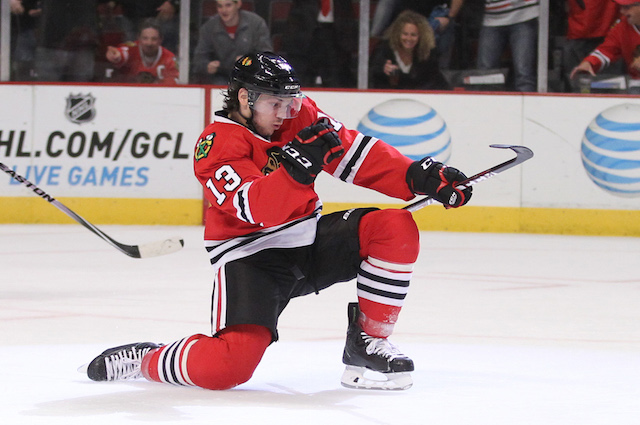
Daniel Carcillo is another one. He was recently suspended six games for a despicable late cross-check on Winnipeg Jets forward Mathieu Perreault, making it the 12th time in his NHL career that he has either been fined or suspended by the league, including the fourth time for a stick foul. To a lot of NHL teams, a guy like this is poison. They don't want to deal with the on-ice discipline issues. They don't want to be associated with it. They have no use for it. But whenever Carcillo's value as an NHL player is questioned, it is (legitimately) pointed out that a lot of really good hockey teams over the past couple of years have found a use for him, even if in a limited role and even if that role goes away come playoff time when the games start to really matter. But you still need guys that can fill out your fourth line over an 82-game season. And as far as fourth-liners are concerned, a team can do a lot worse than him. In between suspensions he can chip in 20 points over a full season and not be a liability defensively. For a guy that usually makes between $500,000 and $800,000 per season (he makes the league minimum this season) that is fine production and it's not hard to see why a team, and especially a good team, has use for that.
Even a guy like Patrick Kaleta has something going for him from a hockey standpoint. He may not score as much as some of the other guys here, but what he does do is draw penalties at a rate that is on par with some of the most talented and skilled players in the NHL. Over the past five years his penalty differential of plus-34 is 39th in the entire league out of more than 1,500 players. For a guy that rarely gets more than 10 minute of ice-time per night and is only used sparingly over the course of a season, that difference in power play time alone is probably worth a couple of extra points in the standings.
The reason the heavyweight enforcer is all but extinct in the NHL is because teams finally started to realize it was a waste of a roster spot and cap space to have a guy on your roster that can't do anything except punch somebody else in the face. But they obviously still want that physical edge to their team, and somebody that can do something else to go along with it.
And that is where these guys come in.
Even though they can at times be a menace to themselves, their teams, the other team, and everybody around them when they are on the ice, as long they continue to have some sort of value to teams and can provide something for a below market price given their level of production, they are never going away.
When they do retire or stop finding a work because they are no longer productive, they will simply be replaced by the next crop of players that are exactly like them.