Manchester United sale: What to know about Jim Ratcliffe's impending purchase of 25% from the Glazer family
The deal isn't finished, but Ratcliffe looks set to close the deal on investing in Man United with an eye to a purchase

By
James Benge
•
6 min read
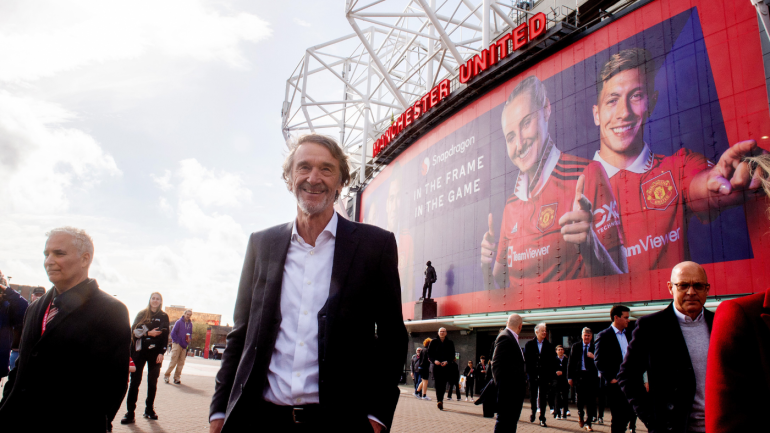
Eleven months after the process begun, the finish line is in sight in the Manchester United takeover... well, sort of. The club's board are due to vote this week on Sir Jim Ratcliffe's proposal to buy a 25 percent stake for nearly $1.6 billion. For many supporters it will be a matter of considerable disappointment that the current owners do not leave the club, and there will be fears that the turbulent 18 years under the Glazers are far from over. We answer some of the biggest questions around the deal below.
1. Is the deal for Manchester United done?
Not quite, though it has been heading in the direction of Ratcliffe ever since Saturday when the group led by Sheikh Jassim bin Hamad Al Thani claimed they would be withdrawing from the process. That came after several weeks of constructive dialogue between INEOS and Raine Group, the bank instructed by the Glazers to pursue a sale and alternative financing options for United. Ratcliffe had previously offered alternative deal structure including one that involved buying out the family stake -- Class B shares that give the Glazers 96 percent of the voting power at United -- though this proved contentious with the remaining shareholders.
Ultimately, the deal that will be put to the board later this week sees Ratcliffe acquire a quarter of the club for a sizeable price, the first step in a process that is expected to end with the 70 year old and his chemical business INEOS as owners at Old Trafford.
2. Why doesn't Ratcliffe just buy the whole club?
Partly this comes down the vendors. While the Glazer family may be the subject of deep antipathy in Manchester, there are those within the family who are said to be reluctant to cash in their stake in a business that has swelled in value since their father Malcolm completed his leveraged buyout in 2005 for £790 million (around $1.5 billion at the time). And that's to saying nothing of the cache that comes with owning one of the biggest entertainment brands in the world, one that does not seem to depreciate even when results are not what they were. United also previously paid out over £20 million a year before the COVID-19 pandemic. There may yet be more money to be made for the Glazers.
Ratcliffe might also conclude that if he can avoid paying full whack now there is no reason to do so. For the time being, there is no firm information on how the prospective new owner intends to finance this first 25 percent he's committing to purchase, nor the future deals that would bring the club entirely under the INEOS umbrella. Given the sheer expense that purchasing United will constitute, it seems inevitable that INEOS will have to borrow to fund the purchase -- a significant question supporters will have is whether that debt will be loaded onto the Old Trafford books or those of the parent company. In a market where interest rates have risen dramatically, Ratcliffe might reasonably conclude that it is better to wait even as long as several years before finalizing his purchase.
3. Why pay a premium?
The near $1.6 billion for 25 percent is certainly a hefty markup on the stock market value of United, $3.3 billion. It is nearly 11 times the club's most recent earnings, a marked contrast even with what the Clearlake Capital consortium paid for Chelsea last summer. It is also in marked contrast with Ratcliffe's own comments from March, when he said he would not be paying "stupid prices." Such a proposal eclipsed the offer of Sheikh Jassim, who is understood to have informed the Glazers that he would not match their demands.
What INEOS are getting for their deal, however, is control of the sporting functions at Old Trafford. Sir Dave Brailsford, the company's director of sport, is expected to have a significant role to play and was among those who joined Ratcliffe on his visit to the stadium and Carrington training ground in March.
4. What does this mean for United's transfer business?
Already the talk is of which transfer guru will arrive at Old Trafford in the coming weeks and months with names such as Paul Mitchell, formerly of Tottenham and Monaco, most consistently mentioned. Almost any change would be good news for United, who have wasted an almighty proportion of the £1.5 billion they have spent on players since Sir Alex Ferguson's retirement in 2016. Equally, one man alone cannot fix a recruitment department that is hardly the envy of the club's rivals. Once new structures are in place, however, the spotlight might fall on Erik ten Hag's involvement in recruitment; last month the manager defended the involvement of his agent Kees Voss in many of the signings made since his appointment last year.
5. What about Erik ten Hag?
For now there has been no suggestion that Ten Hag is under pressure and he certainly has many admirers at a club who he guided to their first trophy in six years with February's EFL Cup. The spotlight will surely shine on the Dutchman before too long if United remain sixth and don't turn around a Champions League campaign that has seen them lose their first two games. However Ten Hag might reasonably note that there have been a string of on and off-field issues, not least the takeover itself, that have hampered his ability to do his job.
6. What happens to Old Trafford?
When the Glazers bought Manchester United in 2005, Old Trafford was one of the jewels in the British sporting crown. They have, however, invested little in keeping the stadium up to date in a fast-moving sector and it was a notable snub to see club football's largest ground left off the list of stadia for Euro 2028. Recent years have seen ownership acknowledge the need to modernise the ground and The Times of London report that INEOS will look to increase capacity to 90,000.
7. Will INEOS be good owners?
Unlike Sheikh Jassim, INEOS do have previous in the sporting field, they own Swiss side Lausanne-Sport and Nice, which Ratcliffe bought for €100 million in the summer of 2019. Since then the Ligue 1 club have never finished higher than fifth or lower than ninth despite what has been, by French standards, significant spending on marquee names such as Aaron Ramsey and Jean-Clair Todibo. There is further experience in the sporting field through the aforementioned Brailsford, who played a significant role in cycling team INEOS Grenadiers, whilst the company also holds a stake in the Mercedes F1 team. There is certainly interdisciplinary knowledge to apply.
What supporters will expect from an owner is someone who places the needs of the team before his own. In that regard, it would at least be encouraging for them to read that Ratcliffe had previously spoken of United as a "community asset" in an interview with the Wall Street Journal. His interest would be "purely in winning things," the professed boyhood fan who was there when his club lifted the Champions League at the Camp Nou in 1999, now determined to bring the good times back.
Equally there is value to INEOS in associating itself with Manchester United. In much the same way as questions were merited over a Qatari bid constituting sportswashing so there will be those who ask if Ratcliffe's involvement in sport is a way to greenwash a chemical company that in 2020 was reported to be the largest polluter in Scotland. In March, Greenpeace said: "INEOS is a major producer of plastic, toxic pesticides and fossil fuels, as well as one of the UK's leading fracking firms. Having already plastered its brand all over cycling, sailing, football, running and rugby, INEOS is the undisputed champion of sportswashing."