WNBA, players union agree to 30-day CBA extension as negotiations continue between sides, per report
The current collective bargaining agreement between the sides was set to expire Friday

By
Jack Maloney
•
5 min read
The WNBA on Wednesday offered the Women's National Basketball Players Association (WNBPA) a 30-day extension to continue negotiations on a new collective bargaining agreement, an opportunity the WNBA accepted Thursday, just hours before the current CBA was set to expire on Friday, according to The Athletic.
This is not be the first time the sides needed an extension to complete negotiations on a new CBA. In fact, an extension was utilized to ratify the current CBA. In 2019, the two sides announced a 60-day extension before agreeing to a new deal in January 2020.
If the league and the players cannot ultimately agree to terms on a new CBA, the next significant step could be a work stoppage -- most likely via the owners locking out the players, though the players could also go on strike. At that point, all league business would cease -- players would not even be able to access practice facilities -- but negotiations would continue.
However, the two sides could first enter a status quo period, during which the conditions of the current CBA would continue, though not for a set period of time. Per the Cornell Law Review: "Courts developed the 'status quo' doctrine from the Katz prohibition of unilateral changes. This doctrine requires employers 'to maintain, during ther period of negotiations, the status quo concerning conditions of employment in order to avoide committing [a violation of the duty to bargain in good faith].'"
The key difference between status quo and an extension is that either side could announce a work stoppage at any point during status quo, while an extension would lock in the current CBA until a set date (or until a new CBA is agreed upon).
The WNBA has never lost games to a work stoppage, but it has come close. In 2003, there was still no deal in place by early April when then-NBA commissioner David Stern issued an ultimatum to come to terms on a new CBA by April 18 or the season would be cancelled. The two sides did just that. As a result, the 2003 WNBA Draft was delayed, as were preseason games.
WNBPA senior advisor and legal counsel Erin Drake told The Athletic on Tuesday that the two sides would not agree on a new CBA before Oct. 31.
"We have worked hard to be able to say on Friday, we did it. Unfortunately, that's not going to happen," Drake said. "In a dance, it takes two to tango. And it has been difficult to find a beat, to find a rhythm and to find the same sense of urgency [from the league], just to be frank, to get this done."
The league responded by stating it had made an offer to the players on Oct. 1, which had been ignored until Monday.
"We have been negotiating with the Players Association in good faith and with urgency for several months with the goal of finalizing a new collective bargaining agreement as quickly as possible," a WNBA spokesperson told ESPN. "Throughout this process, we have been clear that our top priority is reaching a new collective bargaining agreement that addresses players' ask for significant increases in pay, benefits and enhancements to their experience, while ensuring the long-term growth and success of the league and its teams.
"We urge the Players Association to spend less time disseminating public misinformation and more time joining us in constructive engagement across the table."
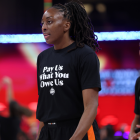
The WNBA and the WNBPA have been embroiled in a bitter labor dispute for over a year. In October 2024, the players announced their intention to opt out of the current CBA.
"This is a defining moment, not just for the WNBA, but for all of us who believe in progress," WNBPA president Nneka Ogwumike said in a statement at the time. "The world has evolved since 2020, and we cannot afford to stand still. If we stay in the current agreement, we fall behind.
"Opting out isn't just about bigger paychecks -- it's about claiming our rightful share of the business we've built, improving working conditions, and securing a future where the success we create benefits today's players and the generations to come. We're not just asking for a CBA that reflects our value; we're demanding it, because we've earned it."
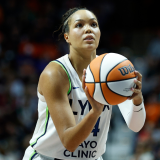
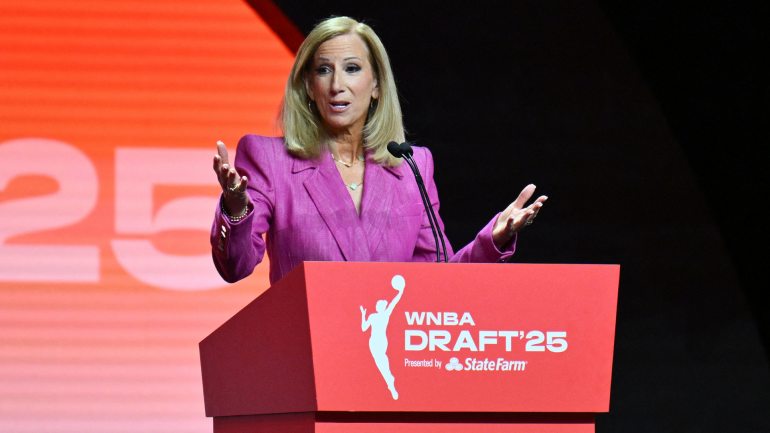
In recent months, the tension between the players and the league, and specifically commissioner Cathy Engelbert, has heightened. Most notably, WNBPA vice president Napheesa Collier delivered a scathing rebuke of Engelbert during her exit interview following the conclusion of the Minnesota Lynx's season.
"We have the best players in the world. We have the best fans in the world. But right now we have the worst leadership in the world," Collier said, while also accusing Engelbert of making disparaging remarks about players, including Caitlin Clark.
Engelbert later addressed the criticism during her pre-Finals press conference.
"I have the utmost respect for Napheesa and every single player in our league," she said. "They are at the center of everything we do. I was disheartened to hear that some players feel the league and me personally do not care about them or listen to them, and if the players in the W don't feel appreciated and valued by the league, then we have to do better and I have to do better."
The main sticking point between the two sides is the revenue sharing model.
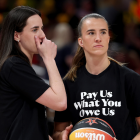
Under the current CBA, the salary cap -- and thus, player salaries -- increases at a fixed rate of 3% per year. The players are pushing for a new model where salaries grow with the business. Currently, reports indicate that players only receive about 9% of all revenue, a far cry from the 49-51% of basketball-related income that NBA players receive.
While Engelbert and NBA commissioner Adam Silver have both publicly supported raising player salaries, they have pushed back on revenue sharing.
"I think share isn't the right way to look at it because there's so much more revenue in the NBA," Silver said earlier this month. "I think you should look at absolute numbers in terms of what they are making. They are going to get a big increase in this cycle of collective bargaining and they deserve it."