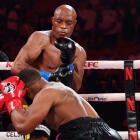
Canelo vs. GGG fight result: Five things we learned from the controversial decision
Las Vegas has a lot of work to do if they want to keep big boxing matches coming to town

•
5 min read
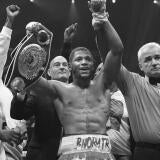
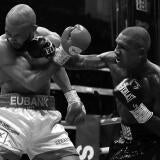
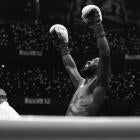
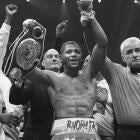
LAS VEGAS -- The middleweight championship bout between Mexican sensation Canelo Alvarez and unified champion Gennady Golovkin presented boxing fans with the full gamut of emotions on Saturday.
But whether you cheered for the dramatic action or jeered the justified (and sadly, predictable) cries of impropriety caused by the scorecards, boxing once again lived up to its moniker as the theatre of the bizarre, with no shortage of subplots to debate and dissect.
Let's take a look at five things we learned after Alvarez (49-1-2, 34 KOs) and Golovkin (37-0-1, 33 KOs) battled to a disputed split draw at T-Mobile Arena.
1. The Nevada State Athletic Commission needs to clean up its act: The lure of big money has long made Las Vegas "the fight capital of the world" and the preferred destination for promoters and fighters looking to secure the largest purse possible. Along with that has come a seemingly inordinate amount of questionable decisions in big fights. But boxing has spent too long accepting that asterisk as part of the overall package when bringing the biggest fights to the brightest stage in "Sin City." And considering the sketchy headlines continually made by NSAC -- from breaking its own rules by allowing Floyd Mayweather to change his glove size after the fact against Conor McGregor in August, to allowing Mayweather in 2015 to retroactively use a banned IV before his superfight against Manny Pacquiao without penalty -- something needs to change.
Too often the "money fighter" in question has received the benefit of the doubt in every possible scenario. This appeared to be the case once again with judge Adelaide Byrd's almost unthinkable 118-110 scorecard in favor of Alvarez. The fact that Golden Boy Promotions held a rematch clause for Alvarez in the event of a draw or defeat only brings more unwanted hints of foul play -- deserved or not. Let's not forget, Nevada is the same state which allowed Mayweather to delay his 2012 jail sentence for domestic battery by one month in order to allow Las Vegas the financial windfall from his pay-per-view showdown with Miguel Cotto.
After the fight on Saturday, NSAC executive chairman Bob Bennett said he stands by Byrd, passing off her scorecard as merely "a bad night." Bennett expressed full confidence, citing Byrd's experience of more than 115 title fights. He also defiantly shot down insinuations from the media that she has a history of questionable scorecards. Only after being pressured to take action by one emotional reporter did Bennett finally agree he would sit down with Byrd so "she can articulate what she saw." There's something rotten in the state of Nevada. Either NSAC needs to shape up or big-time promoters need to stop bringing their business to Las Vegas. Good luck to seeing the latter become a reality.
2. Both fighters were elevated by their performances: Considering that both Alvarez and Golovkin entered the fight looking for the defining victory of their careers to erase any lingering criticism about their standing among the pound-for-pound best, the result (at least inside the ring) was a win-win for both fighters. Alvarez proved he can contend just fine as a full-sized middleweight against one of the sport's biggest punchers and both fighters exuded the perfect mixture of toughness, technique and poise in such a big moment. Golovkin also repealed the notion that he has lost a step at 35 by spending the majority of the night walking down and cornering Alvarez behind his big jab.
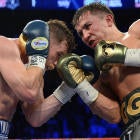
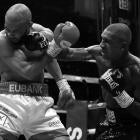
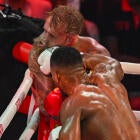
3. How about the chins on these two? Having never been down or staggered in over 400 combined amateur and professional bouts, Golovkin brought quite a reputation for having an iron chin into Saturday's fight. But holy cow did Alvarez make him earn that distinction with the flush counter right hands he connected that spun GGG's chin in the opposite direction. Very few middleweights would've been able to take the physical pounding that each fighter unleashed on this night. And while Golovkin showed tremendous ability to shake it off and continue to plod forward, it was Alvarez who was more of an unknown quantity coming in. But Canelo passed the test presented to him in a major way. While Golovkin's pressure and power seemed to slow down Alvarez's output in the middle rounds and send him backpedaling for a good stretch, Alvarez was never wobbled or forced to hold excessively. Instead, he dug in his heels, shook his head and called GGG on for more. This was as manly a showcase of machismo as any Alvarez fan could've hoped in his toughest matchup to date.
4. The defense was just as good as the offense: Many fans were lured to this fight by the promise of action and both fighters certainly delivered. But it was the skillful defense exuded from both that went a long way in helping this become the violent chess match it turned out to be. Alvarez showed remarkable quickness in dodging GGG's big right hands by swiveling his upper body or sidestepping out of danger. Golovkin, meanwhile, swallowed up a ton of Alvarez's power shots with his high guard. Had both fighters not retained such a high level of defensive responsibility, it's unlikely this would have gone the distance.
5. When the best fight the best and put it all on the line, boxing is still capable of magic: What boxing fans tend to miss most about the middleweight heyday of "The Four Kings" of the 1980s or the heavyweight pinnacle of the 1990s was the "go for broke" attitude shown by the sport's biggest names in marquee fights. That attitude has become far too foreign in recent years on the highest level. Seeing Pacquiao, for example, unwilling to throw caution to the wind against Mayweather in the final rounds, left many consumers unhappy with their purchase. But Alvarez-Golovkin simply felt different from the moment it was signed. It felt like a throwback fight and it very much delivered in such a manner considering the majority of the action was contested at close range, with neither fighter willing to back down when things got hairy. Both fighters never stopped trying desperately to win and as simplistic as that notion sounds on paper, it's something boxing has missed on the PPV level for some time.