How Joshua-Klitschko has a chance to save the dormant boxing heavyweight division
Great heavyweight fights like Saturday's Joshua-Klitschko have become few and far between

•
4 min read

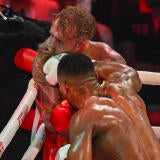
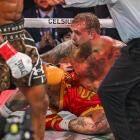
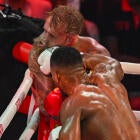
With 90,000 fans expected at London's Wembley Stadium, Saturday's bout between unbeaten Anthony Joshua and former champion Wladimir Klitschko is, on paper, the biggest heavyweight title fight in many years.
A large part of the intrigue surrounding the fight (set to air on Showtime at 4:15 p.m. ET) centers around the fact that the division has been so maddeningly dismal in the 13 years since Lennox Lewis' retirement.
Klitschko's historic, yet unspectacular dominance (including 18 consecutive title defenses) conspired in part with a string of nondescript European fighters swapping whichever titles remained to produce what many, including International Boxing Hall of Fame writer Jerry Izenberg, believe to be the worst era in heavyweight history.
"The thing about it is, boxing isn't dead but the heavyweights are dead," Izenberg told CBS Sports. "That's a big distinction."
Izenberg, 86, the columnist emeritus with the Newark Star-Ledger in New Jersey, where he was first hired in 1951, has seen his share of heavyweight eras both good and bad. He remains one of two just daily newspaper writers to have covered every Super Bowl, and recently published a book titled "Once There Were Giants: The Golden Age of Heavyweight Boxing."
But finding a singular answer isn't easy to the question of: Whatever happened to the heavyweight division?
From Izenberg's perspective, it's a combination of factors, including the lack of great trainers today ("How can you have star pupils if you don't have great teachers?") to the lack of money available in boxing for young stud athletes who are making a decision on which path to pursue.
"Fifteen guys make all the money in boxing, so the next step is they become tight ends, wide receivers or power forwards," Izenberg said.
Another reason has been the gratuitous flooding of world titles, which include four champions from the recognized sanctioning bodies, along with confusing (and often unnecessary) interim and secondary titleholders.
"Do you know how meaningless a title is?" Izenberg said. "We've got four champions and I challenge you to walk down the street and stop four people and say, 'Who is the heavyweight champion?' They will say, 'I don't know.' That's because there is none."
But as Izenberg looked back over the great eras of yesteryear which he covered firsthand, he points to a common and recurring theme which has helped produce great fighters -- and just as importantly -- great opponents for them to face.
"The final thing is hunger," said Izenberg, who was born in 1930 at the start of the Great Depression. "One of the things that created these great fighters was the depression, which created this string of hunger. I hope to God we never see that again. I'd rather give up boxing than to see that.
"But where do the heavier weights come from today? People who are hungry, Eastern Europe. They are eating a potato for dinner [which] is what they are trying to get away from. There are guys out there that can fight in the heavyweight division but most of them come from different countries."
Love boxing? Be sure to subscribe to the In This Corner with Brian Campbell podcast where he breaks down everything you need to know in the world of boxing.
The lack of star fighters from the United States has certainly hurt the heavyweight division domestically, just as much as increased knowledge regarding head trauma has in recent years. While boxing still lives up to its moniker of a "poor man's sport" for how much it provides a way out from harsh and underprivileged upbringings, it's hard to argue with the idea that prosperity and prizefighting don't typically mesh at the start.
"You don't see any Harvard or MIT guys willing to get hit in the face and be a boxer," Izenberg said. "It's not going to happen. It's a very hard way to make a living so I think that tells you the overall picture."
Izenberg credits the 1970s boom with Muhammad Ali defeating Sonny Liston for the heavyweight championship in 1964, thus removing the mafia's control over the division and allowing more competitive fights against the very best to take place. The last great heavyweight era of the 1990s might best be explained by Ali's influence.
But when it comes to comparing the challengers that a fighter like Klitschko has faced to the type of competition champions of previous eras have faced, Izenberg can only laugh.
"Sportswriters created this Bum of the Month club for Joe Louis but he fought every month, just about," Izenberg said. "He and Rocky Marciano and Jack Johnson are not in my book because they didn't have the volume of fighters who the guys in the golden eras had to fight. But some of the guys they fought would easily be champions today.
"We had a hell of a lot of good fighters in those days but they were born too soon. The stage was too crowded for them. You can't compare to today because it's a different world. Television has changed everything. Guys with 15 fights are getting title matches. You used to have to fight maybe 20 times to get an eight-rounder in [Madison Square] Garden because there were so many fighters."
Whether Saturday's Joshua-Klitschko fight proves to be one we remember for years to come, kicking off a renaissance within the division remains to be seen.
"Well, you can remember bad fights too," Izenberg said. "My prediction is very simple. I think if the referee sticks to business and doesn't let Klitschko abuse the holding, I think Joshua wins. Klitschko is a little older and the fire has been turned down a notch. Joshua is a work in progress. We haven't seen Joshua at his best. If he's at his best, it's over for [Klitschko]."