U.S. government admits role in plane crash that killed elite figure skaters in Washington
The skaters were among the 67 people who were killed in the crash

By
Bryan DeArdo
•
1 min read
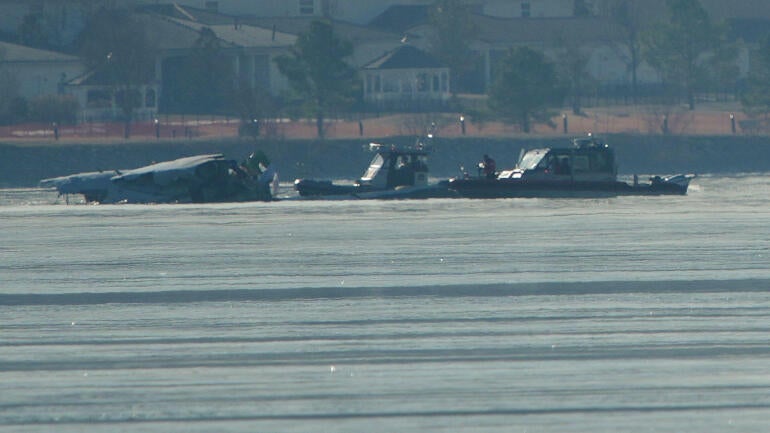
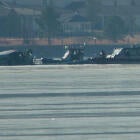
The U.S. government has admitted its role in the deadliest plane crash on American soil in more than two decades. The crash resulted in 67 deaths that included a group of elite young figure skaters in addition to their parents and coaches who had just attended the U.S. Figure Skating Championships in Wichita, Kansas.
On Wednesday, the government acknowledged that the actions of an air traffic controller and Army helicopter pilots played a role in causing the Jan. 29 collision that took place between an airliner and a Black Hawk near Washington.
Six members or associates of the Skating Club of Boston were among the figure skating community who were killed in the crash. That included teenage skaters Jinna Han and Spencer Lane, their mothers, and their coaches Evgenia Shishkova and Vadim Naumov, a two-time Olympic skater who won the pairs title at the 1994 world championships.
In all, the plane carried 60 passengers, four crew members and three soldiers.
The official response stated that the government is liable for the crash partly because the air traffic controller violated visual separation procedures that evening. That filing also stated that the Army helicopter pilots' "failure to maintain vigilance so as to see and avoid" the airline jet makes the government liable.
The filing also suggested that others -- including the pilots of the jet and the airlines -- may have also played a role in the crash. The lawsuit blames American Airlines and PSA Airlines for their roles in the crash. Both of those airlines have filed motions to dismiss.
The government has denied that any air traffic controllers or officials at the Federal Aviation Administration or Army were negligent.
While the National Transportation Safety Board is slated to release its report early next year, investigators have already pinpointed a number of factors that led to the crash. That includes the helicopter flying 78 feet higher than the 200-foot limit on a route that allowed very little separation between planes landing on Reagan's secondary runway and helicopters passing below. Additionally the NTSB has stated that the FAA failed to recognize the dangers around the busy airport despite 85 near misses the previous three years.