The Forever War: Rory McIlroy's internal battle continues as golf immortality awaits at 2023 Masters
McIlroy sits one major away from the career grand slam, yet he's been unable to tame Augusta National in 14 tries

By
Kyle Porter
•
8 min read
AUGUSTA, Ga. -- The last year of professional golf has brought about a once-in-a-generation battle between two organizations attempting to bend the future of the sport in their direction. There are agents (literal and figurative) on either side and mercenaries around every corner but only a handful of generals directing the war.
Rory McIlroy, of course, has been the most prominent among them. He fought for the future of the PGA Tour, the galvanization of professional golf and the integrity of the biggest events in the world. Whether you agree with the positions he took, it's undeniable that the conflict which has embroiled the sport over the last two years was largely shaped by his words and his power.
You have heard plenty other PGA Tour players acknowledge as much. We follow Rory. We believe in Rory. He has the future of the game in mind.
Again, it doesn't really matter whether you approve of his thought process; the point is that it would be nearly impossible to oppose this proposition: Rory has been running the show.
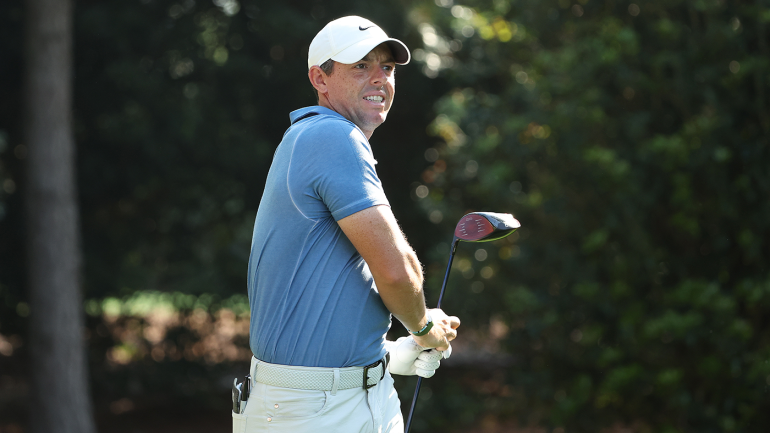
So, this week at the 87th Masters, there is a bit of irony that McIlroy -- after a year of pulling various levers and turning numerous tides -- now returns to the one place that has always eluded his control.
Who can forget that still-barely chubby body doubled over a Titleist driver in 2011 as his boyish dreams curled slowly and ran suddenly into Rae's Creek? The exasperation and frustration gave way that evening to the wave of tears he shed after experiencing what so few in the world can even fathom: having the requisite talent necessary to blow a massive Masters lead.
This is how forever wars begin.
Rory is making his 15th Masters start this year. Only two golfers have won their first Masters on their 15th attempt or later (Mark O'Meara and Sergio Garcia). It's his ninth rip at the career grand slam. No golfer has won the slam after his fifth attempt.
His issues are not physical. How could they be? Only four golfers in history have a better scoring average at Augusta National than McIlroy. Those four have combined for 10 green jackets. No one other than Rory has ever been this good at this place for this long and failed to win.
"I would say the majority of mental or emotional struggles rather than physical [at Augusta]," he said on Tuesday. "I've always felt like I have the physical ability to win this tournament, but it's being in the right head space to let those physical abilities shine through. It's been tentative starts, not putting my foot on the gas early enough. It's been -- I've had a couple of bad nine holes that have sort of thrown me out of the tournament at times.
"So, it's sort of just like I've got all the ingredients to make the pie. It's just putting all those ingredients in and setting the oven to the right temperature and letting it all sort of come to fruition. But I know that I've got everything there. It's just a matter of putting it all together."
So rarely in sports does the responsibility of performance so clearly fall upon a single individual. There's nothing like the expectation of success in golf. Nothing. If Josh Allen doesn't make the AFC Championship Game, the other team's defense might have just been better. If Shohei Ohtani doesn't make the World Series, maybe the Angles faced four aces in the AL Championship Series. In golf? There's no defense. Nobody swatting your ball out of the air. Nobody returning your backhand with an even better forehand.
When you're supposed to win the Masters, you're supposed to win the Masters. You're the best golfer on the planet, and this is the place that rewards those types of players. You just have to ... do it.
"Nothing" was Fred Couples' response when he was asked what McIlroy needs to do to win at Augusta National.
"He's just got to play golf and be better than everyone. It looks like this is another prime year. He's playing very, very well. What does he have to do? I don't know," he said.
"Is it surprising he's never won this? Of course it is, the way he plays and the way he putts and how high he hits it and how far he hits it. But it's not that easy. He just does his own deal and plays like Rory can, and he'll be just fine. Then he's got to beat two, four, five people on Sunday."
When we think of McIlroy at the Masters, Ernie Els and Greg Norman immediately come to mind. He even brought them up Tuesday. Their wars never ended, and Els once outlined the potential long horizon in Rory's future.
"When a thing stings you, it keeps stinging you," Els said several years ago. "When it gives to you, it keeps on giving. I've seen that with Gary Player. I've seen it with Jack [Nicklaus]. I've got a love-hate relationship with the place. It was always almost like a curse to me. It was not a romantic deal to me. It was a f---ing nightmare for the most part."
This is how wars become forever.
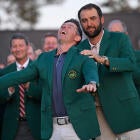
When you have The Gift, when both Tiger Woods and Jack Nicklaus have already given you the keys to their club and refused to walk it back, you are left with nobody to battle but your past and the future. In golf, and this is what makes it so bitterly unique, there's nobody keeping you from your goals but yourself.
That is why every passing Masters that Rory plays is so interesting. He's tried to talk himself into everything. One year, it was playing Augusta all the time. The next year, it was playing sporadically. Then it was convincing himself it was just another tournament. That was followed by convincing himself it was not. He juggled one year. He flew in mental coach Bob Rotella this year to give him a pep talk.
Wars are fought on many fronts.
"He will [win here]," Woods said of McIlroy on Tuesday. "It's just a matter of time. Rory has the talent. He has the game. He has all the tools to win here. It's just a matter of time. A lot of things have to happen to win at this golf course. A lot of things have to go right. I think Rory has shown over the years he's learned how to play this golf course, and you just have to understand how to play it.
"He's been there. Last year, he made a great run, put himself there. But I think that it's just a matter of time, whether it's this year or next or whenever it comes, he will get it done, and he will have a career grand slam. It's just what year it will be; it will definitely happen."
It's comments like these, the gifts McIlroy possesses, the history of the tournament and the place he finds himself -- what he wants most is perhaps the most elusive achievement in all of sports, a Masters when you're supposed to win it -- that makes the inner turmoil of the most introspective athlete on the planet such a fascinating watch.
Rory seems at peace this week. His press conference answers were easy, his banter with Brooks Koepka in a practice round playful. He joked privately about his inability to solve this place and seemed reconciled with whatever outcome this year (or perhaps any year) holds.
But that doesn't mean he doesn't want it. "No one wants me to win this tournament more than me," he said. And practice rounds are for detentes anyway because desire lays dormant until the lights come on, and, so often in golf, your desire to succeed is inversely related to your ability to sate it.
Rory's real war isn't the one he's been fighting for the last year on behalf of professional golf. It's not even one he will wage against Scottie Scheffler or Brooks Koepka or Dustin Johnson. His greatest battle is every first full week of April when he tussles with his own heart and his own contentedness and his own psychological equilibrium.
These are far more compelling dramas than anything else in sports because, while the nature of a person facing off against another person in a physical dual is enthralling, nothing can match the drama of one fighting with the person in the mirror.
To achieve something we doubt we can achieve is a fight we all face every single day. Though trying to shoot 67s at Augusta National is not relatable at all, that internal struggle of ambition is the most relatable thing in the world.
The eternal war that Rory wages is neither external nor able to be understood by most everyone who has ever played professional golf. For it is not a conflict with those around him -- that would be much easier to win than the one in which he is engaged. He's been fighting that one for the last year, on and off the golf course. He's won several battles, and the war is mostly in hand.
The irony, after a year of fending off everyone who came for his league and his organization, is that now Rory must return to a war he must wage for as long as it will last.
For the grapple with Augusta and its jackets is not about Augusta and certainly not about jackets. Not at this level. Not for Rory. Not this year. Maybe not any year.
No, the most compelling theater in sport is such because of this unfortunate reality: Rory's war is not against a league or a person or a tournament. It is far more human than that. Far more relatable and identifiable.
After 15 years of playing some of the best golf in the modern era, the greatest truth that golf reveals about us all remains true about one of the best to ever do it: Rory McIlroy's true war is only and forever with himself.