MLB Power Rankings: Every club's best first-round draft pick, including Clemens, Jeter and Bonds
The draft is this week, so let's go with some draft flavor in the rankings

By
Matt Snyder
•
13 min read
As we begin yet another week without actual Major League Baseball, there is at last something of substance upon which to focus for baseball nuts. That would be the MLB Draft, which starts on Wednesday.
In the spirit of the draft, our rankings this week will focus on each team's best first-round pick.
I cannot stress enough that these are first-round picks only. There have been legions of stars who were drafted from lower than the first round or signed as international free agents. Not only that, but the draft didn't even start until 1965 and, in judging some of the first rounds from the early years, didn't really hit its stride for a while.
This is also the toughest sport to draft for many reasons. Every single first round we'll see picks that look baffling with the benefit of hindsight, but made sense at the time. What you'll see below is a whole lot of hindsight. I'm judging how the picks turned out.
This was incredibly tough to actually rank. I tried to weigh so many factors, such as the obvious (how good was the player) against how early/late the player was selected (again, among first rounders only) and how actually adept was the pick (that is, if the team passed on him, could they have had someone at least marginally as good or would they have gotten a career minor-leaguer instead). Did the draftee help the team win a championship was considered, but not an overriding factor, as one player can only make so much difference in baseball. Oh, and as always, the people on social media are right.
Off we go.
Best first-round pick
| 1 |  |
| Roger Clemens was so good in college, the award for best collegiate pitcher is now named the Roger Clemens Award. Among the pitchers chosen before Clemens got the call at 19: Stan Hilton, Jackie Davidson, Darrel Akerfelds, Ray Hayward, Joel Davis, Rich Stoll, Wayne Dotson and top overall pick Tim Belcher -- who refused to sign with the Twins Wow. The second-best player from this first round who did sign? Dan Plesac. The best position player? Ricky Jordan. Roger Clemens was the best first-round pick of all time, even if it's because too many other teams missed. | |
| 2 |  |
| They've had some good ones. Jered Weaver going 12th in 2004 was quality. Frank Tanana was the 13th overall pick in 1971 and put together a very good career. The easy pick, of course, is Mike Trout. He'd have been the best first-rounder in the history of the franchise if they took him first overall, but they actually got him 25th. Among the players picked before Trout in the 2009 first round who never even made the majors: Donavan Tate (3rd, Padres ), Matt Hobgood (5th, Orioles), Bobby Borchering (16th, Diamondbacks ), Chad James (18th, Marlins), Jiovanni Mier (21st, Astros) and Jared Mitchell (23rd, White Sox). Let's not paint the 2009 Angels as secret geniuses, though. They had the 24th and 25th picks and technically took Randal Grichuk before Trout. | |
| 3 |  |
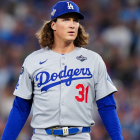
| Bob Welch (1977), Rick Rhoden (1971) and Rick Sutcliffe (1974) all went in the 20s, but this isn't even close. In the 2006 draft, some quality players like Evan Longoria , Andrew Miller and Brandon Morrow (when healthy) were taken before Clayton Kershaw, but so were Luke Hochevar, Greg Reynolds and Brad Lincoln. Right after Kershaw? Drew Stubbs and Billy Rowell. | |
| 4 |  |
| Did you know Dale Murphy was drafted as a catcher (5th, 1974)? He's the runner up here. The Braves had the top overall pick in 1990 and they didn't miss: Chipper Jones. There wasn't another good non-1B infielder taken the rest of the round. | |
| 5 |  |
| Twice they had the first overall pick with a "can't-miss" prospect and didn't miss. Do we pick A-Rod (1993) or Junior (1987)? We'll go Ken Griffey Jr. [Note: Mike Moore in 1981 and Al Chambers in 1979 also went first overall; I was just pointing out the "can't miss" part]. | |
| 6 |  |
| The Yankees have only picked first twice and missed both in Ron Blomberg and Brien Taylor. They did hit on their only other two single-digit picks in a big way. Thurman Munson went fourth overall in 1968 and Derek Jeter was sixth in 1992. Both won multiple titles with the Yankees. Surrounding both of them in the first round was mostly mediocrity. I'll go Jeter, but either pick would be fine. | |
| 7 |  |
| Shawn Green (16th, 1991), Chris Carpenter (15th, 1993) and a host of others were good picks (Vernon Wells, Lloyd Moseby, Shannon Stewart, Noah Syndergaard , Marcus Stroman ), but there is only one selection here. In the 1995 draft, the Jays took a lanky high school pitcher named Roy Halladay 17th overall. The next four picks and six of the next seven never made the majors. | |
| 8 |  |
| The two biggest names heading into the 2001 draft were the best collegiate pitcher (Mark Prior) and hitter (Mark Teixeira). The Twins opted to take local high school catcher Joe Mauer (who was signed to play quarterback for Florida State). Injuries ruined Prior, Dewon Brazelton at No. 3 was a bust and Gavin Floyd (fourth overall) had an admirable career but was never a star. Teixeira was very good for a long time, but Mauer was better. Past Teixeira at fifth overall, the rest of the first round was pretty barren. Excellent pick. | |
| 9 |  |
| Maybe Alex Bregman (2nd, 2013), Carlos Correa (1st, 2012) or George Springer (11th, 2011) get there, but there's more competition. Lance Berkman went 16th in 1997, Billy Wagner was the 12th overall pick in 1993, but I'm going with the Hall of Famer Craig Biggio. The Astros got him 22nd overall in 1987. Six players picked ahead of him never made The Show. The top pick, Ken Griffey Jr., turned out fine, though. | |
| 10 | 
Athletics
|
| Matt Chapman went 25th in the 2014 draft and he's already rocketing up the charts, but the top two here are easily Mark McGwire (10th in 1984) and Reggie Jackson (2nd in 1966). I'll go with Reggie. The player picked before him in that 1966 draft? The Mets took a high school catcher named Steven Chilcott, who never made the majors. | |
| 11 |  |
| All due respect to Ryan Braun (5th, 2005), Prince Fielder (7th, 2002), Gary Sheffield (6th, 1986) and several other good first-round selections, the Brewers have a big top two. Robin Yount went third overall in 1973 behind David Clyde and Paul Molitor went third in 1977 behind Harold Baines and Bill Gullickson. Interesting note here is Yount went immediately before Dave Winfield. Molitor went before two players who didn't make the majors. Doesn't that make Molitor the better pick? Tough tiebreaker. | |
| 12 |  |
| Going by WAR it's Rafael Palmeiro, who went 22nd in 1985. Kerry Wood is second. Yeah. Third? Kris Bryant and he's the pick. Sure, he went second overall, but many were clamoring for the Cubs to take pitcher Jon Gray. Instead, Bryant was the pick at second overall after Mark Appel. By the end of 2016, Bryant had a Rookie of the Year, MVP and a World Series ring. | |
| 13 |  |
| By WAR, the top two Giants picks were Will Clark (2nd, 1985) and Matt Williams (3rd, 1986), but right below them are Buster Posey and Madison Bumgarner, who had a hand in three titles. In 2008, Posey went fifth overall behind Tim Beckham, Pedro Alvarez, Eric Hosmer and Brian Matusz. The pick right after Posey was Kyle Skipworth, also a catcher. The best player the rest of the round who signed that year was Brett Lawrie. I think the Giants took the right one. We'll go with Posey, even if Bumgarner is a tough omission. | |
| 14 |  |
| Some good ones here. Chris Sale (13th, 2010) is a recent one. Harold Baines (1st, 1977) is a nice throwback. The Robin Ventura selection at No. 10 in 1988 was a nice stroke, but it was only a setup for the best first-rounder in franchise history. In 1989, the Sox took Frank Thomas seventh overall. The six picks before The Big Hurt? Ben McDonald, Tyler Houston, Roger Salkeld, Jeff Jackson, Donald Harris and Paul Coleman. The two picks after Frank? Earl Cunningham and Kyle Abbott. Then came two players who didn't sign and then Jeff Juden, Brent Mayne, Steve Hosey, Kiki Jones and we'll just stop there. What a pick, 1989 White Sox. | |
| 15 |  |
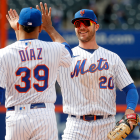
| Ah, what could have been. Sure they won one title, but more would've been OK, too. Darryl Strawberry was the first overall pick in 1980. Dwight Gooden went fifth overall in 1982 behind Shawon Dunston, Augie Schmidt, Jimmy Jones and Bryan Oelkers. Due to this, the pick is Gooden. | |
| 16 |  |
| Before 2000, the choice was between Greg Luzinski and Lonnie Smith. Now it's an easy top two with Chase Utley (15th, 2000) and Cole Hamels (17th, 2002), both of whom were major contributors to the 2009 World Series title. I'll go with Utley for two reasons: He was an everyday player and that there was a whole lot of nothing around him in his draft. If they didn't pick him, it was a bust. Starters like Jeremy Guthrie, Matt Cain and Joe Blanton went within eight picks of Hamels. Sure, they wouldn't have been nearly as good, but at least they were quality major leaguers. The next position player after Utley was taken who was worth anything was Kelly Johnson (38th overall). | |
| 17 |  |
| Even if there's a thought maybe they should have taken Bonds, I'm sure the Reds are OK with Barry Larkin fourth overall in 1985. The Hall of Famer was the shortstop on the 1990 World Series champs and won an MVP. This isn't really even close, either. The next-best Reds' first rounders are the likes of Todd Frazier, Jay Bruce and Gary Nolan. | |
| 18 |  |
| Tough call here between Ryan Zimmerman (4th, 2005), Stephen Strasburg (1st, 2009), Bryce Harper (1st, 2010) and Anthony Rendon (6th, 2011). Strasburg and Harper were the most obvious and consensus number ones we've seen in quite a while. Rendon kind of fell into their lap and Francisco Lindor went two picks later (and Javier Baez right after him). Zimmerman is a franchise fixture, but Ryan Braun went immediately after him (they were both drafted as third basemen). I think I'm gonna go with Strasburg, because the fervor around his promotion was part of what turned the franchise around and he was still around for the title. He's not higher because he was the consensus number one to the point anyone would've taken him. | |
| 19 |  |
| Max Scherzer at 11 in 2006 is the pick. The best player the rest of the round behind Scherzer was Ian Kennedy (21st). They are, however, docked points because basically all Scherzer's value came with other teams. | |
| 20 |  |
| Even if the team in front of you screws up the pick, you still have to make the right one. So when the Padres took Matt Bush first overall in 2004, the path was clear for Justin Verlander to the Tigers. Good thing they didn't overthink it. The rest of the top 10 that year: Phil Humber, Jeff Niemann, Mark Rogers, Jeremy Sowers, Homer Bailey, Wade Townsend, Chris Nelson and Thomas Diamond. | |
| 21 |  |
| Manny Machado at three in 2010 was good. Bobby Grich at 19 in 1967 was great. O's fans can dream on Adley Rutschman being the pick here someday, but this isn't close. In 1990, the Orioles grabbed Mike Mussina 20th overall out of Stanford. Between Chipper Jones going first and Mussina at 20, the best players were Alex Fernandez, Carl Everett and Jeromy Burnitz. After Mussina and through the sandwich round, the next best players were Rondell White and Steve Karsay. | |
| 22 |  |
| Andrew McCutchen was a great pick at 11 in 2005. They didn't miss at the top spot with Gerrit Cole in 2011, but there's only one pick and let's talk about it. Barry Bonds' father was a great player for years (three-time All-Star), so there was family pedigree. Barry was coming from college, so it's not like experience should have been a concern. And yet, five players were taken before him in 1985: B.J. Surhoff, Will Clark, Bobby Witt and Barry Larkin. Oh wait, that's the top four. The White Sox took high-school catcher Kurt Brown fifth with Bonds falling to the Pirates sixth. Brown never made the majors. Bonds did the following year and stayed there for 22 years. Of course, didn't he fall into the Pirates' lap? They didn't win a title with him and he spent more seasons with the Giants. Tough to rank. | |
| 23 |  |
| With all due respect to Greg Swindell (2nd, 1986) and Charles Nagy (17th, 1988), both quality pitchers, the choice here is between two players taken in the '90s (though Francisco Lindor going 8th in a stacked 2011 draft is rising the ranks): Manny Ramirez went 13th in 1991 and CC Sabathia went 20th in 1998. Tough tiebreaker time: Though it would've been a big miss in either case, the Indians could've had Cliff Floyd or Shawn Green instead of Manny (they both went in the next three picks). There were no starters worthwhile taken after Sabathia until Mark Prior went 43rd overall (and he didn't even sign out of high school). CC is the pick. | |
| 24 |  |
| After the top two picks in 1973, the Padres were sitting pretty -- even if they didn't know it at the time. They were picking fourth but Robin Yount and Dave Winfield were on the board. The Brewers took Yount, so Winfield it was. For those curious, Tony Gwynn went in the third round in 1981. The Padres' second-best first-round pick was Derrek Lee (14th) in 1993. | |
| 25 |  |
| George Brett! Nope, he was actually a second rounder. Zack Greinke in 2002 was an exceptional pick for the Royals. The five picks before him: Bryan Bullington, BJ Upton, Chris Gruler, Adam Loewen and Clint Everts. Prince Fielder went directly behind Greinke, but the best players after that through pick 14 were Jeff Francis, Joe Saunders and Khalil Greene. | |
| 26 |  |
| With all the Cardinals' history, their first-round picks aren't quite as storied. It's not just because they pick toward the back often, either. Their single-digit picks, in order of career WAR: J.D. Drew, Andy Van Slyke, Terry Kennedy, Dmitri Young, Braden Looper, Bob Meacham, Leron Lee, Mike Dunne, Paul Coleman and Ed Kurpiel. The best first-rounder? Hall of Famer Ted Simmons, who went 10th in 1967. The combined WAR of the next six players was -7.8, though Bobby Grich went 19th overall. | |
| 27 |  |
| It's a two-horse race here between David Price (2007 first overall) and Evan Longoria (2006 third overall). I'll go with Price by a nose because they didn't screw up number one in a draft where they easily could have. Longoria was an excellent pick behind two busts, but Clayton Kershaw went 6th and Max Scherzer went 11th. Another tough tiebreaker. | |
| 28 |  |
| Somewhat surprisingly, the Marlins have only had the first overall pick once. They did well with it, taking Adrian Gonzalez out of high school in 2000. The rest of that round was pretty marginal other than Chase Utley at 15. I'm taking Christian Yelich , though. In 2010, Yelich went 23rd overall. From Chris Sale at 13th through the end of the first round, the only worthwhile players were Yelich and Mike Foltynewicz. Yelich was an absolute steal. This isn't higher because he didn't become a superstar until he left Miami. | |
| 29 |  |
| Two choices here. Todd Helton went 8th in 1995 and Troy Tulowitzki went 7th in 2005. I'll go Helton. He did more for the Rockies anyway, but also the next-best position player after him in his draft was Geoff Jenkins. In 2005, the Rockies could have gone with Andrew McCutchen or even Jacoby Ellsbury. | |
| 30 |  |
| Two here stand head and shoulders above the rest. Kevin Brown went fourth overall in 1986 and Mark Teixeira was fifth in 2001. I was set to pick Brown because the Rangers got more value out of him, but trading Teixeira to the Braves is one of the more significant moves in building the 2010 and 2011 pennant-winning Rangers. Those were their first two in history. Also, the seven players picked after Teixeira either didn't make the majors or posted a negative WAR. Tex it is. Oh, and that makes sense! | |
Here's hoping your favorite teams sets a new standard this coming Wednesday.