Rim protection: Pau Gasol beasting among best, Brook Lopez struggling
Brook Lopez is struggling, Roy Hibbert is still good, and wait, Chris Kaman?

By
Matt Moore
•
3 min read
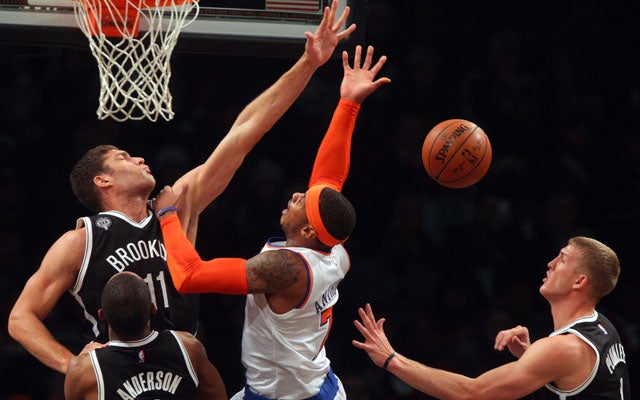
Last year, the NBA started publishing "tracking data," which is gathered using a system of cameras that track every player movement on the floor. It provides a bunch of cool stuff to look at, and maybe one of the most useful is field goals protected at the rim. It's a great measure of big men and how they're succeeding, or struggling, on that end.
TheBrooklynGame.com did an analysis to look at the most shots defended at the rim, and defenders' allowed field goal percentage.
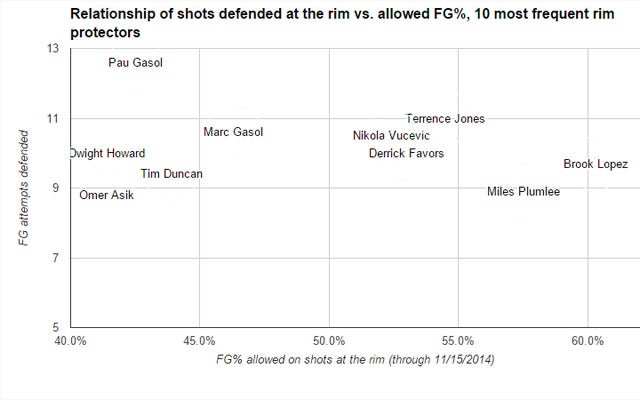
The two biggest takeaways there? Well, as Brooklyn Game points out, yikes, Brook Lopez. He has really struggled under Lionel Hollins, and you wonder how much of this is in concert with how other "tough love" coaches have struggled to bring the best out of him. It's a problem for the Nets because Kevin Garnett can't clean it up. The Nets are fortunate to have a lot of quality perimeter defenders, but that's still an awful lot of shots for Lopez to be defending, and doing it poorly.
On the other hand, Pau Gasol has been a monster. Much of this is due to the ability to only stay low and just be tall, thanks to Joakim Noah's versatility and mobility in defending pick and roll combos and generally creating havoc. But Gasol has been astonishingly sound and isn't being put into constant mismatches like he was in LA. This is a great example of how taking a veteran talent who struggles in an area and moving him to a system that doesn't expose him to weaknesses in his game can make him into a huge plus.
Nylon Calculus has a new metric they've developed called Rim Points Saved per 36 minutes. The idea, briefly, is that if opponents make 79.1 percent of all shots at the rim on average (which they did last season), and you multiply all attempts at the rim times the two points they score, then take 79 percent, you see what an "average" opponent would score on a players' given number of attempts defended. Subtract how many they actually are allowing this season, and you have the number of points they save against the average defender.
In short, the metric tells you how good a player is at defending the rim with consideration to the average number of misses you can expect a player to create just by showing up.
Then you adjust per minute to give you a better indication of how they're doing when they're actually on the floor.
Lot of surprises there, including Lopez's teammate Mason Plumlee ahead of Tim Duncan. Then again, Hollins is mostly using Plumlee only against bench players so he's boosting numbers that way. Same might be true of Gobert. Omer Asik, Roy Hibbert, Gasol ... those are all established. Maybe most impressive is Robin Lopez and Chris Kaman's numbers together. That's a big deal for Portland, which was atrocious last year on defense. The Blazers finished 16th in defensive efficiency, but had outlier performances against the West that were much worse. They've ticked up to 10th this season.
DeMarcus Cousins' spot here is important, as he's become maybe the most underrated big man defender in the league, along with Timofey Mozgov who's right below him.
Want a good explanation for why the Clippers have struggled so much? Spencer Hawes was the worst of any qualifying player, and Blake Griffin isn't far from him. But one thing with Griffin, along with, you'll notice, Anthony Davis right above him, is that:
Scheme plays a huge roll in "Contest%" one of the more important stats. Last year, power forwards and centers (broadly defined) had an approximately 11% gap between contest percentages, 44% for C's and 33% for PFs. Hopefully that will forestall any “but Anthony Davis?!?” questions.
via Early Returns: SportVU Rim Protection Values.
So your typical power forwards are going to struggle in this scheme, which also shows why Noah is so low on this list. But still, some interesting takeaways from defensive improvement. Let us know what stood out to you in the comments.
(Note: I'm the editor in chief of a network of sites that includes Nylon Calculus. The data I thought was relevant here, so I included as I would another site's if I came across it.)