Why Real Madrid would be wrong to sack manager Xabi Alonso after Champions League defeat at home to Man City
The results may not be there, but if you dig a bit deeper, Los Blancos are producing numbers that warrant better results

By
James Benge
•
6 min read
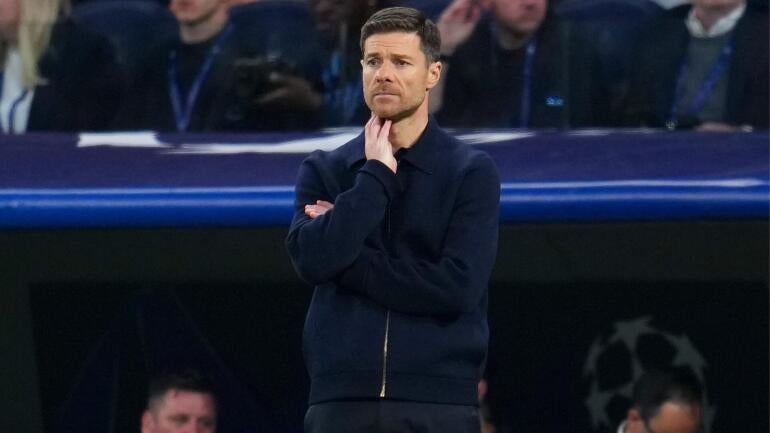
Is this it for Xabi Alonso then? Vinicius Junior misses a few chances, Antonio Rudiger goes rogue in his penalty area and Real Madrid conclude that there can be no more time afforded to a coach with a proven track record of success as a player with this club and as a coach in the most remarkable of circumstances.
That had been the suggestion in the Spanish press since Saturday's defeat at Celta Vigo. Fail against Manchester City and Alonso was on the brink. By his standards and Madrid's, this team had been wobbling over the last month with two wins and three defeats in their last eight. Florentino Perez has dispensed with coaches for less. But those managers have not been Alonso, a coach who was supposed to be empowered to bring about a "new era." If this is the end, this probably isn't going to be a time period that gets much of an airing on a Perez Eras Tour.
And if it is the case that Alonso departs after 22 games, then it is a suitably baffling plot twist for a club that cannot shake its inclination towards the telenovela. You simply have to hang around for the next episode because right now it's not entirely clear why exactly Manchester City beat Real Madrid, and it's not certainly entirely clear why that particular result should cost Alonso his job.
To address that latter point first, a second defeat to English opposition means that Madrid are seventh in the league phase of the Champions League with games against Monaco and Jose Mourinho's Benfica to come. Though their old boss would doubtless love to play spoiler, Madrid can probably expect to get six points, and with that, they would be a near lock for top eight. Doubtless, it would be preferable to have the home advantage that comes with a top-two seeding but there is no cause for panic.
Nor is there in La Liga. Again, a four-point deficit to Barcelona is suboptimal, but Alonso has beaten them once this season. In the month since, they have nine points from a possible 18 but scored 10 goals from 14.4 expected goals (xG). A bit of better finishing from those not named Kylian Mbappe, sidelined Wednesday with a muscle issue, and the table might look very different. Fundamentally, there is nothing that has gone wrong on the pitch so far this season that cannot be rectified.
Wednesday's display too was by no means a disaster. Giving up over 2.5 xG to City doesn't look nice in isolation but 1.92 of it came in the space of 10 weird minutes late in the first half. Thibaut Courtois spilled a corner, Rudiger got too close to Erling Haaland. Do you sack a manager because two experienced defenders made individual errors? Would you continue to employ him if Brahim Diaz got his header on target, if Vinicius Junior's bicycle kick was struck that bit sweeter or if Mbappe had been a bit fitter and changed this game from the bench?
Perhaps not, given so few of the questions around Alonso have been about his ability to coach this team successfully. He can broadly say he has done that. Last season in La Liga and Champions League play, Madrid created shots worth 1.76 non-penalty expected goals (npxG) and gave up 1.17. This season, they are at 1.99 and 1.11, their points per game tally drifting up too. They aren't yet at best-team-in-Europe levels but Alonso knows better than most that this club can take its time to move through the gears. Right now, they are motoring along quite nicely.
Then again, this is Real Madrid. This isn't a tactics gig, as Thierry Henry explained on the UEFA Champions League Today pre-match show.
"You have a guy there who is coaching a bit too much and not managing enough," he said. "Gareth Bale was sitting there the other day and telling us that at Madrid, what you need to do is manage players.
"I feel sorry for Xabi Alonso because you could see what he did at Leverkusen when he was able to coach a team that was going to listen to what he wanted to do. It's a different ball game."
It is certainly true that the way Alonso started his managerial career would be asking for trouble at Madrid. When he took his first senior coaching position with Leverkusen, the Spaniard surprised his squad with an obsessive focus on tightening up the defense. Some within the Bay Arena dressing room had expected one of the great deep playmakers of his day to send them straight in at the deep end with front-footed positional play and were surprised by what they got.
A young squad who had never won anything as a collective could hardly question Alonso's methods. A group who won the Champions League before many were old enough to hire a car? They might have preconceived notions about what happens (or does not) when they lose the ball. Take, for instance, Vinicius Junior, whose supposed rift with Alonso has been as major plotline through the early months of the season as the goalscoring feats of Mbappe. The vast majority of his career has been under the tutelage of Zinedine Zidane and Carlo Ancelotti, both of whom interpreted the Madrid management gig in laissez-faire fashion. A hands-off approach brought both collective and individual glory without players being summoned in for daily pre-training meetings.
Perhaps Wednesday night functioned as a reminder that not everyone has been alienated by Alonso. Rodrygo came out with a punchy defense at the final whistle, insisting, "We are with [Xabi Alonso]. We need this unity to move forward." Their relationship during the Club World Cup had been the first sign of superstars butting up against this new style of management. Rodyrgo's embrace of his coach after his substitution is a reminder that bridges can be built. Jude Bellingham was similarly supportive while Raul Asencio was even more forthright.
"We are with Xabi Alonso to the death," said the young center back. "We understand his message. You saw the change of attitude tonight."
That last line is the most significant. It is easy for players to say one thing to the cameras and another behind closed doors but for much of this game, Madrid played like a team fighting for something or someone. The Vinicius, Rodrygo tandem might have created even more than it did. In the first half in particular, there was much to admire in the defensive organization, the way there was always a second body to block a Jeremy Doku cross with Bellingham and Dani Ceballos working hard without the ball.
More than any coach, Alonso finds himself in a results, not performance business, but there was nothing in this game to suggest that future results are beyond Madrid. After all, they have a coach whose methodical approach can have a meaningful impact on the vibes that seem to carry more weight than any predictive metric.
Leverkusen players adored Alonso's eye for the "small details." By the time he had been in the job for a year, his ability to coach them on so many facets of the game was functioning as a type of management. His team were so prepared and drilled that they came to believe at the deepest level that they could not be beaten. There was a reason for that meme that pitted Alonso's Leverkusen against Madrid in a never-ending, no-one loses sort of game. Alonso had imbued Leverkusen with that very Madrid-ian belief in their own invincibility.
He can coach squads and he can motivate them, too. And if a serial winner as a player and coach can't find a way to get these players bought into a more organized way of playing, can anyone? If Alonso goes, is there any point in asking his successor to do much more than take the pre-match press conferences and pose for photos? Perhaps they could pick the dressing room music too and hang the Christmas decorations? After all, should Alonso go, then Madrid are making plain that they want a vibe conductor rather than a tactician. They might as well lean into it.