Two years into Sir Jim Ratcliffe's Man United tenure, he has proven himself unable to restore the glory days
He vowed not to make a 'knee-jerk' coaching decision two months ago, but the club did just that on Monday, firing Ruben Amorim

By
James Benge
•
5 min read
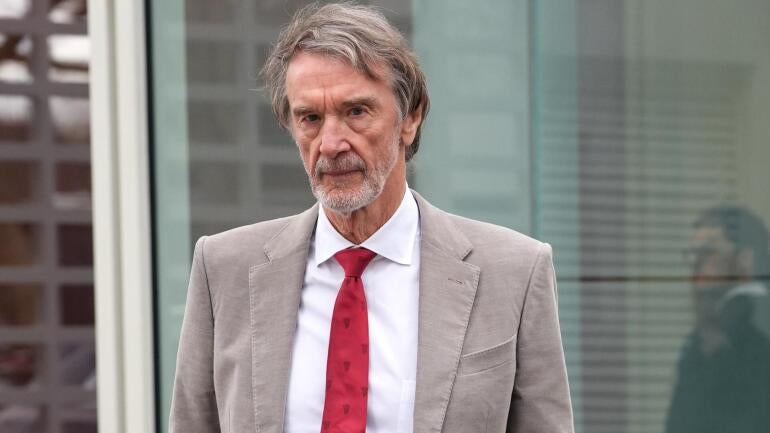
When Sir Jim Ratcliffe finalized his purchase of a minority stake in Manchester United in the first few weeks of 2024, there was one date that was continually hammered home by the incoming sporting hierarchy. Project 150, chief executive Omar Berrada dubbed it. Manchester United's semiquincentennial must be marked in style with the Premier League title. Supporters could not be expected to wait for United to get to the promised land the long way round, Ratcliffe insisted.
"The key thing is our trajectory," he insisted, "so that people can see that we're making progress. I think it's the club's 150-year anniversary in 2028 … if our trajectory is leading to a very good place in that sort of timeframe, then we'd be very happy with that."
It is worth bearing that in mind, given that we are near equidistant between Ratcliffe entering United and what the club expect to be their grand moment of rebirth. The season in which they are due to win the league title, they haven't sniffed since Sir Alex Ferguson's 2013 retirement, is the one after next. Do they feel like a team that could be champions by then?
If the key thing is United's trajectory, then we might consider how the sporting hierarchy have shepherded them to the position they find themselves in. The implementation of a fresh sporting hierarchy afforded INEOS the perfect opportunity to say thanks for your service to Erik ten Hag after a second season in which the Dutchman had delivered a dreary eighth-place finish. The world knew that Ratcliffe was inclined to do exactly that, holding talks with Thomas Tuchel among others before blinking off the back of an FA Cup triumph.
Everyone makes mistakes. Most don't compound them with £200 million of waste in a transfer window only to see the inevitable reality two months later. Even fewer hire one of the most esoteric young coaches in Europe -- one who had already talked himself out of the Liverpool job with his didactic approach to a 3-4-2-1 -- in spite of arguments to the contrary made by the sporting director they had paid millions and waited months for.
That head coach then ostracized a string of the academy graduates and young footballers whose continued presence in the team is one of the core tenets of Manchester United football club. After a first half season that ought not to have inspired confidence, an organization that had supposedly been on the cusp of running out of money found enough to overwhelmingly address one problem position but few others. Then, as performances are starting to swing upwards in a way that suggests results might yet follow, you sack that same head coach -- or should that be manager -- citing your fears as to what might happen to the season if Ruben Amorim remains in charge. Nothing, of course, to do with the quite pointed statements he has been making about you in public.
If that is the direction of travel, does it feel like United are on a road paved with gold?
On the field, things have arguably been looking up. United have dragged themselves out of the gutter. They aren't anywhere near the stars just yet, but sketch out for a minute how they might get there. It would probably help no end for them to return to the Champions League next season, if only to boost the Old Trafford treasury so they could finally address the yawning chasm where a midfield ought to be.
It feels a bit of a long shot for United to achieve that off the back of draws with Wolverhampton Wanderers and Leeds, but here's the thing: it is extremely likely there will be five qualification spots for the Premier League in next season's Champions League. All that is separating the Red Devils from fifth is goal difference. That upswing in performances has resulted in the league's fifth-best non-penalty expected goal difference. It doesn't take the sort of top-tier data department United lacked for so long to tell you that a team on the cusp of fifth with the fifth-best underlying metrics -- their actual goal difference looks solid too -- has quite a good chance of getting fifth. All the more so when the team currently occupying it, Chelsea, have dived headfirst into the unknown.
United have dived off after them. Darren Fletcher, interim head coach without a timescale on when he might be replaced, has never managed a senior game in his life. His U18s play in a different system to the senior team. It is an almighty gamble to assume that a rookie can "give the team the best opportunity of the highest possible Premier League finish," altogether greater than it was to gamble on Amorim's sniping not having an impact on the field.
It was almost certainly not the case that Amorim was going to be the man to deliver on Project 150. His formation was too dependent on having the sort of dramatic talent superiority that he had over 15 other teams when he was winning titles in Portugal. He himself acknowledged that, saying on Christmas Eve, "to play a perfect 3-4-3 we need to spend a lot of money and need time." Even accounting for recent improvements, you can't expect hundreds of millions to get your system working when your attempts so far have delivered six fewer points than Fulham during your tenure.
The conclusion Ratcliffe et al reached might be the right one, but yet again it is their methodology that leaves something to be demanded. CBS Sports sources suggest that United are likely to assess the managerial market with a view to a permanent appointment closer to the summer, when a glut of high-grade coaches might leave the international game and join a pool that could include Oliver Glasner, Marco Silva and Enzo Maresca.
It is just the trajectory of reaching this point that should worry supporters and prospective United employees. After all, it was two months ago that Ratcliffe was vowing not to make a "knee-jerk" decision on a coach he thought deserved a three-year go at the job. Amorim had been afforded money that United had been indicating earlier in the summer might not be there. The squad teeters on the brink of being too ill-shaped for managers who don't want to play a back three, most managers, in other words. It is just about usable, but the next permanent coach might ask how he is supposed to play Amad Diallo and Bryan Mbeumo together, what he is now supposed to do with Patrick Dorgu and how there came to be so few central midfielders of quality.
Two years into Ratcliffe's stewardship, United find themselves where they were, usually on a minimum biennial basis, from the moment Ferguson ceded the club he had built to the Glazers. The squad needs remolding and the playing style is probably going to be ripped out root and branch. Go get the board: looks like we're back to zero days since our last nonsense.
As for Project 150, perhaps it's time for a reassessment of goals. Start planning now and 2078 really could be a year to remember for United fans.