From David Arias to Big Papi, David Ortiz's career arc was an unusual one
From player to be named later to likely Hall of Famer

•
1 min read

Now that Red Sox designated hitter David Ortiz has played his final game, it's as good of a time as any to review his legacy. That includes, among other aspects, his unusual career arc.
Everyone knows about Ortiz's impressive longevity -- he played in parts of 20 seasons, comprising 10 All-Star Games and seven (going on eight) MVP ballot appearances. What's perhaps not as appreciated is all the unusualness that accompanied that longevity.

In retrospect, the oddness surrounding Ortiz's career began before he made his big-league debut. Originally a member of the Mariners organization, he was traded to the Twins as a player to be named later in exchange for Dave Hollins. (All told, Hollins played in 28 games with the Mariners.) Over the ensuing two-plus decades, Ortiz would change his name (from David Arias) and then make the remarkable transition from seeming afterthought to Hall-of-Fame-caliber hitter look easy -- and it's not easy ... it's like steering a conversation from Martin Van Buren to FIP, in that it requires stamina and ability.
Ortiz's weird arc didn't stop there, obviously. Everyone knows how things played out in Minnesota. He arrived as a 21-year-old and became a fixture as a 24-year-old. Yet Ortiz didn't reach his heights until after he was non-tendered by the Twins following a then-career-best 120 OPS+. Later he would criticize Minnesota's hitting philosophy, all but fingering the Twins as the Spider Kelly of the majors -- that is, they taught everyone to hit like lightweights.
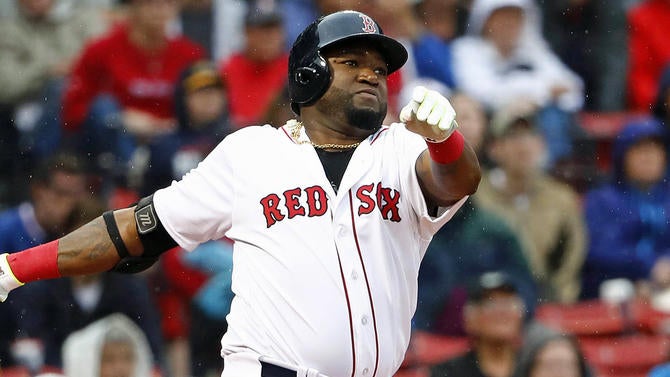
With Boston, Ortiz became a franchise icon thanks to his personality and penchant for timely hits. But even so, he experienced some turbulence that added spice to his career stew. Ortiz slumped every April from 2008 through 2010, and had rough first halfs in 2009 and 2015. In fact, his 2009 season as a whole looked like the beginning of the end. Ortiz posted just a 102 OPS+ -- a substandard mark for someone whose raison d'être is hitting baseballs.
Yet Ortiz nevertheless rebounded -- to the extent that, in retrospect, it was silly to think he was nearing the end of his utility as a 33-year-old. Here we are, some seven seasons later, after Ortiz authored the best 40-year-old season of all-time. Who would've thought?
As much as any other comment, that question is the one that best defines Ortiz's career.