Trae Young trade grades: Hawks get 'B+' for sending former face of their franchise to Wizards
The Trae Young trade makes sense for both sides

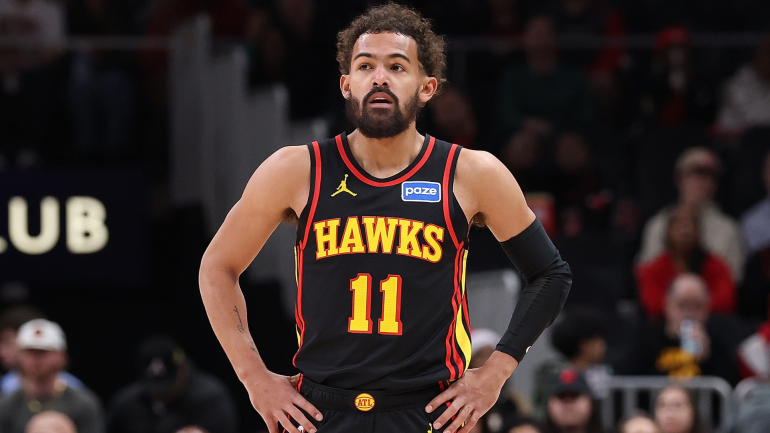
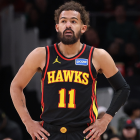
Trae Young's time as an Atlanta Hawk has officially come to an end. On Wednesday, the four-time All-Star was traded from the only NBA team he's ever known to the Washington Wizards for CJ McCollum and Corey Kispert.
On the surface, the deal is somewhat strange. Why would the Hawks trade a superstar like Young without getting back any young players or draft picks? And why would a Wizards team add such an expensive veteran midway through what has thus far been a lengthy rebuild? Well, for reasons we'll cover in our grades below, the deal actually makes a fair bit of sense for both sides.

Atlanta Hawks: B+
It has become clear throughout this season that the Hawks are ready to move forward without Young on their roster. They are just 2-8 with him on the floor this season and 16-13 without him. The Young-less Hawks have defended better than they ever did with the small and defensively indifferent Young on the court. They're passing the ball more. Jalen Johnson is heading for his first All-Star appearance, Nickeil Alexander-Walker has broken out with more on-ball opportunities, and with a high lottery pick coming from New Orleans, Atlanta saw an opportunity to pivot around a style and timeline that fits the other players on their team more than the ball-dominant Young.
Let's make this clear from the jump: this was a cap dump. By making this move, the Hawks go from a team slated to starting the offseason above the cap to one that could have as much as $30 million or so in room if it wants it. Atlanta has more moves it wants to make, and it couldn't make them with a $49 million player option owed to a point guard they fundamentally no longer wanted.
So what is that next step? The obvious answer is an Anthony Davis trade. They've been linked to the Dallas big man for weeks, and if the price is right, they could very easily pull the trigger. Moving Young first allows the Hawks to add Davis without worrying about the luxury tax or finding proper depth next season. While he doesn't exactly fit the timeline of the younger remaining Hawks, he certainly checks the defense and athleticism boxes they've leaned into this season.
A Davis trade is by no means a must, though. It's entirely possible that the Hawks just wanted to redistribute Young's money to multiple players. Say they enter next offseason with that $30 million or so in cap space. They could attempt to use most of it to sign a replacement guard, someone like Coby White from the Chicago Bulls, with the idea that they could get 80-90% of Young's production at half of the price. The Hawks still need some shot-creation out of their guards. They just may not want to pay max money to get it from a player as flawed as Young. They'll also have the cap room mid-level exception of around $10 million to use on depth as well, potentially a center to replace Kristaps Porziņģis.
The sky is really the limit here for Atlanta. The most expensive player on next year's roster is Jalen Johnson at $30 million. We exist in an NBA in which some teams have two or three players commanding salaries in the $40-50 million range. Depth is at a premium for many of the older, top-heavy contenders. Atlanta now has a chance to build a deep, versatile roster that's also financially sustainable in the apron eras. We don't know what comes next, but we do know that the Hawks are extremely well-positioned to build whatever sort of team they want.
And don't sleep on the players they acquired in the deal independent of the cap concerns. Corey Kispert had a tough year due in part to injuries, but think about the last few younger veterans who have left Washington. Daniel Gafford got to Dallas and broke out. Deni Avdija got to Portland and now he's going to be an All-Star. The Wizards were one of the NBA's more dysfunctional franchises for years, and while they've cleaned up their act in some ways as they've rebuilt, they've still mostly been devoid of veteran talent. Kispert's shooting is going to be more valuable on a better team than it was for the Wizards. He doesn't have an Avdija-esque jump in him, but he's making less than the mid-level exception for the next three years and he fills a role the Hawks know they need because they paid Luke Kennard $11 million to fill it this season.
McCollum is likely a temporary addition, but a welcome one. As we've covered, the Hawks do need some measure of shot-creation from their guards, they just didn't want it coming from someone who monopolizes the ball to the degree Young does. McCollum is a happy medium. He'll come in, generate offense, space the floor for Atlanta's more athletic forwards, and generally play a pretty low-maintenance style. He's a 34-year-old impending free agent, so he probably isn't part of Atlanta's long-term plans, but he'll help this year's team and could potentially stay afterward on a team-friendly deal if both sides enjoy their partnership for the rest of the season.

Washington Wizards: B-
The Hawks had genuine reasons to be concerned about paying Young $49 million next season. The Wizards do not. Their roster is so cheap moving forward that even after this deal, they have the ability to create over $47 million in cap space this offseason. Depending on where they draft, that figure could get even higher. As of right now, Young is one of just two players on the entire Wizards roster that is under contract for next season but not on a rookie-scale deal. The other player is Justin Champagnie, a former undrafted free agent locked up on a multi-year minimum deal. A $49 million player option is nothing to the Wizards. They can still do practically whatever they want.
As a pure talent play, you just can't beat this price. The Wizards got a four-time All-Star at age-27 without giving up a single draft pick. He missed time this season due to an MCL sprain, sure, but he has generally been reasonably healthy. His contract is brief. He'll be a free agent after that 2026-27 option. If the Wizards had extended Young before seeing him play for them, this grade would be a whole lot lower. As it stands, they've taken on virtually no risk. The potential reward is unclear. All of the concerns Atlanta had about Young apply to other teams as well. But it's not as though the Wizards paid a hefty price or are locking themselves into Young with this trade. They're taking a look at a former All-Star. If he works out, great. If not, they can let him go easily enough.
In the interim, the primary benefit of adding Young is creating offensive structure. The Wizards have emphasized drafting raw athletes with their lottery picks. Players like Alex Sarr and Bilal Coulibaly have shown a lot of promise, but badly need someone to create easy looks for them. Young guards Tre Johnson and Bub Carrington are scorers first, and the best playmaker on the team at the moment is probably second-year wing Kyshawn George.
All of them can theoretically benefit from Young's presence. They'll have the ball less, but when they get it, they'll be in a position to do more with it. They'll get to develop in an ecosystem in which they have a point guard capable of collapsing the defense and creating advantages. If nothing else, Young is therefore a set of training wheels. He's going to make life easier for these up-and-coming Wizards before they're ready to scale up and run the offense on their own. If the Wizards determine by the summer of 2027 that those players are ready to run the team on their own, again, they can just let Young walk. For now, they're still crawling. They need to learn how to walk before they can run, and Young can guide them through that process. Washington currently ranks 27th in offense. The were dead last a season ago. Those aren't optimal developmental circumstances.
The obvious fear here is that Young uses so many possessions that Washington's incumbent prospects find themselves watching the ball rather than engaging with the play. It's a reasonable concern, and why we're stopping short of praising the trade. Young can be a hard player to play with. But the general manager who drafted young in Atlanta, Travis Schlenk, works for the Wizards now. They know what they're getting into, and the cost here is so minimal that they can pull the plug at any time.
The other concern? Washington owes a top-eight protected first-round pick to the New York Knicks. For now, that pick is safe. The Wizards have the fourth-worst record in the NBA as of this writing, meaning they can pick no lower than No. 8. But climb any further up the standings and the pick is mathematically at risk. Get up to the No. 7 or No. 8 range and suddenly the risk of losing the pick becomes mathematically meaningful. As it stands right now, the Wizards are just three wins behind the Clippers for the NBA's eighth-worst record. If Young comes in and immediately plays well, there is some amount of risk here.
But remember, the Wizards didn't make this trade in a vacuum. They know they owe that pick, and according to The Athletic's Fred Katz, they have been "obsessed" with the idea of keeping it. If they need to engage in some late-season shenanigans to lose games, well, don't be surprised if they do so. Besides, the Wizards started the season 3-20 and are 5-6 since. It's also possible that the mere disturbance of putting Young into the mix throws off that rhythm. The Wizards will have to learn how to play with Young, after all, and if that were easy, well, the Hawks probably wouldn't have traded him.