7 things to know about Jason Garrett re-signing with the Cowboys
Garrett will soon be the longest-tenured head coach since Jerry Jones took over the team in 1989.

By
Jared Dubin
•
9 min read
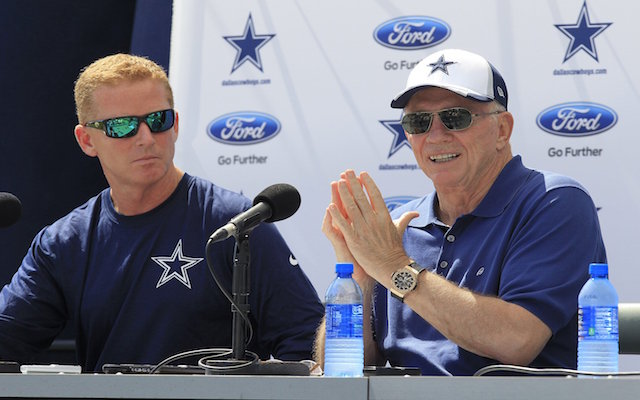
The Dallas Cowboys and Jason Garrett have reached an agreement on a new contract. According to NFL Network's Ian Rapoport, the deal will be worth $30 million over five years.
It was a fairly accepted idea entering the season that Garrett was on the hot seat and might not be long for Dallas if the team missed the playoffs again. Instead, Garrett's Cowboys won the NFC East with a 12-4 record after finishing at 8-8 in each of his first three full seasons as head coach. They also won a playoff game for only the second time since they last won the Super Bowl after the 1995 season. As a result, Garrett is being rewarded with a long, lucrative new contract.
Here are a few things to know about Garrett and the Cowboys re-upping.
1. Jerry's preference was always to keep Garrett
The Cowboys only had one coach from 1960 through 1988: the legendary Tom Landry. One of Jones' first moves when he bought the franchise was to fire Landry and hire his former college teammate and then-University of Miami head coach Jimmy Johnson. Johnson lasted 80 games in Dallas, amassing a 44-36 record and taking a team that was 1-15 in his first season and turning it into a dynasty that won back-to-back Super Bowls in his final two seasons in Dallas, and a third under his successor, Barry Switzer.
The Cowboys have gone through six head coaches since Johnson left following Super Bowl XXVIII: Switzer, Chan Gailey, Dave Campo, Bill Parcells, Wade Phillips and Garrett. Though he served as offensive coordinator under Phillips until midway through the 2010 season, Garrett was actually hired by Jones before Phillips and was considered the "head coach in waiting" from the day he started.
Eight games into the 2010 season, with the Cowboys sitting in last place in the NFC East at 1-7, Phillips was fired. Garrett took over and went 5-3 the rest of the way. Three 8-8 seasons and this year's 12-4 campaign later, Garrett has a total record of 41-31 in Dallas.
At 72 games, Garrett has lasted the longest of any non-Johnson coach under Jones' ownership. By midway through next season, he'll become the franchise's leader in games coached under Jones. His .569 winning percentage currently ranks third among those coaches behind Switzer (.625) and Phillips (.607), though until this year he had been one of only two coaches in Cowboys history (along with Campo) to never make the playoffs.
Jones once referred to Garrett as "[his] Tom Landry," and this new deal will align Garrett more closely with the owner than any other coach in the history of his ownership tenure.
2. Great pass offenses
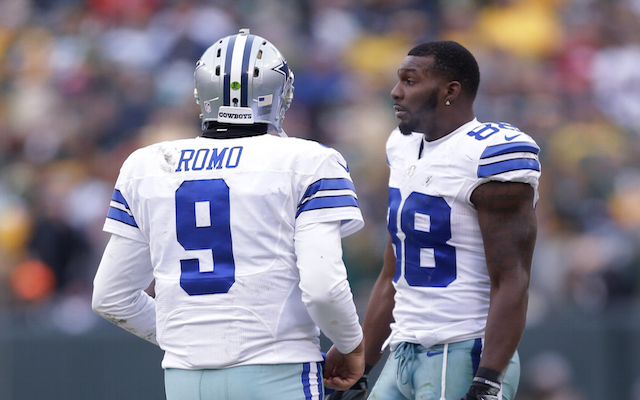
Garrett has been in charge of the Dallas offense in some way since 2007. Though in the past two years, he ceded play-calling duties first to Bill Callahan and then Scott Linehan so he could focus more on game management, the Cowboys have still run his Norv Turner-style Air Coryell offensive system. Here's how Dallas' offenses have fared in that time.
| Cowboys Offense | ||||||
| Year | Play-Caller | Points Per Game (Rank) | Yards Per Game (Rank) | Pass DVOA Rank | Rush DVOA Rank | Overall DVOA Rank |
| 2007 | Garrett | 28.4 (2) | 365.7 (3) | 4 | 10 | 4 |
| 2008* | Garrett | 22.6 (18) | 344.5 (13) | 18 | 7 | 17 |
| 2009 | Garrett | 22.6 (14) | 399.4 (2) | 3 | 3 | 3 |
| 2010* | Garrett | 24.6 (7) | 364.3 (7) | 20 | 15 | 21 |
| 2011 | Garrett | 23.1 (15) | 375.5 (11) | 5 | 27 | 12 |
| 2012 | Garrett | 23.5 (15) | 374.6 (6) | 7 | 24 | 11 |
| 2013 | Callahan | 27.4 (5) | 341.1 (16) | 10 | 5 | 11 |
| 2014 | Linehan | 29.2 (5) | 383.6 (6) | 4 | 3 | 4 |
As you can see, Garrett has routinely led one of the best passing offenses in the league. The Cowboys have ranked in the top-10 in passing DVOA in every season under Garrett except the two in which Tony Romo missed more than one game (marked with asterisks). They also ranked in the top-seven in pass DVOA in each of those years when Garrett was the one calling plays. Romo was a second-year starter when Garrett took over play-calling duties, and under Garrett he has broken nearly every franchise passing record imaginable.
Garrett's Cowboys have featured Jason Witten at tight end for every single game of his tenure, and they've cycled through three No. 1 receivers in Terrell Owens, Miles Austin and Dez Bryant. Romo and Garrett have shown an ability to turn unheralded players like Austin, Patrick Crayton, Laurent Robinson and Cole Beasley into valuable offensive contributors over the years, rarely missing a beat in the passing game when one had to replace another.
3. Iffy commitment to the running game
Where the Cowboys have been less consistent under Garrett is in the running game. They've gone through four No. 1 running backs under Garrett: Julius Jones, Marion Barber, Felix Jones and most recently DeMarco Murray. Garrett and his various running backs coaches mostly deployed those backs in a time share, with only Murray really ever turning into a feature back who played on all three downs.
Garrett often professed that his wish was for the Cowboys to be a run-first offense, but that was rarely his practice. The Cowboys ranked 15th, 25th, 17th, 21st, 23rd and 31st in percentage of running plays while Garrett was in charge of play-calling, while they ranked 29th under Callahan before finally jumping all the way to third this year under Linehan.
4. Red Zone issues
While Garrett's offenses have always piled up yards, they sometimes struggled to convert those yards into touchdowns rather than field goals. Note that the Cowboys ranked lower in points per game than yards per game in four of Garrett's six seasons as the play-caller.
In those six years, the Cowboys ranked in the top 10 in red zone touchdown percentage only twice, mostly averaging a converion rate near 50 percent, where it usually takes approximately a 60 percent red zone touchdown percentage to rank in the top 10. Garrett has often been criticized for his conservative play-calling once the Cowboys get into "field goal range," and that's reflected a bit in those numbers.
The last two seasons under Callahan and Linehan, meanwhile, Dallas ranked third and then second in percentage of red zone opportunities that ended in touchdowns, numbers that are much more in line with the amount of offensive talent the Cowboys have had on hand in Garrett's tenure.
5. Rebuilding the offensive line
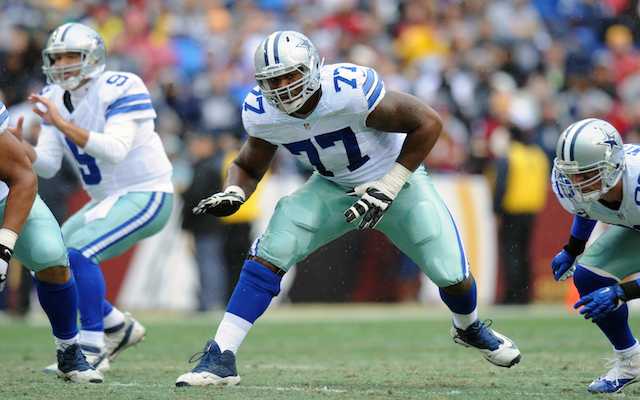
When Garrett took over as head coach in 2010, the Cowboys were starting Doug Free, Kyle Kosier, Andre Gurode, Leonard Davis and Marc Colombo from left to right along the offensive line. It was one of the biggest, oldest and slowest offensive lines in the league.
Garrett, along with Jerry and Stephen Jones and assistant director of player personnel Will McClay, made it a mission to completely rebuild that line. That mission has been a resounding success.
Jerry Jones' Cowboys had never drafted an offensive lineman in the first round until they took Tyron Smith with the ninth pick of the 2011 NFL Draft. The Cowboys selected an offensive lineman in the first round of each of the last two drafts as well. They wound up taking Wisconsin center Travis Frederick at No. 31 after trading down in 2013 (they used the additional selection on No. 2 receiver Terrance Williams), despite the fact that most teams had a second or third-round grade on Frederick. Then, Stephen Jones famously talked Jerry out of taking Johnny Manziel with the 16th pick of the 2014 draft, and they instead selected Notre Dame tackle Zack Martin and moved him to right guard.
The result of that commitment to the offensive line is what was likely the NFL's best unit during the 2014 season. Smith, Frederick and Martin all made the Pro Bowl, while Smith and Martin were named First Team All-Pro and Frederick was named to the Second Team. Those three started all 16 games, while Ronald Leary started 15 games at left guard and Free -- who has become one of the better right tackles in the league after struggling on Romo's blind side -- started 11 games before he missed the end of the season with an injury.
The Cowboys appear set up to have a dominant line for at least the next five years if Smith, Frederick and Martin stay healthy. Even when Free and Leary missed games, Jeremy Parnell and Mackenzy Bernadeau stepped in and the group did not miss a beat.
6. Rod Marinelli will be back as well
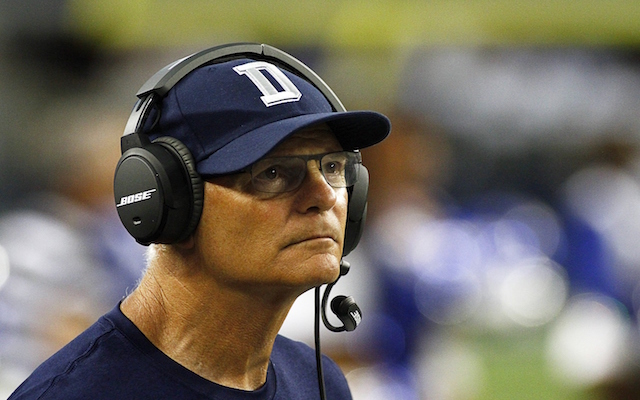
Much like head coaches, the Cowboys have gone through a ton of defensive coordinators under Jerry Jones. Just since Garrett took over as the offensive coordinator in 2007, the Cowboys have had six different coaches calling the plays on defense. Brian Stewart was hired as Phillips' defensive coordinator in 2007, and he called the plays for part of the 2008 season until Phillips took over that role himself. Phillips called the defense until he was fired in 2010, with Paul Pasqualoni serving as interim defensive coordinator until the end of the season.
Garrett -- or Jones, depending on who you ask -- then hired Rob Ryan as the defensive coordinator, and he lasted only two seasons. Jones then brought in Monte Kiffin for the 2013 season, and the result was one of the worst defenses of all time. The Cowboys then engineered a defensive hierarchy that was somehow even more odd than their offense that featured a head coach that used to call plays, an offensive coordinator who no longer called plays, and a passing game coordinator that suddenly loved to run the football.
Kiffin was "demoted" to assistant head coach/defense, while defensive line coach Rod Marinelli was promoted to defensive coordinator. The Dallas defense was better under Marinelli despite losing Jason Hatcher to Washington, DeMarcus Ware to Denver, Sean Lee to a torn ACL and various starters and subs to injuries throughout the season.
It was rumored as recently as Sunday night that Marinelli would join Lovie Smith in Tampa Bay, but instead the coached has reportedly reached an agreement to stay with the Cowboys, according to NFL Network's Ian Rapoport.
7. Work to do on defense
The defense is where the Cowboys will now have to rebuild after devoting most of their resources to the offense -- specifically the line, as mentioned above -- over the last few years. This year's defense on the whole was not all that much better than the 2013 version that was the worst in the league; it was just on the field a lot less due to the success of the Cowboys' ball-control offense. It will take a lot of work to build it back up, especially given the lack of depth and Dallas' still somewhat murky cap situation.
That work likely started with the trade-up to select former Boise State defensive end DeMarcus Lawrence in the second round of last year's draft. Lawrence missed the season's first eight games and played sparingly through the remainder of the regular season. He failed to record a sack until the playoffs, where he clinched Dallas' win over Detroit with a strip-sack of Matthew Stafford (after fumbling the ball after recovering Anthony Spencer's strip-sack) and added another sack against Green Bay.
The Dallas secondary was exposed for much of the season, though, and particularly in the loss to the Packers. Orlando Scandrick played very well after his return from a suspension, but $50 million cornerback Brandon Carr was ineffective for most of the year before rebounding with a strong stretch run, while the opposite was true of nickel corner Sterling Moore, who was excellent early on, but flailed late and was roasted by Packers rookie Davante Adams in the playoff loss.
Dallas will need to shore up that secondary, as well as add strength and depth to both the defensive line and linebacking corps.