Study finds a correlation between NFL arrests and low Wonderlic scores
Do Wonderlic scores matter? According to a new study, the answer is yes.

The importance of the NFL's Wonderlic test has long been debated.
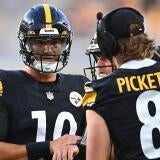
Ryan Fitzpatrick, who went to Harvard (duh), posted a high score, but in his decade or so in the league, he hasn't amounted to anything more than a mediocre-at-best quarterback. Dan Marino and Jim Kelly reportedly flunked the test, and they're sitting in the Hall of Fame.
A new study, however, indicates that there might be a way for teams to use Wonderlic scores.
As ESPN's Kevin Seifert first reported, a group of researchers' peer-reviewed work, which was published in the American Journal of Applied Psychology, found that a correlation exists between NFL arrests and low Wonderlic scores. ESPN characterized the correlation as "small but clear," reporting that "players who scored below the mean in the researchers' sample were also about twice as likely to be arrested in the NFL as those who scored above it."
ESPN has more on the sample, which appears to be small:
Wonderlic results remain confidential in most cases, but the researchers secured scores from the 2002 and 2003 drafts after they were inadvertently posted on a public website. For that period, they found a mean grade of 21.7 on a scale of 1 to 50. Approximately 18 percent of the players who scored below the mean were arrested in the NFL, while 9.5 percent of those who scored above it were arrested.
The researchers also discovered that NFL Draft prospects who were arrested prior to entering the league were twice as likely to get arrested (from 2001-12) after being drafted.
Brian Hoffman, an associate professor and chair of the industrial-organizational program at the University of Georgia, explained to ESPN how he'd use the findings if he were an NFL general manager. In short, Hoffman wouldn't rule out a prospect just because of a low Wonderlic score. But if a player had been arrested in the past and then scored low on the test, well that might be an indication that "there's even more work to do there."
"If I were a decision-maker, I wouldn't view getting into trouble as a zero-sum game," Hoffman said. "You check off that they've been in trouble and know what that has meant for others on a percentage basis. And then there's a factor that would make the likelihood a little worse: If they score lower on the Wonderlic. Really, that tells you there's even more work to do there."
To be clear, a low Wonderlic score on its own shouldn't necessarily become a red flag. It is, however, another useful piece of data for NFL teams to weigh.