UFC Fan Guide: A brief historical overview -- from a battle for acceptance and 'The Ultimate Fighter' to today
How the sport grew from its early days of being labeled 'human cockfighting' to a powerhouse in the modern sports landscape

•
5 min read
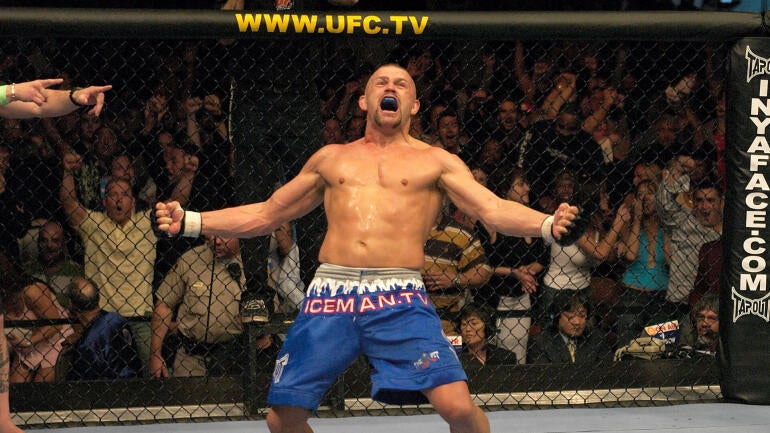
UFC has officially entered its Paramount era. After striking a landmark media rights deal in 2025, UFC events will begin streaming live on Paramount+ beginning with UFC 324 on Jan. 24. Even better, all events will stream live as a part of the subscription to Paramount+, meaning for the first time in UFC history, there are no pay-per-views.
It has been a long road to get to this point, with UFC going from a "no holds barred" promotion built to showcase the Gracie brand of jiu-jitsu, to a struggling promotion being crushed by government efforts to outlaw the sport, to an international juggernaut.
In advance of the debut UFC event on Paramount, and with the intention of introducing new fans to UFC, we took a look back at the early days of the promotion to see how we reached this point.
More UFC Fan Guide content: Active fighters to know | Most exciting fights to watch ahead of UFC 324
UFC 324: Fight card, date, complete guide as Justin Gaethje vs. Paddy Pimblett kicks off Paramount+ era
Shakiel Mahjouri
The early days
To get into the history of MMA is too big of a task for one article. For simplicity, we'll start with Japanese judo master Mitsuyo Maeda, who traveled the world showcasing his art, making his way to Brazil where he taught Carlos Gracie in 1917. Gracie shared the art with his brothers. The family, most notably Helio, refined the system into what became known as Brazilian jiu-jitsu. The Gracies would continue to develop the martial art, passing it down through their family, eventually leading to Rorian Gracie being one of the co-founders of UFC.
Rorian was hoping to showcase his family's craft and selected his younger brother, Royce, to be the Gracie representative in the eight-man, one-night tournament that would air live on pay-per-view. Royce would go on to win the inaugural tournament, which was promoted as an event without rules to answer long-standing questions about which martial art was the best. UFC 1 featured a boxer wearing a single glove (Art Jimmerson), a sumo wrestler (Teila Tuli), a karateka (Zane Frazier), a hulking shootfighter (Ken Shamrock), and others. Gracie picked up three submission wins in a total of roughly five minutes to take home the title.
Gracie would continue dominating the competition, winning tournaments in UFC 2 and 4 (he was forced to withdraw from the UFC 3 tournament after a first-round win), proving the UFC as a Gracie promotional tool as a resounding success. Royce had a slight frame and did not look the part of a man who would dominate larger opponents from violent striking backgrounds, yet he made it look easy to drag opponents to the ground where he quickly forced them to submit.
As events went on, UFC began to introduce more rules and judges to score fights, as well as the idea of "superfights" that existed outside of the tournament format.
"Human cockfighting" and the battle for acceptance
As UFC events continued, the sport became known for extreme violence, though that was more based on marketing and reputation than the actual action inside the Octagon. This led to Senator John McCain labeling the sport "human cockfighting" in 1996 and making a push to have it banned in all 50 states. McCain succeeded in getting the sport banned in 36 states, leading to most UFC events being held in less desirable locations while also being limited in reach to just DirecTV pay-per-view and VHS tapes.
In response, UFC began to introduce more rules, added weight classes and worked with state athletic commissions to legitimize the promotion as a sport.
By 2000, sanctioned events, both UFC and other promotions, began to be held in New Jersey, though UFC was going through significant financial struggle, largely as a result of the sanctioning struggle and a reduced audience on pay-per-view.
Enter the Fertittas and Dana White
With UFC nearly dead amid ongoing financial struggles, casino executives Frank and Lorenzo Fertitta, along with their friend and business partner Dana White, made a move to acquire the promotion, securing the deal for just $2 million in 2001. That September, UFC 33 took place as a sanctioned event in Las Vegas, also returning to pay-per-view on cable, not restricted to just DirecTV.
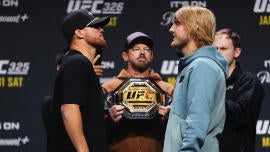
Business improved as Zuffa, the parent company of the UFC established after the sale to the Fertittas and White, poured money into advertising and secured deals with Fox Sports Network. At the same time, the light heavyweight division became the marquee division with a crop of intriguing stars in Tito Ortiz, Chuck Liddell, Randy Couture and Vitor Belfort.
Mainstream media coverage of the sport was also on the rise, but the investment into the promotion was still resulting in massive financial losses for Zuffa and once again putting UFC on the brink of folding.
The Ultimate Fighter saves UFC
One of Zuffa's last-ditch efforts to save UFC was the creation of the reality television show "The Ultimate Fighter," which aired on Spike TV beginning in 2005. Even the show came at a financial cost, with Zuffa having to pay production costs.
The show was a major success, giving fans and curious observers a way to connect with fighters as individuals, as well as establishing the ultra-brash White as the face of the promotion. But the real payoff of "The Ultimate Fighter" came with the finale, as Stephan Bonnar and Forrest Griffin put on an all-time great fight in the light heavyweight finals that drew praise and big ratings -- and led to the continuation of the show.
White credits the show as "saving the UFC," and it also led to expanded deals with Spike TV, including UFC Unleashed and live UFC Fight Night events.
Expansion into a modern sports product
Once "The Ultimate Fighter" exploded and UFC secured expanded television deals, UFC hit a boom period that saw increased live gates and pay-per-view buyrates as stars emerged and the fanbase continued to grow.
Efforts began for international expansion, and the UFC has now held events in nearly 30 countries outside the United States. UFC continued to grow and signed more media rights deals as the sport continued to expand. Zuffa also purchased several fight promotions, most notably WEC, Pride Fighting Championships and Strikeforce. The promotion also announced in 2012 that it would begin to feature women's fights, bucking White's repeated claims that UFC would never feature women. Ronda Rousey was the game-changing figure who caused the course reversal and quickly became a major crossover star.
While UFC has seen some periods of business decline, it remained a major player in the sports landscape, and in 2016 WME-IMG (Endeavor) was part of a group that acquired Zuffa for $4.025 billion. After Endeavor fully acquired Zuffa in 2021, a merger with WWE and the subsequent creation of TKO followed in 2024.
Now, UFC has entered the Paramount era, reuniting with the company that owned Spike TV, the network where "The Ultimate Fighter" saved the promotion more than two decades ago. If the past is any indication, there are many exciting twists and turns still to come.