Fantasy Football draft prep: Alternative strategies and formats make mixing it up easy and more challenging
Fantasy Football keeps evolving; here are different ways to play

•
10 min read
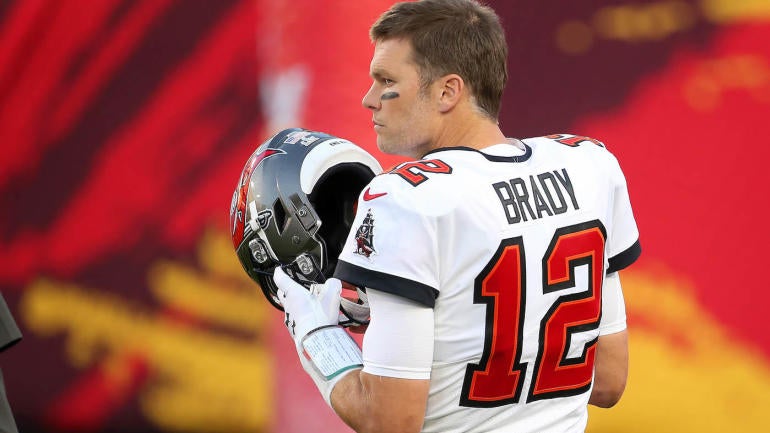
One of the great things about Fantasy Football's exponential growth over the past decade is that it's not all growing in the same direction. The rate at which players are joining the community may be exceeded only by the rate at which the game is diversifying.
Whether it's different scoring systems, rules, lineup settings or time periods, there is no shortage of ways to play. That makes it ultra-important when you join a new league to read all of the rules, but it also makes it possible to play in even more leagues without redundancy. While we don't have enough pages in this magazine to go in depth in every different way to play Fantasy Football, we have broken down some of our favorites below, as well as a way you can make each format even more fun and tips to dominate that individual format.
Dynasty/Keeper
How it's different: This is actually two different types of leagues, easily separated. Dynasty leagues have an original startup draft and then you can keep whoever you want for as long as you want. The only draft you have each year is for rookies. Keeper leagues allow you to keep a set number of players, sometimes at the cost of future draft picks. If you're in a traditional redraft league, a keeper league can be a nice way to transition to eventually playing in a full Dynasty league.
Tips and strategies: More than any other format, you need to be flexible and know your league. New Dynasty managers often behave more like redraft managers than they should, which opens up an opportunity to obtain young talent cheaper. Other Dynasty managers can become obsessed with youth to the point of giving up proven talent too cheaply, opening up opportunities for win-now managers.
The most important tip for this type of league is to avoid the dreaded middle. You should either be contending or rebuilding, no in-between. For contenders, players like Tom Brady, Derrick Henry, Julio Jones, and Travis Kelce are valuable assets who could put you over the top. For rebuilders, it may already be too late to trade those same players for full value.
Make it better: Add a salary cap. We'll talk in full about salary cap leagues below, but adding a salary cap to a Dynasty league adds an entirely new level of strategy to the format, especially if player salaries escalate over time.
Salary cap drafts
How it's different: Instead of a standard draft, where picks are made based on draft order, in a salary cap draft every player is available to you for as long as you have money. Each manager starts with a budget (our auction values are based on a $100 budget) and each player is bid on by whoever has interest, and the biggest bid wins. In redraft leagues, the salary cap number generally only matters for the draft itself. In Dynasty or keeper leagues, that cap may be a number you need to stay under each week of the season, or at least at the beginning of each season.
Tips and strategies: Generally each manager takes turns nominating players. There are two strategies I prefer for nominations: 1. Nominate the most expensive players you don't actually want -- your busts, if you will -- to spend other people's money. 2. Nominate your kicker and defense first. Either you'll get them for a dollar or someone will overpay for a kicker or defense.
Have a set of values you believe in before the salary cap draft starts. It should be based on your view of the players and the total amount of money available to spend. That way you'll know if people are overspending early. If they are, value will be available late.
Also, as a rule, the last player in a tier is the one people will overpay for, especially if it's the last RB1 or the last elite tight end. So don't be afraid to get your guy early. This almost never happens at quarterback. In fact, we generally have multiple top-15 quarterbacks who go for $2 or less in our salary cap drafts. Same for tight ends.
Make it better: This, above all other formats, is the draft to try to do in person. The joy or agony on people's faces as they get (or miss) their guys is well worth the trouble. If you can't do it in person, a video chat is the next best thing.
BestBall
How it's different: Always build a stacked roster but start the wrong guys each week? This is the format for you! In BestBall leagues, you don't have to choose who you start. In the most widely played variation of this game, you simply draft 18-22 players at the beginning of the year, and each week your top scorers are your starters. It rewards drafting skill and generally does not involve waivers. One benefit is that this format allows you to add more leagues without adding to your weekly waiver wire/lineup setting time.
Tips and strategies: Stacking has become almost a foregone conclusion and still mostly a necessity. In most BestBall leagues, weekly upside is king, so you want players correlated to each other. For example, a team with DK Metcalf should choose Russell Wilson over Aaron Rodgers or Tom Brady when the time comes to make that decision. This is pretty obvious with your early picks, but it's the late-round stacks that can really make you a profit. Teams like the Lions and Jets allow you to stack their entire passing game at almost no cost.
Most BestBall leagues are total points leagues; in other words, no head-to-head. Know who gets rewarded. A league where only one team wins requires you to focus much more on upside (and super stacking). Leagues that pay out the top 50% require a more measured approach.
If you draft an elite quarterback or tight end, you may get away with only drafting two of that position, presuming you manage the byes well. Otherwise, plan on trying to acquire at least three of every position. The majority of your roster should be running backs and wide receivers.
Make it better: Blend it more with the traditional game. While most BestBall leagues are total points, there's nothing that says they have to be. One of my favorite leagues is a Dynasty BestBall Salary Cap league where we still play head-to-head and have playoffs. We even allow trades and in-season waivers. If you're setting it up yourself you may consider doing one preseason waivers run, depending on how early you draft, and one around Week 9.
Two-QB/Superflex
How it's different: You're allowed to start more than one quarterback. In two-QB leagues, you must start two quarterbacks. In Superflex, you must start one quarterback and you are allowed to start a second as a flex if you like. The benefit of this format is that it takes advantage of the quarterback depth in a pass-heavy league.
Tips and strategies: Don't let the Superflex variant fool you -- you want to start two QBs every week in that format as well. It just gives you extra flexibility in case of injury or bad luck. The major difference between the two is that you should prioritize a third QB who is a starter in a two-QB league.
You can throw out everything we say about waiting on quarterback. Six or seven should be drafted in Round 1 and the top 12 should be gone before you finish the third round. But there is a dry spot after you get past the QB13 or 14. Don't go reaching for the mediocre tier of QB2s too early, as there will be a lull when everyone grabs all the skill position talent.
Stability in a QB2 is more valuable in this format. We boost guys like Taysom Hill, Justin Fields, Jameis Winston, and Trey Lance in our regular rankings because upside is all that matters in a QB2 in that format. In this format, guys like Kirk Cousins, Ben Roethlisberger, and Baker Mayfield become far more attractive because they aren't going to lose their job.
Make it better: If you're going to boost the QB values in your league by allowing people to start another one, then go the whole way and add tight end premium as well. That entails giving tight ends 1.5 points per catch, or 50% more than whatever running backs and receivers earn. This balances out all of the positions and makes a draft truly hard to predict. It also opens up more strategies, which is always more fun.
Individual Defensive Players (IDP)
How it's different: Instead of starting team defenses, you start individual defensive players, compiling points based on their tackles, sacks, interceptions, or whatever other stats you want to count.
Tips and strategies: This varies greatly based on how many you start. If it's just one defensive player, you do not need to make it a big priority on Draft Day. Even if it's one per position, you can generally get a great linebacker who will get a bunch of tackles at the end of the draft. But the scoring system, specifically how tackles are valued relative to turnovers, matters so much.
As a rule, cornerbacks and defensive tackles can be ignored unless you have to start them. Someone like Aaron Donald could be an exception. If you do have specific lineups for each position, watch the position designations closely. Landing a linebacker designated as a defensive end or a safety designated as a corner is a way to find a sneaky high scorer at a position.
As a beginner, focusing on tackles is a good way to build a high-floor defense. They're generally more predictable than sacks and turnovers.
Make it better: Set a full lineup. Distinguish between defensive ends and defensive tackles, between safeties and corners. Require 11 defensive starters, with at least one defensive tackle, two ends, three linebackers, two corners, and two safeties. Allow managers to flex the rest of the spots. This seems overwhelming at first, but after a year you'll wonder what took you so long, and your knowledge of the game will grow because of it.
Also, use total tackles instead of solo and assists, just for peace of mind. There is a lack of consistency in determining solo tackles vs. assists that doesn't exist in most other areas.
Daily Fantasy Sports (DFS)
How it's different: Still unsure what all these FanDuel and DraftKings ads are about? Daily Fantasy Sports is just what it sounds like. You pick a lineup, based on a salary cap system, for that day only. Whoever scores the most points wins. Generally, these games are played for money, but there are free contests as well.
Tips and strategies: Most sites have specific contests just for beginners. Play in those contests for as long as they will allow you. It's a way to get your feet wet without competing with the pros right away.
Know your contest. A 50/50, double up, or head-to-head is a contest where you generally just need to finish in the top half. As we discussed with BestBall, those contests are more about projections and floor. If you're trying to win a million dollars in a tournament, you can throw projections and floor out the window and instead stack up multiple team's offenses with a few off-the-wall plays.
One stack people miss is playing your running back with his defense. As a rule, when defenses perform well, teams run more. Also, don't be afraid to stack a quarterback with his second and/or third best option. Finally, run it back with a receiver from the other team. If your stack hits big, chances are the other team will be throwing.
Make it better: Play with your friends. The most fun I've had playing DFS is in weekly contests with a group of friends or co-workers. Most sites will allow you to create mini-contests that are private for 2-20 players. A weekly game with your friends is akin to a weekly poker game at someone's house. It's much more fun than playing poker at the casino with strangers.