'You gotta play harder than everybody else': How small guards are making it in an increasingly tall NBA
Davion Mitchell, Jamal Shead and Collin Gillespie -- all 6-foot-1 and under -- are providing the blueprint for today's short kings

It started the way so many podcast segments do: with a retired NBA player talking about how he would've fared had he played in this era. Offensively, the former player said, he'd have been better in today's game, no small feat considering that he won two MVP awards in his day. But then he acknowledged the other side of the coin: Defensively, he would've had a tougher time.
"It's hard for small guards in today's game," Steve Nash said.
Nash was listed at 6-foot-3, but has said that he was really one-and-a-half inches shorter. Like typists and telephone operators, guards his size have been vanishing in recent years. In 2019-20, when the NBA first mandated that a team doctor had to certify every player's official height without shoes, the more honest accounting resulted in a big uptick in little guys: 114 players listed at 6-foot-3 and under (up from 86 the previous season) and 51 listed at 6-foot-1 and under (up from 32 the previous season) appeared in an NBA game. In 2025-26, only 85 players listed at 6-foot-3 and under and 30 listed at 6-foot-1 and under have taken the court -- even fewer than when they were allowed to lie about their height.
Basketball has always been a tall person's game, but now teams see size, length and defensive versatility as antidotes to the improved spacing that has supercharged modern offenses. If you're about 6 feet tall, you are "undersized": the mere fact of your height is something to be overcome. Players of all sizes are more skilled, defensive versatility is paramount and offensive rebounding is en vogue. In September, the 5-foot-10¼ Shane Larkin, who has been happily hooping in Turkey since 2018-19, said that he had turned down opportunities to return to the NBA because he wasn't interested in being the backup to the backup again. Even stars of small stature are met with significant skepticism, as evidenced by any recent discussion of Trae Young or Ja Morant's trade value.
All else equal, bigger is better, as far as front offices and coaches are concerned. But in an era that has been downright hostile to diminutive players, there are some short kings who have managed to scale the summit. Three teams that made the quarterfinals of the NBA Cup feature small guards in the midst of breakout seasons. They may even be showing that the undersized have been undervalued.
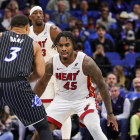
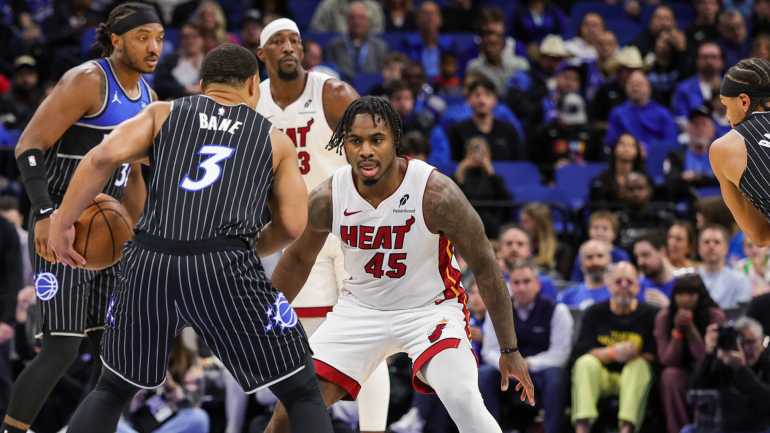
Davion Mitchell may stand only 6 feet tall, "but he's a tank," Miami Heat coach Erik Spoelstra said. "I mean, he's built like a football player. So where he may give up some height, he's making up for it with strength and agility and the way he can move." Nicknamed "Off Night" dating back to his days at Baylor, Mitchell relishes guarding guys with bigger frames and bigger names.
Spoelstra said that Mitchell's lateral quickness is "uncommon," as is the fact that "he loves it, he loves to defend." He has been one of the league's premier pests at the point of attack for years, and yet, during the 2024 draft, three years after the Sacramento Kings selected him No. 9 overall, they dumped Mitchell to Toronto in order to get under the luxury tax.
"The tough part about it is we had a lot of guards, especially at that size, and we didn't have a lot of minutes," then-Kings coach Mike Brown said. "And he was a young guy trying to find his way at that time."
Mitchell began his career on a roster that featured De'Aaron Fox, Tyrese Haliburton and Malik Monk. Even after Halliburton got traded, Mitchell's playing time waxed and waned. He had his moments as a pick-and-roll ballhandler, particularly when Fox was sidelined, but made just 32.7% of his 3-point attempts in three years in Sacramento. In Year 2, Brown played Terence Davis over him in Game 7 of the Kings' series against the Golden State Warriors. In Year 3, Mitchell received several DNP-CDs and Keon Ellis jumped him on the depth chart. He got a few DNP-CDs with the Raptors, too, before they traded him to Miami for a second-round pick at last year's deadline.
Sometimes, third team's the charm. The Heat desperately needed someone to defend opposing point guards and get in the paint, and Mitchell, it turns out, needed someone to challenge him. About a month after the trade, Spoelstra took Mitchell out of the starting lineup and told him something he'd never heard before: He wasn't working hard enough. Specifically, he wasn't engaged enough on defense away from the ball.
"He used to just stand around," Spoelstra said. "When his guy had the ball, he activated, and then he was just totally chilling out on the weak side when he wasn't involved."
Spoelstra showed Mitchell the tape, and it didn't lie. As much of a hellhound as he was one-on-one, he was missing opportunities to get steals, take charges and disrupt the opposing offense as a help defender. The film session was a surprise, but Mitchell said it was the "spark" that he needed.
When Mitchell sees an opportunity to make a defensive play, he knows he's empowered to go for it. "I like it when he's slightly reckless," Spoelstra said, repeating a message he'd delivered in front of the whole team earlier this season. An aggressive mistake is better than being caught napping.
"It took a lot of learning and watching film and a lot of mistakes," Mitchell said. "On the ball, I used to put so much pressure, and then off the ball I used to kind of just think, 'All right, I can relax now.' But now I just try to be in the mindset of I can't relax at all."
This season, Mitchell has started every game he's played for the 14-11 Heat, averaging 9.8 points and a career-high 7.8 assists. Miami has the league's sixth-best defense, and it's the fastest team of the play-by-play era (since 1996-97), running an offense that eschews pick-and-rolls and dribble-handoffs in favor of drives, ball movement and player movement (and originated at a DIII school in Maine). "I'm not going to lie: Playing this fast and also playing the defense we play, it is hard, it's tough," Mitchell said. The style might be too demanding for some big-name point guards, but it has been perfect for him. Defensively, his job is to wreak havoc at all times. Offensively, as he sees it, it's to make the game easy: Push the pace, help his teammates find scoring opportunities and shoot open shots.
"With this offense now, you don't really know what's gonna happen," Mitchell said. "It's just a free-flowing offense. You're just playing basketball. It's super fun."
Mitchell has made 39.3% of his 3s this season, and, while he's touching the ball more often than ever before, his time of possession is way down because, instead of running pick-and-rolls, he's either shooting, passing or attacking as quickly as possible. For a small guard, he is a big bully, adept at using his body to bump defenders off and shield them away. "Even guys that are taller, I still get into their body," Mitchell said. His floater is a real weapon, and he's shooting 60.3% on drives. Brown said that the way he's is playing is "definitely not surprising," praising his work ethic and character. With the Heat, though, Mitchell has simultaneously streamlined and rounded out his game, becoming a surer, sturdier and somehow even scrappier player.
"He's changed his whole game to adapt to Miami and it's really awesome to see," Toronto Raptors guard Jamal Shead said.
Shead would know. In 2021, when he was a freshman at Houston, the Cougars met Baylor in the Final Four. Leading up to the game, Shead was on the scout team, playing the role of Mitchell. After studying Mitchell's game tape -- and then giving the starters hell with a spot-on impression -- he had a better idea of how he could make a name for himself.
"I was watching a bunch of film on him, just trying to give the guys a good look," Shead said, "and I was like, 'Oh, shit, half of these shots are really good shots that I can take. Half of these possessions and what he does on defense are some things that I can start doing.' I took a lot from his game."
Going into his sophomore season, Shead had a clear path to follow. Houston coach Kelvin Sampson told him he had an opportunity to play real minutes … as long as he committed to being the Cougars' best defender.
"I was a good defender, I was really just lazy," Shead said. "I think Coach Sampson saw that and he pulled the laziness out of me."
Shead said he "didn't have any clue" what kind of player he could be when he got to college, but Sampson and the Cougars "believed in me and I kind of just followed whatever they threw at me." He developed into not just their best defensive player but the most relentless, disruptive defensive guard in the nation. Sampson would later call him the heart and soul of the team and the greatest leader he'd ever coached. As a senior he was a consensus first-team All-American, the Naismith Defensive Player of the Year and the first player to win the Big 12 Player of the Year and Defensive Player of the Year awards in the same season.
Those accolades, combined with an off-the-charts basketball IQ, made Shead a legitimate draft prospect, but he had several factors working against him: He stayed in college for four years, shot just 31% from deep and was 6-foot-1. The Raptors nabbed him with the No. 45 pick, and he was happy with where he landed up, in part because of their recent history with small guards. Kyle Lowry and Fred VanVleet became All-Stars and champions in Toronto.
"I was blessed to come to an organization where they do give opportunities to guys that are 6-1 or 6-2," Shead said. "This organization is known for being successful with those type of guys."
The Raptors got the pick they used for Shead in the same deal that brought them Mitchell, the guy he'd impersonated three years earlier. "Being his teammate for my first four-and-a-half months in the NBA was just so helpful," Shead said. "He taught me how to be an effective small guard." This may be a generous assessment; Mitchell said that Shead "taught me a lot, too, especially being a rookie, how hard he works." From the moment he got on the court during the preseason, Shead was picking up full-court and forcing turnovers.
In Year 2, Shead ranks second in the league in offensive fouls drawn on a per-possession basis, according to databallr, almost entirely because he has a knack for getting opposing bigs whistled for illegal screens. "He's doing a phenomenal job," Mitchell said, of "being that dog on defense, but also getting his teammates involved." Shead is averaging 12.3 assists per 100 possessions, the fourth-best mark in the league, and only Nikola Jokić and has assisted shots at the rim more frequently. He's only 23, but he has already become one of the Raptors' leaders, and they're outscoring opponents by 8.0 points per 100 possessions in his minutes, per Cleaning The Glass.
"He has a big heart, he's a winner, he's a competitor," Toronto coach Darko Rajakovic said. "He's somebody who brings it every single day, if that's a practice, shootaround, game. You just want to have guys like that."
Much like Miami, the 15-11 Raptors want to run teams ragged. They lead the league in transition frequency, per CTG, and they're easily first in fast-break points. Shead is quick to throw hit-ahead passes, never seems to get tired and, according to Rajakovic, sets the tone for everybody else with his ball pressure.
"It just gets everybody else to play to a certain level, a certain standard," Rajakovic said. "Not just second unit; he's keeping everybody accountable when he plays to that standard. And that's not an easy thing to do. To be that guy, you need to bring that every single night, and that's why I love him so much."
In the Raptors' first 18 games, Shead made 42% of his 3s. He has been in a shooting slump since then, but he's always making winning plays. In a recent win against the Blazers, he had five steals in the first half. His advice for young, vertically challenged players is simple: "You gotta play harder than everybody else. That's really just about it. You can figure everything else out. You gotta be the smartest guy, and you gotta play harder than everybody else on your team. That'll take you a long way right there."
Just as teams went all-in on switching as a means of emulating and trying to slow down Golden State a decade ago, they are now responding to what they saw in the 2025 NBA Finals. The Oklahoma City Thunder won the title on the strength of a frantic, ferocious defense, and the Indiana Pacers took them to seven games by giving them a taste of their own medicine. This season, there has been a shift toward speed, physicality and pressure. In theory, this means there's a lane for small guards, or at least a certain type of small guard.
"Now everyone's trying to play much faster, everyone's trying to pick up full court every time," Mitchell said. "So guys who can really guard full court and can make the right plays and play the right way has a better chance to actually play in this league 'cause that's what the league is changing to."
No team has changed its identity more drastically than the merry band of overachievers in Phoenix. And no one has personified the 14-10 Suns' vibe shift better than Collin Gillespie, the 6-foot-1 guard who has been a giant in crunch time. During a miraculous comeback against the Timberwolves, Gillespie stole an inbound pass and made a game-winning floater. Last week against the Lakers, after Devin Booker left the game with a groin injury, Gillespie scored 16 of his career-high 28 points in the fourth quarter. On Monday against Minnesota, he scored 11 of his 19 in the fourth.
Gillespie has been indispensable, particularly because Jalen Green has played in only two games, Grayson Allen missed two weeks and Booker has been out lately. Regardless of how many touches and shot attempts he gets, though, he plays with the energy of an end-of-the-bench guy desperate to stay on the floor. He sneaks in for rebounds, harasses ballhandlers in the backcourt and is second in the NBA in loose balls recovered. "That's the stuff that makes you stick," he said. On one play against Atlanta, he crashed the offensive glass, poked a rebound away from Dyson Daniels, then dove to the floor to get his hand on the ball, not only saving it from going out of bounds but redirecting it to Jordan Goodwin for an assist.
"If there's younger guys on my team that see us doing that or see me doing that, then they can't not do it," Gillespie said. "So I think there's a leadership aspect to it. And then also just a competition aspect and wanting to do all those little things. But I think for sure you can't let that slip, even if my role is larger right now because we have some guys out."
Right after summer league in 2022, Gillespie, then an undrafted rookie on a two-way contract with the Denver Nuggets, broke his leg. While rehabbing, he spent a lot of time with Nuggets assistant coach John Beckett, who told him that he could be a difference-maker if he could "pick up full, change the energy of a game, change the pace of a game, create turnovers," Gillespie said. By the time he was healthy, the Nuggets were the defending champs and they were committed to Reggie Jackson as the backup point guard. Unless Jamal Murray was hurt, Gillespie didn't get minutes.
Gillespie shined in the preseason after signing a two-way with the Suns in 2024, but broke his ankle two minutes into his first game with their G League team. He didn't get regular playing time until the last month of last season, but, while the team was limping toward the finish line, that experience was important for him. Gillespie put up a 22-10-5 line in 26 minutes in Minnesota, and he showed the front office enough to earn a standard contract in the summer. Coming into this season, he was determined to "put it all out on the floor and see what happens," he said. What's happened has been extraordinary. He has made 42.9% of his 3s, and he has been been a threat well behind the arc, on the move and off the dribble.
"We need guys who can play-make and create their own shots, and everybody on the staff and on the bench is always just telling me to be aggressive," Gillespie said. "I put a ton of work in towards it and I have confidence in myself, so why not shoot those shots?"
Some teams have tried to target Gillespie on defense, but he fights. "He's gritty, tough, strong for his size," Suns coach Jordan Ott said. "That allows him to play bigger." Phoenix, after ranking 27th on defense last season playing a conservative style, now ranks 12th and forces turnovers more often than anybody outside of OKC. Ott said he expects Gillespie to keep improving, citing his intelligence and work rate, the same attributes that have allowed him to "fit right in" with their new style of play.
"He's got a long runway here, and opportunity," Ott said. "We're really happy that he's embraced that opportunity."
Gillespie understands why teams have typically put a premium on size. If you're on the smaller side, he said, you have to prove that you can dribble, pass, shoot and hold up defensively, and the intangibles are non-negotiables. When he watches Mitchell and Shead play with (slightly) reckless abandon, he sees players not just of a similar size, but of a similar mindset.
"I think we're all winners and we'll do whatever it takes to win," Gillespie said. "It might not look pretty all the time, but that's the one thing that we're focused on."