
Resignation of underappreciated Ron Washington a big loss for Texas
Ron Washington was often criticized for his in-game management, but his manner of dealing with players in the clubhouse is why the Rangers will miss him.

By
Matt Snyder
•
3 min read
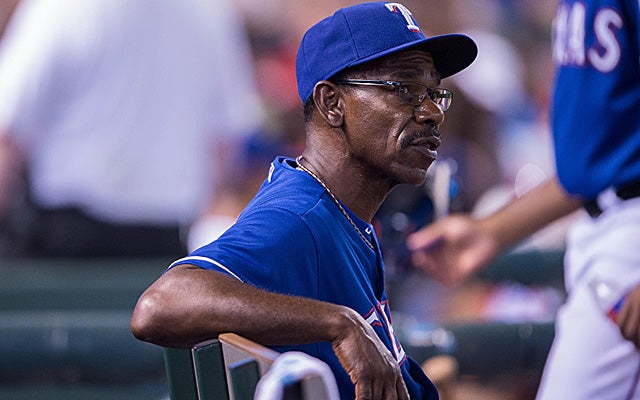
The analysis of Ron Washington's tenure as Rangers manager generally boils down to two different camps. In the wake of his resignation from the post Friday, let's take a look.
One camp will always point out Washington's shortcomings as an in-game strategist. He certainly had flaws and even he would likely point that out in a few areas. I'll cop to having questioned his logic behind bunting far too often, in my opinion, though the complaints nationally from fans and stat-minded pundits alike didn't stop there by any stretch.
Being a manager is so much more, though, than just putting together a lineup, deciding when to bunt or managing the bullpen. These aren't robots. There's a people aspect to running a baseball team from the locker room and dugout.
And on that front, few were better than Washington over the past eight years. He was utterly beloved in his clubhouse for pretty much his entire tenure as Rangers manager. I had the privilege of covering the 2011 World Series and, to a man, that entire clubhouse couldn't have had anything better to say about "Wash" on a daily basis throughout the series.
This wasn't a surprise. The enthusiastic manager always had his guys' backs, whether in arguing with an umpire or discussing a sticky situation with the media. These players were his guys and he always protected them as best he could.
It wasn't just that he was beloved, though. Too much of that without discipline is bad. Washington was greatly respected and commanded attention when he was set to speak to his troops. He was the boss, even if he was a beloved boss. Michael Scott surely would be jealous.
This was never more telling for me than when Ian Kinsler left Texas in a blaze of glory last offseason, bashing the Rangers organization, specifically general manager Jon Daniels. He wasn't holding back at all, calling Daniels a "sleazeball" and saying he wants the Rangers to go 0-162 in 2014. If there was ever a time for a former player to reveal any shortcomings Washington had as a manager from a player's perspective, it was then.
What did Kinsler have to say about Washington?
"I'll miss all my teammates. I'll miss Elvis [Andrus] and Beltre, Mitch [Moreland], Matt Harrison and [manager Ron] Washington."
Kinsler went out of his way to name five people in particular he'll truly miss -- his boss being one of them. That's telling.
It's not surprising, though. Everywhere Washington walked in then-Rangers Ballpark (in 2011), he was popular, be it with players, staff members or even local media who covered the Rangers on a regular basis.
This is something that can't be measured. Washington obviously had a way with people. There's no stat that has the ability to quantify making guys want to win for you. Sure, in the grand scheme of things, ability of the players will almost always trump all -- though we could point to Bobby Valentine's 2012 Red Sox as an example where talent didn't matter in the face of losing a locker room -- but if we're talking about making small differences in many different areas with a locker room manner, Washington was always able to extract the best from his guys.
Well, until the disaster that was the 2014 season, but even the biggest Washington dissenters can't blame this mess on him.
Washington's place in Rangers history is secure, too.
This is a franchise that only had three seasons with at least 90 wins before Washington was hired. Washington won at least 90 games in four consecutive seasons.
The Rangers had previously only been to the playoffs three times. Washington took them three times himself.
The Rangers had never won a playoff series and obviously never went to the World Series, pre-Wash. Under Washington they four playoff series and went to two straight World Series.
Washington leads the Rangers in career wins (664, with Valentine being second at 581) and games over .500 (53, with Billy Hunter being second at 38).
Sure, those Rangers he was steering to the playoffs had talent, but the man steering the ship had a way with that talent. He deserves plenty of credit for those great seasons -- and, really, the undisputed best chapter in club history -- and I have no doubt he'll be missed.