2017 NBA All-Star Game Starters: Here's why I left Steph Curry off my ballot
CBS Sports writer Matt Moore reveals his ballot for the All-Star Game starters.

By
Matt Moore
•
12 min read

The starters for the NBA All-Star Game will be announced on Thursday. The voting format was changed this year, with fans counting for 50 percent of the vote, players getting 25 percent, and members of the media getting 25 percent. A panel of media members was chosen by the league to comprise this year's media vote, and I was one of the lucky few plucked to make those picks.
When you have to make these kinds of decisions on awards, which are subjective, arbitrary, and require choosing between a lot of players who are deserving, you can go two ways. You can take it lightly, trust your gut instincts, and not spend too much time on it, or you can spend entirely too much time agonizing over each choice.
I chose the latter. I spent the greater part of four days going over every stat, metric, quote, game clip, and input I could find. I asked colleagues and associates for their input. I read fan feedback and came up with 10 NBA All-Star starters. Here's my list, and how I got there.
Western Conference
Guards (Select two)


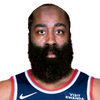

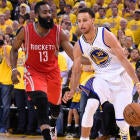
These are your two leaders in the MVP race. Westbrook is averaging a triple-double while leading the league in scoring. Harden is putting up 28.9 points, 11.6 assists and 8.3 rebounds per game for the Rockets, who have stunned everyone with how good they are. These two are definitely having the best seasons of anyone in the NBA this season, and they have to be All-Stars. Period.
Honorable mention: Stephen Curry is the obvious omission here, and he's been great. All the numbers are there, the Warriors have the best record, etc. But this season has not been like last year, and while Curry has gotten his numbers, Kevin Durant and Draymond Green are the engine of what makes this Warriors team great. Mostly, though, it's just about how great Westbrook and Harden have been.
Forwards (Select three)


The best player on the best team, averaging 26-9-5 and shooting a blistering 65.9 percent True Shooting Percentage, the highest of his career. He's 77th percentile in defense and in the 98th percentile offensively via Synergy Sports.
Yeah, he's pretty good. Durant would be an MVP candidate, maybe the leader, had he not joined such a loaded team. He's obviously an All-Star.

Leonard is in the 96th percentile offensively and 86th percentile defensively via Synergy Sports, and is the best player on the second-best team in the West. He's averaging a 25-6-3 stat line with a 62.6 percent True Shooting Percentage. He's not even Durant-elite. He's like the "alternative name-brand that only rates slightly lower" version of Durant. He's the best individual wing defender in the league, and a constant play-maker on both ends. There are no weaknesses to Leonard's skill-set. He's clearly an All-Star.
And now for the tough one...


Here was the list I had to suss out, and the case for each player:
Marc Gasol, Memphis Grizzlies: The best player on Memphis who has surprised many with how good they are, especially with injuries to Mike Conley and Chandler Parsons. Gasol's rediscovered his defensive dominance and the best overall passing center in the league (if you don't count Draymond Green; Nikola Jokic is getting there). Gasol's averaging 20-6-4 on 46 percent from the field and 38 percent from 3-point range as he's added that as a weapon. He makes his team go and is the most crucial to the success of an over-.500 team on this list.
Draymond Green, Golden State Warriors: Leads the team with the best record in basketball in rebounding and assists. He's the engine for what they do, and is in my opinion the current Defensive Player of the Year. He's the best passing big man in the game, an emotional catalyst for the team that is capable of the best basketball at their best, and is efficient on his own.
Rudy Gobert, Utah Jazz: The best rim protector in the league and arguably the Defensive Player of the Year. Super-efficient inside and has had the best season of any member of the Jazz, who have also had a great season thus far despite injuries.
DeMarcus Cousins, Sacramento Kings: The best big man in basketball, pound for pound. Has the best advanced metrics in nearly every category. Hurts his team with off-court tirades, on-court techs and pouting, general bummer behavior. If it's just about production, it's Cousins.
Anthony Davis, New Orleans Pelicans: Having an absolutely unreal season, third in the league in scoring, and it's just impossible to blame the Pelicans' malaise on him. Plus, they've turned the corner since a horrible start. They're not good but they're decent. His numbers are on par with Cousins.
Let's do process of elimination here: Gobert goes first because he's just not the producer that the rest of them are. The Jazz are great defensively 1-5 on the court nearly all the time, and Gobert isn't a go-to scorer. So he's out. With Cousins, it comes down to this: You can't simultaneously be the reason your team is good and bad and be an All-Star. Cousins is frustrated with losing, sure, that's understandable. But the tirades, punching seats, feuding with reporters, pouting about calls for minutes on end and having it affect defensive effort, these things matter. The best big man in basketball is within Cousins, but he has to be willing to control his emotions enough to play like it. He hasn't, so he's out.
So we're down to Gasol, Green, and Davis. My impulse was Gasol, then my intellect said Green. Davis I had basically counted out. The team's bad. There's no doubt. So who cares what kind of numbers he puts up?
But Davis is:
- 3rd in scoring
- 6th in rebounds
- 2nd in blocks
- 4th in PER
Those are pretty insane numbers. Then there's this: The Kings are 8.7 points better in net points per 100 possessions with Cousins on vs. off. For the Pelicans, they're 8.4 points better. But notably, the Kings are still a minus-1.3 with Cousins on-court, they still get outscored, when he's on the floor. The Pelicans are plus-0.9. A slim differential, but "the Kings get outscored with Cousins on and the Pelicans outscore their opponent when Davis is on" is what it comes down to.
Plus, the only real knock on Davis is defense, and when I started to look at the numbers, I found that the Pelicans' defensive rating improved by 4.2 points per 100 possessions, and was a 101.8 mark with him on-court, which is really good.
There is an undefinable "All-Star" element as well. Draymond Green is a star, no doubt, and one of the best players in the NBA. But Anthony Davis is a superstar. Gasol's poor rebounding figures factor in, a lot of things factor in, but in the end I was left with this:
Despite the Pelicans' record, the Pelicans are a good team with Anthony Davis on the floor, and he's carried them as much as possible. For that, he's my final All-Star selection.
The NBA will announce the results of the cumulative fan, media, and player All-Star starter votes on Thursday night on "Inside the NBA."
Eastern Conference
Guards (Select Two)


This was requisite, and a no-brainer. Lowry fits every definition you want. He's the best player on the second-best team in the conference, he's great on both ends of the floor so you don't have to dock him points. He can shoot, he's a great passer, he's a floor general, he delivers in big moments and is the best overall point guard in the conference.
The data backs this up, too. Lowry leads the guards I considered for this spot in VORP, Value Over Replacement Player, and in Win Shares. He scores less than the others, because he plays next to DeMar DeRozan, and the Raptors offense has been No. 1 for most of the season in offensive efficiency. Simply put, there is no justification for Lowry not being the starter. He's the best overall guard in the conferencethis season.
Now for the tough one:


I agonized over this choice more than any other. There are so many deserving players. Here's the list of guys in consideration for these two spots:
All of these guys are stellar, and they honestly are all deserving of being selected as an All-Star. But they can't all be, especially not as a starter.
I made the case for Kemba Walker a month ago, and I still think he deserves to be a reserve, he's been that good. But the Hornets have tailed off, and so have Walker's numbers, while others on the list have surged past him. So he gets bumped. DeMar DeRozan sure does score a lot of points by shooting mid-range jumpers, and he's essential to the Raptors' success. But his defense is suspect and he doesn't bring much else to the table, though his per-100 possession rebounding numbers are solid. Volume scorers just aren't as valuable as they used to be, and he's up against too tough of a field.
Then there's Kyrie Irving. Irving does not deserve to be punished for playing next to LeBron James. But he also can't be especially rewarded for the absence of numbers next to James, either. Irving has been efficient, and deserves credit for making the Cavs the No. 1 team in the East, but his defense is really shoddy when he's not in locked-in, playoff-mode Kyrie, and he trails his competitors in both assists and True Shooting percentage. Irving is electrifying, but the others are more deserving.
So we're down to Wall vs. Thomas.
Team Success: The Wizards were abysmal early on, starting 6-11 through Nov. 30. But since then, they're 16-8. If Washington had just not face-planted early on, Wall might be a no-brainer here. But they did. Thomas, meanwhile, has helped lead Boston to the third-best record in the Eastern Conference, and most of their wins are directly attributable to him. The Celtics aren't a contender, but they're a much better team, and more consistent, than Washington.
Advantage: Thomas
Strengths vs. Weaknesses: It's basically Wall's defense and passing against his True Shooting Percentage (54.9 percent), and Thomas' efficiency and dynamic ability to take over the game vs. his defense. Wall's still not a great shooter, and in the modern NBA, that really hurts you. Does Wall do enough to make up for it? Absolutely. But when we're judging these guys against each other, that matters. Then there's Thomas' defense. Did you know that the Celtics, despite Thomas leading the NBA in fourth-quarter scoring, are only barely better than their opponent with Thomas on the court in the fourth? That's because the defense bleeds whenever he steps onto it. All the Celtics' defensive problems are not attributable to Thomas, but a lot of them certainly are. His size means he can't get around screens, he just dies on them like a dandelion blowing into a bulldozer, and opponents regularly just shoot over him.
Advantage: Wall
Advanced Metrics: It's brutal, here, too.
| Thomas | Wall | Advantage | |
| On vs. Off Net Rating | Plus-0.4 | Plus-12.7 | Wall |
| PER | 27.1 | 23.7 | Thomas |
| Win Shares | 6.4 | 4.5 | Thomas |
| Assist Percentage | 32.5 | 46.4 | Wall |
| VORP | 2.3 | 2.4 | Wall |
| TrueShooting Percentage | 61.7 | 54.9 | Thomas |
Thomas' usage matters here, too. He's been crazy efficient despite having the ball all the time. He's got a better team around him, for sure. But being able to produce like he has with that kind of focus is impressive. It should be noted that Thomas basically got here because he has been so berserk the past four weeks. Over the course of the season, he was actually relatively inefficient, and his on vs. off numbers were actually in the negative. But while I don't weigh recent performance ahead of overall numbers, you can't remove recent performance, either. The timing of this vote hit at just the right moment for Thomas.
I won't break down how Thomas would do if you switched him to the Wizards and Wall to the Celtics. The short answer is that the Celtics get better and the Wizards get worse, but that ignores how both teams were designed. It's not relevant for these discussions; it matters how they've done on these specific teams this season.
So in the end, it comes down to this. I think Wall is a more impactful player on both ends, more valuable, and does more for his team. But Thomas' performance has been more spectacular so far this season for the Celtics. He's carried them to wins in very direct ways, and that, combined with the Celtics' record had me select Thomas over Wall. I do not feel good about it, because every examination of Wall shows just how great he is. It's a tough, tough choice, but I went with Thomas.
Forwards (Select Three)


The best player in basketball in this, our universe. The most versatile player to ever play the game. The best player on the East's best team, and the biggest reason they are No. 1. The defending NBA Finals MVP and three-time NBA champion. Yeah, didn't need a lot of thought on this.


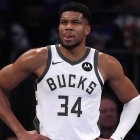
Honestly, considering everything, Antetokounmpo may be the best player in the conference this season. Look at this freaking stat line:
He's averaging 2.1 blocks and five assists while scoring 20 points per game. Kareem Abdul-Jabbar is the only other player to do so in league history. That's the company the Greek Freak is in. The Bucks are 7.7 points better in net points per 100 possessions with him on the floor this season, and he comes with a killer's attitude. This guy is an All-Star.


If Butler were a guard, as he has been every other year, it would be him and Lowry, and I wouldn't have had to bleed myself figuring out Wall vs. Thomas. He's averaging 24.8 points, 6.8 rebounds, 4.8 assists per game, shooting 45-34-86, and the toughest two-guard defender in the entire NBA?
Butler's only real weakness is the Bulls' record and it's impossible to put that on him. He's missed a few games due to injury, and the Bulls have no spacing like we all knew coming into the season. But he's delivered time and time again in clutch situations, and the biggest reason Chicago is 11-10 vs. teams over .500 is because of how Butler steps up in the moment. Butler is in the 91st percentile offensively and 77th percentile defensively on Synergy Sports. He gets in.
Honorable mention: Kevin Love is the one guy that I feel bad for not recognizing. He's been great this season for Cleveland and leads them in on vs. off net rating. His defense has been the best of his career and he's a major part of why they're winning. Joel Embiid is going to be in about 12 straight of these games if he stays healthy, and the only reason he's not in is because a. Butler is a guard and b. his minutes restriction and inability to play back-to-backs has to matter. Workload factors in.