Agent's Take: Notable players who cashed in on performance bonuses
Here's an in-depth look at the most lucrative performance bonuses earned by some of the NFL's more prominent players.
By
Joel Corry
•
11 min read
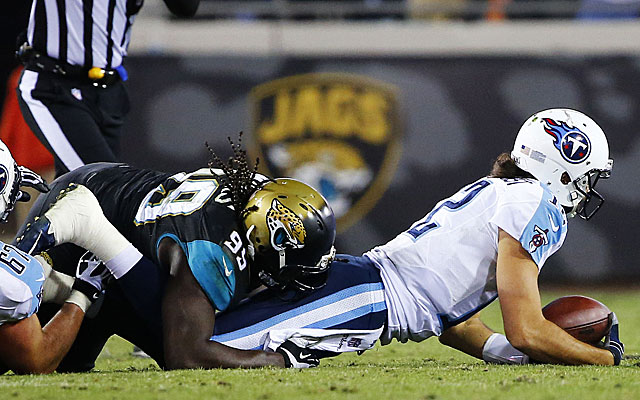
Performance bonuses in NFL contracts received some unexpected notoriety recently during Week 16’s nationally televised Thursday Night Football contest between the Jacksonville Jaguars and Tennessee Titans. The broadcast team mentioned that Jaguars defensive tackle Sen’Derrick Marks earned a $600,000 bonus when he got his eighth sack of the season by bringing down Titans quarterback Charlie Whitehurst on the final play of the game.
Incentives and salary escalators, the two major types of performance bonuses, can be used to bridge the financial gap when there is a disagreement in a negotiation between a player’s agent and the team on the player’s value. These contract mechanisms are usually designed to be classified as not likely to be earned (NLTBE) so that they will not count against the salary cap when a deal is signed.
Generally, any incentives or escalators with higher thresholds than the player or team’s statistical performance in the prior season qualify as NLTBE. The most frequent categories for individual achievement are playtime or based on the player’s primary function (i.e., receptions or receiving yards for a wide receiver).
Incentives are preferable to escalators. Triggering an escalator doesn’t necessarily mean that the player will make the increased salary. The escalated amount is rarely guaranteed so teams can still ask the player to take a pay cut or release him without any financial obligation. This happened with John Abraham in 2013. The Atlanta Falcons cut him instead paying him $6.5 million for the 2013 season after he triggered a $1 million base salary increase with 71.62 percent defensive playtime and 10 sacks in 2012.
Here’s a look at some of the most lucrative performance bonuses of 2014 and in the contracts of some of the NFL’s more prominent players.
Bonuses earned
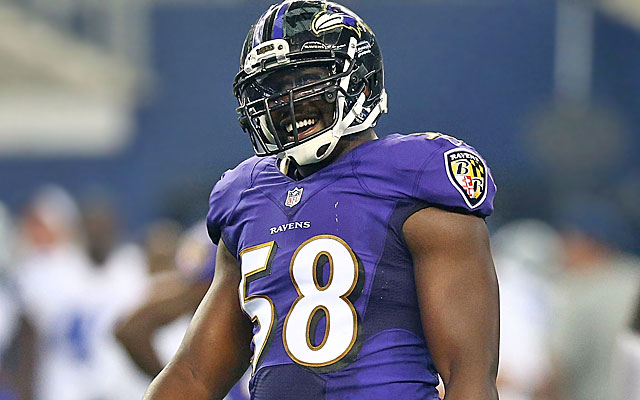
Elvis Dumervil, OLB, Baltimore Ravens: Dumervil triggered $3 million in base salary escalators and earned $1 million in incentives during Week 12’s contest against the New Orleans Saints by reaching the 12-sack mark. His 2015, 2016 and 2017 base salaries of $4 million, $4 million and $5 million each increase by $1 million.
Vince Wilfork, DT, New England Patriots: Wilfork provides a perfect illustration of how NLTBEs can be used in conjunction with a pay cut. He took a $3 million offseason pay cut to remain with the Patriots for this year by lowering his $8 million salary to $5 million because of a season ending Achilles tear during the 2013 season.
Wilfork was given the opportunity to earn $3 million back through incentives. He earned $500,000 by playing 50 percent of New England’s defensive snaps. The five-time All-Pro picked up another $750,000 with 60 percent defensive playing time. An additional $1.25 million was earned for Wilfork hitting 70 percent playing time. He had 73.6 percent playtime for the season (802 of 1,089 defensive snaps).
Wilfork got an extra $500,000 for 70 percent playing time and the Patriots reaching the divisional round of the playoff because of a bye in the wild-card round. He is making the entire $3 million because there’s also $500,000 for 70 percent playtime and the Patriots finishing in the top 10 in scoring defense (eighth in the NFL).
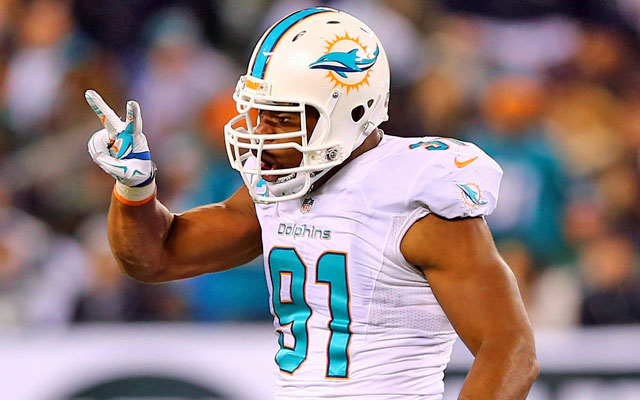
Cameron Wake, DE, Miami Dolphins: Wake’s 2015 base salary goes up $750,000 to $8.95 million because he had 11.5 sacks. It would have increased by another $1 million with 13 sacks. Fifteen sacks would have given him a total 2015 salary increase of $3 million. Leading the league in sacks would have pushed Wake's 2015 base salary up $5 million to $13.25 million.
Emmanuel Sanders, WR, Denver Broncos: Sanders earning $850,000 of his $1.5 million escalator increases his $4 million 2015 base salary to $4.85 million. He got the entire $250,000 available for 90 or more receptions by catching 101 passes. He also maxed out the receiving yards portion of the escalator. Hitting 1,200 receiving yards was worth $500,000.
Sanders has 1,404 receiving yards (fifth in the NFL). Also, $100,000 was earned with eight touchdowns. Fourteen touchdowns would have increased his 2015 base salary by another $150,000. There’s also $500,000 for being named first team All-NFL, which he won’t earn.
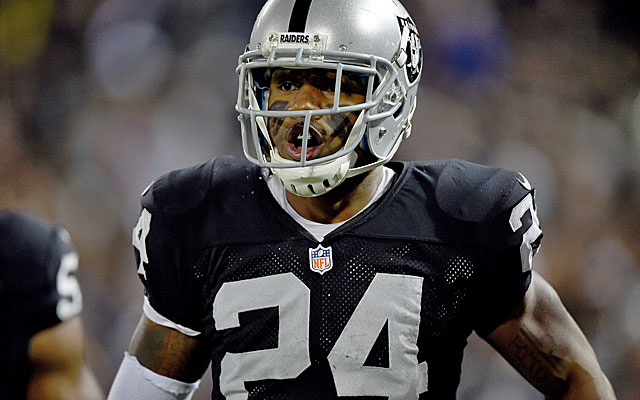
Charles Woodson, S, Oakland Raiders: The one-year contract the 38-year-old signed in the offseason contained a $2 million incentive package. Woodson is making $1.2 million of the $2 million. Seventy-five percent defensive playtime earned him $1 million. His defensive playtime is 98.7 percent (1,102 of 1,117 defensive plays).
Woodson gets another $200,000 because he intercepted four passes. A total of $650,000 was available for interceptions by picking off eight passes. The incentive package also included $175,000 for being selected to the Pro Bowl and $175,000 for being named the NFL’s Defensive Player of the Year.
Woodson’s $1 million in playing time incentives was considered likely to be earned (LTBE) and have been counting against Oakland’s salary cap since he signed the deal because Woodson’s 2013 defensive playing time was 99.35 percent (1,067 of 1,074 defensive plays).
Matt Forte, RB, Chicago Bears: Forte’s 2015 base salary increases from $6.65 million to $7.05 million for him being one of the NFL’s top dual threat running backs. He earned $400,000 for reaching 1,625 combined rushing and receiving yards.
Forte finished the season with 1,846 yards from scrimmage. He scored 10 touchdowns, but needed 15 to add another $100,000 to his 2015 base salary.
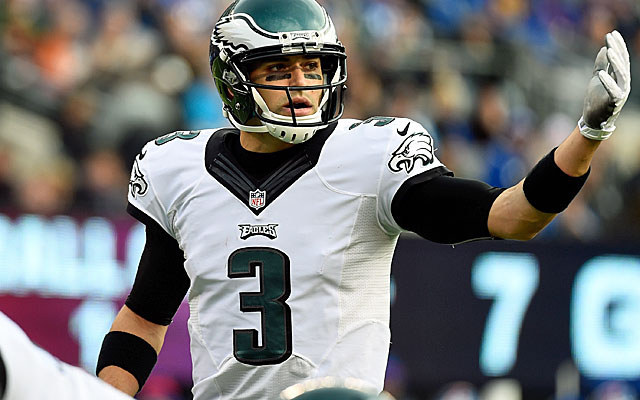
Mark Sanchez, QB, Philadelphia Eagles: Sanchez benefitted from Nick Foles’ season-ending collarbone injury. The one-year, $2.25 million deal he signed also had $1.75 million in playing time incentives.
Sanchez picked up $250,000 once he received 50 percent of Philadelphia’s offensive snaps (53.1 percent-625 of 1,176 snaps). The entire $1.75 million would have been earned if Sanchez had gotten to 80 percent playtime.
Bonuses that weren’t earned
Junior Galette, OLB, New Orleans Saints: With 10 sacks this season, Galette fell two sacks short of the 12 required to remain eligible for $6.5 million of future performance bonuses. A $2.5 million third day of the 2016 league year roster bonus, $1.5 million third day of the 2017 league year roster bonus, $1.3 million 2018 base salary escalator and $1.2 million 2019 base salary escalator largely hinged on Galette getting at least 12 sacks.
There was also a requirement that Galette be on the 53-man roster, injured reserve or physically unable to perform list in each week of the season immediately preceding the year of the respective bonuses.
Chad Henne, QB, Jacksonville Jaguars: The Jaguars scrapping the plan to redshirt Blake Bortles for the 2014 season was costly to Henne. The two-year, $8 million contract he signed in March contained additional $2.5 million in 2014 incentives. Also, $1.25 million was strictly for offense playing time, beginning at 25 percent with him receiving $250,000 and topping out 75 percent for the entire amount.
Henne also had $1.25 million in incentives for 75 percent playtime and team success. Eight wins was the lowest success threshold. The $1.25 million strictly for playing time was considered LTBE because Henne had 85 percent offensive playtime in 2013 (898 of 1,057 plays).
The Jaguars will receive a salary cap credit in 2015 of $1.25 million since Henne didn’t earn any of the incentives with 13.6 playtime (141 of 1,037 offensive snaps) this year.
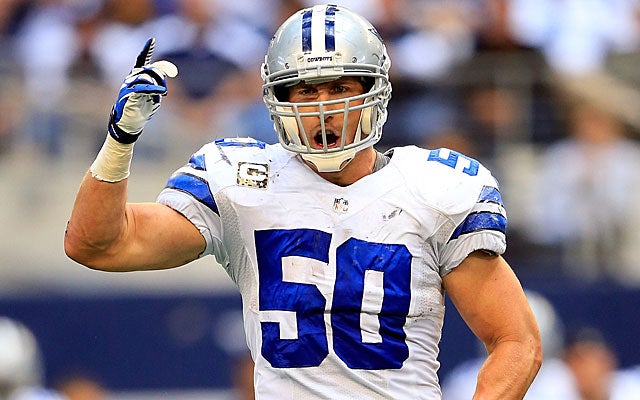
Sean Lee, MLB, Dallas Cowboys: Lee’s off-season ACL tear prevented him from having a shot at earning a $1.5 million 2015 base salary escalator for taking at least 80 percent of the team’s defensive snaps. Eighty percent playing time also would have increased his $2.5 million 2015 base salary guarantee for being on the roster on the fifth day of the league year (March 14) to $4 million.
Darren McFadden, RB, Oakland Raiders: McFadden’s one-year, $1.75 million contract to remain in Oakland for the 2014 season is an excellent example of a “prove it” deal. He never reached his potential during his first six seasons with the team while under his rookie contract because he was constantly plagued by injuries. He didn’t play more than 13 games in any season and missed 29 games during those six years.
McFadden had $2.25 million in incentives that may have been earned if he had regained his 2010 form where he rushed for 1,157 yards, his only 1,000 rushing yard season, and was sixth in the NFL with 1,664 yards from scrimmage. Also, 1,100 rushing yards was worth $750,000 and 1,250 rushing yards would have increased the amount earned to $1.25 million. The final $1 million was for 1,400 rushing yards. McFadden had only 534 rushing yards.
Marshawn Lynch, RB, Seattle Seahawks: Lynch was fourth in the NFL with 1,306 rushing yards but still 194 yards shy of earning a $500,000 incentive.
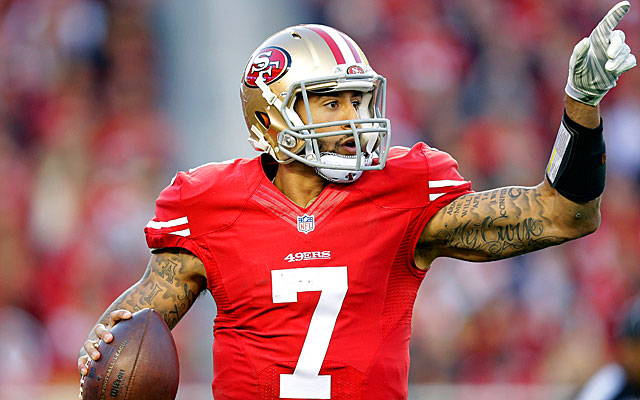
Colin Kaepernick, QB, San Francisco 49ers: It is unusual for NFL contracts to contain salary de-escalators dictated by on the field performance. De-escalators for failing to participate in off-season workouts are a relatively new league trend instead of including separate workout bonuses in contracts.
For example, Tony Romo is required to complete 90 percent of the Dallas Cowboys’ offseason workouts to prevent his base salary from de-escalating by $500,000 in that particular year. The six-year, $126 million contract extension Kaepernick received from the San Francisco 49ers has a convoluted $2 million per year salary de-escalator.
Kaepernick’s base salary for the following season doesn’t decrease by the $2 million if he is named first or second team All-Pro by the Associated Press, or the 49ers reach the Super Bowl while he has 80 percent offensive playtime in the regular season and playoff games leading up to the Super Bowl (wild card, division and conference championship games). Once Kaepernick reaches this threshold in a season, the de-escalator becomes void for the remainder of the deal.
The 49ers missing the playoffs triggered the de-escalator, so Kaepernick’s 2015 base salary goes from $12.4 million to $10.4 million. The activation of the de-escalator doesn’t change Kaepernick’s $15,265,753 2015 salary cap number. The lower salary, $10.4 million, is already a part of his cap number because de-escalation is being considered likely for cap purposes in each year of his contract.
Pending bonuses
Andy Dalton, QB, Cincinnati Bengals: Dalton’s six-year, $96 million contract extension contains $18 million of base salary escalators tied to playoff performance that can increase the overall value of the deal to $114 million.
Eighty percent or more of regular-season offensive playtime, which Dalton has by taking 97.1 percent of the offensive snaps (1,031 of 1,062 plays), and reaching the divisional playoffs with at least 80 offensive playtime in any prior playoff games in that season increases the base salaries in the rest of his contract each by $1 million.
Another $500,000 is added for reaching the conference championship game if those same playtime requirements are met. It becomes a $3 million per season escalation with a Super Bowl win and the requisite playtime.
If the Bengals defeat the Indianapolis Colts in the wild-card round while Dalton is on the field for at least 80 percent of the team’s offensive plays, then his 2015 through 2020 base salaries will increase by $1 million to push the average of his deal to $17 million per year.
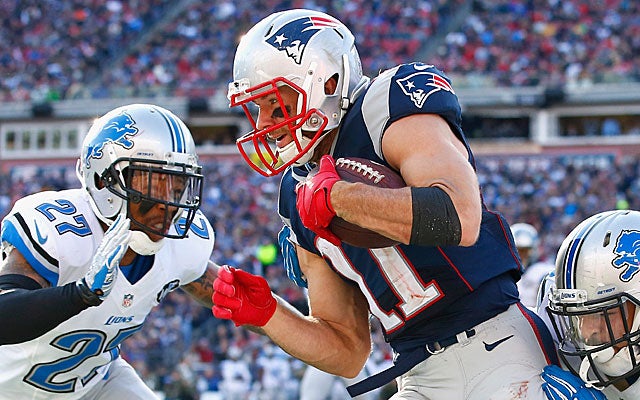
Julian Edelman, WR, New England Patriots: Edelman has 92 receptions, 972 receiving yards and four receiving touchdowns this season. He had four different ways to earn a $500,000 incentive. Three of them have fallen by the wayside. They were 70 receptions and seven receiving touchdowns, 80 receptions and 13 regular season wins by the Patriots, and 1,057 or more receiving yards.
He will get the $500,000 if the Patriots are in the Super Bowl because he’s already satisfied the 80 receptions requirement.
Chris Harris, CB, Denver Broncos: Harris’ recent five-year, $42.5 million contract extension has an additional $6.5 million of base salary escalator based on first team All-NFL selections. His $900,000 2015 base salary will increase to $1.4 million with the honor.
A selection by the Associated Press, Pro Football Writers of America, Sporting News or Sports Illustrated is satisfactory. A selection this year can also impact his 2016 salary.
Harris’ 2016 base salary will increase by $1.5 million if he receives first team honors in both 2014 and 2015. It’s $500,000 if he’s selected in 2015 without making it in 2014.
Pro Bowl bonuses
Numerous NFL contracts contain Pro Bowl bonuses, including some of the league’s most lucrative contracts.
•Mario Williams earned $400,000 for his Pro Bowl selection even though he has a six-year contract with a base value of $96 million.
•Jason Peters, who is the NFL’s sixth-highest paid offensive lineman (by average salary), added $500,000 to 2015 base salary because of his Pro Bowl nod. It’s now $7.3 million next year.
•Joe Haden picks up an extra $100,000 with each Pro Bowl berth despite making $13.5 million per year.
In order to cash in on a Pro Bowl bonus, players must be selected on the original ballot and participate in the game unless medical excused or playing in the Super Bowl. Getting in the game as an alternate doesn’t suffice.
Proven performance escalator
The new rookie compensation system implemented after the lockout in 2011 eliminated the huge salary escalators that were standard in first round draft pick contracts. There is a fourth year “proven performance” escalator for third through seventh round picks under the 2011 collective bargaining agreement’s rookie wage scale.
Participating in a minimum of 35 percent of the offensive or defensive plays in two of the first three seasons or an average of at least 35 percent playtime in their first three seasons is required to increase the overall fourth year compensation of these picks to the lowest restricted free agent tender in that particular year.
In 2015, the lowest restricted free agent tender will be $1.528 million if the salary cap is $142 million. Some of the more notable 2012 draft picks that will receive an increase for 2015 include Russell Wilson, Alfred Morris, Nick Foles and T.Y. Hilton.
Joel Corry is a former sports agent who helped found Premier Sports & Entertainment, a sports management firm that represents professional athletes and coaches. Before his tenure at Premier, Joel worked for Management Plus Enterprises, which represented Shaquille O'Neal, Hakeem Olajuwon and Ronnie Lott.
You can follow him on Twitter: @corryjoel
You can email him at jccorry@gmail.com