How Seahawks benefitted from NFL rulebook loophole that Matthew Stafford didn't even know about on two-pointer
The NFL rulebook definitely worked in the Seahawks' favor on their wild two-point conversion against the Rams

By
John Breech
•
6 min read
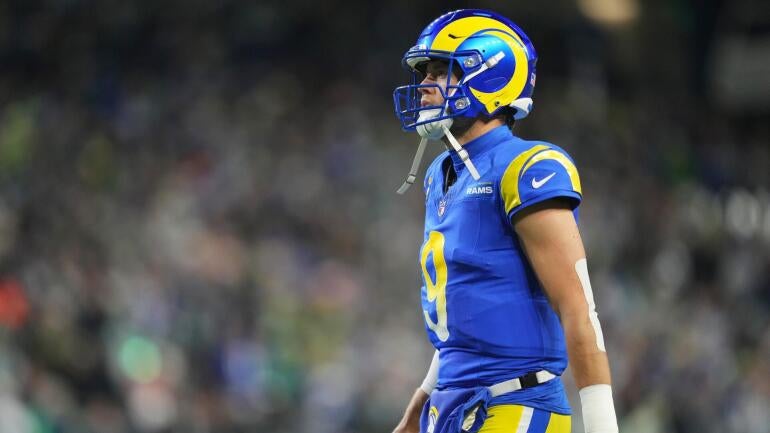
The Seattle Seahawks beat the Los Angeles Rams on Thursday night in one of the wildest games of the NFL season. One reason that Seattle was able to escape with a shocking 38-37 overtime victory is because they pulled off what might go down as the craziest two-point conversion in NFL history.
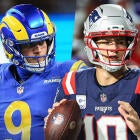
During the two-point play, the Seahawks ended up benefitting from a rulebook loophole that Matthew Stafford didn't even know about, which is definitely surprising, because the Rams quarterback has seen almost everything during his 17 years in the NFL.
On the two-point play, Sam Darnold threw a backward pass that was deflected by Jared Verse. From there, the ball rolled into the end zone and that's where Zach Charbonnet picked it up. The play was ruled an incompletion on the field, but after a review, the officiating crew ruled that Charbonnet's recovery was good for two points, which tied the game up at 30 with 6:23 left to play.
"Is this the craziest 2-point conversion EVER?"
— NFL (@NFL) December 19, 2025
The @Seahawks tie it up in a WILD way 😳
LARvsSEA on Prime Video
Also streaming on @NFLPlus pic.twitter.com/KwNtEIWVQ7
After the game, Stafford admitted that he was stunned by the fact that the two-pointer counted.
"To be honest with you I just want to know that rule because I thought on plays like that, like two-point plays inside of two minutes and stuff, I didn't think you were allowed to advance a fumble," Stafford said, via a team transcript.
NFL playoff picture: 49ers now in driver's seat to earn No. 1 seed in NFC after Seahawks' wild win over Rams
John Breech
Stafford is absolutely correct about one thing, you can't advance a fumble on a two-point conversion. Here's what the NFL rulebook says about that:
"If a fumble by either team occurs after the two minute warning or during a Try: (a) The ball may be advanced by any opponent. (b) The player who fumbled is the only player of his team who is permitted to recover and advance the ball. (c) If the recovery or catch is by a teammate of the player who fumbled, the ball is dead, and the spot of the next snap is the spot of the fumble, or the spot of the recovery if the spot of the recovery is behind the spot of the fumble."
Based on how that's written, Stafford's understanding of the rule is that Darnold fumbled it and since a fumble can't be advanced by anyone besides the fumbling player, the two-pointer shouldn't have counted since Darnold wasn't the one who recovered the ball in the end zone. However, this is where the rulebook loophole comes in.
If the ball ends up on the ground due to a backward pass, there are different rules in place. Once again, let's go to the NFL rulebook:
"BACKWARD PASS: A runner may throw a backward pass at any time (3-21-4). Players of either team may advance after catching a backward pass, or recovering a backward pass after it touches the ground. Any snap from center is a backward pass."
As the rule notes, a player from "either team" can recover a backward pass even after it touches the ground, so this play isn't officiated the same way as a fumble. The twist here is that if a Rams' pass-rusher had just brushed against Darnold's arm as he was throwing the ball, the play could have been ruled a fumble and in that case, the recovery wouldn't have counted. However, the replay clearly showed that Darnold wasn't touched while throwing the backward pass, so the rule regarding a backward pass were in effect and Charbonnet's recovery was legal.
In general, only scoring plays and turnovers are supposed to be automatically reviewed, but two-point conversions can also be reviewed by the booth without a challenge being used. The replay assistant also has the power to initiate a review to check "whether a pass was forward or backward."
Let's go back to the rulebook:
"When an on-field ruling is incomplete, and the pass was clearly backward, the ball will be awarded at the spot of recovery to the team that recovers the ball in the immediate continuing action. If there is no clear recovery, the ball will be awarded to the team last in possession at the spot where possession was lost."
In a situation like this, you get the ball wherever the recovery was made. If Charbonnet had recovered the ball at the 1-yard line and then stepped into the end zone, the two-pointer wouldn't have counted because the ball would have been placed where the recovery happened. If Charbonnet hadn't picked up the ball, the play would have been ruled dead and the two-point conversion would have failed.
There was also another controversial element to the play: At least one official appeared to blow a whistle.
Two point conversion: Rams versus Seahawks. Chaos.
— No Safe Words (@Cyber_Trailer) December 19, 2025
Why isn’t anyone talking about the fact that the whistle blew?
The whistle is clearly audible in the replay.
Are they claiming that they didn’t blow the whistle? pic.twitter.com/zQURf8m6Qn
In an instance where a whistle is blown while the ball is on the ground, officials are allowed to go to replay to see if either team made a clear and obvious recovery. Once again, let's go to the rulebook:
"When the on-field ruling results in a dead ball (e.g., score, down by contact, incomplete pass, etc.), and following replay review it is determined that possession was lost before the ball should have been ruled dead, possession may be awarded to a player who clearly recovers a loose ball in the immediate continuing action."
In this case, Charbonnet made a clear recovery.
Basically, the Seahawks inadvertently used several obscure rules to their advantage. After the game, Rams coach Sean McVay was still trying to figure out what happened.
"I've never quite seen anything like what happened on the two-point conversion where you're lined up to kickoff and then they say it's a fumble because they had the clear and obvious recovery, now you tack it on, make it a 30-30 game," McVay said after the loss. "Very interesting. Didn't get a clear explanation of everything that went on just because of some of the timing of it. They were trying to be able to do that but that's the thing that I've said I've never seen anything or never been a part of anything like that. I've grown up around this game. I'm not making excuses. We don't do that. I don't believe in that. It doesn't move us forward but we do want clarity and an understanding of the things that we can do to minimize that when we rejected the two-point conversion."
This was a huge game for both teams. With the win, the Seahawks now control the path to the NFC West title and the No. 1 seed in the NFC. If Seattle wins its final two games, then the Seahawks will get the top seed (The 49ers could also get the top seed if they win out, so there are actually two teams that control their own fate when it comes to the top seed in the NFC). As for the Rams, they now have to hope that the 49ers or Seahawks slip up over the next few weeks, but if that doesn't happen, then L.A. will be stuck entering the playoffs as a wild card team, which means playing a road game in the opening round.
One thing the Rams and Seahawks won't have to worry about is missing the postseason. The Seahawks officially clinched a playoff berth with their win on Thursday night while the Rams officially punched their playoff ticket in Week 15.