MLB robot umpires get the green light: What to know about ABS challenge system that starts in 2026
MLB's competition committee is reportedly expected to approve the ABS challenge system on Tuesday

By
Mike Axisa
•
3 min read
Major League Baseball's competition committee approved the automated strike zone challenge system for the 2026 season on Tuesday, the league announced. The 11-person committee consists of six owners, four players, and one umpire.
"The previous rule changes that have been adopted by the Joint Competition Committee have had staying power and created momentum for the game, commissioner Rob Manfred, who was strongly in favor of the challenge system, said in a statement.
"We used the same process with ABS that started with listening to fans, conducting extensive testing at the minor league level, and trying at every step to make the game better. Throughout this process we have worked on deploying the system in a way that's acceptable to players. The strong preference from players for the Challenge format over using the technology to call every pitch was a key factor in determining the system we are announcing today. I commend the Joint Competition Committee for striking the right balance of preserving the integral role of the umpire in the game with the ability to correct a missed call in a high-leverage situation, all while preserving the pace and rhythm of the game. I thank the Major League Umpires for their collaboration and the Major League Players for their feedback in moving the game forward for the fans."
The challenge system will be used for all spring training, regular season, and postseason games beginning in 2026.
How does the ABS system work?
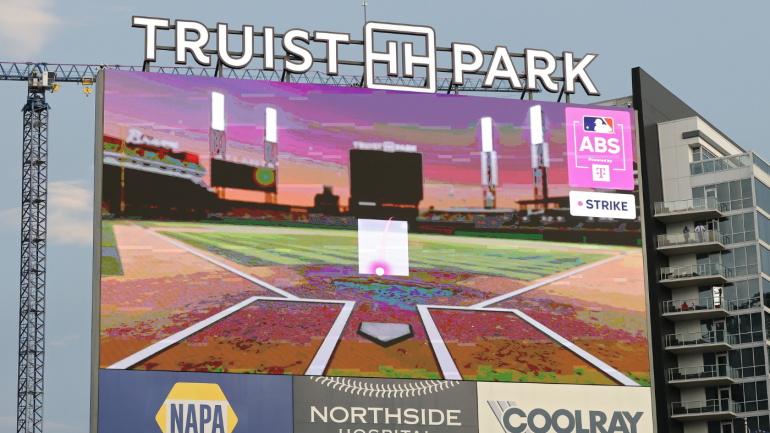
The ABS system, short for automated balls and strikes, has been tested in full in certain minor leagues the last few years. The challenge system is something of a compromise between full ABS and human umpires. With the challenge system, human umpires call every pitch, and each team can appeal two calls per game to ABS. You keep your challenge if your appeal is successful. The pitcher, catcher, and hitter are the only personnel who can challenge a ball/strike call. Managers and coaches can not challenge.
MLB tested the ABS challenge system with big-league players in spring training. It was used in this year's All-Star Game as well and has generally received positive reviews. Here's the challenge system in action:
Relatively quick and painless. The ABS challenge system has been tested in the minors long enough now that a good number of MLB players have played with it in the recent past, plus just about all of them were exposed to it in spring training.
ABS runs on Hawk-Eye, the technology that powers Statcast. Here is how the strike zone is determined, per MLB:
The strike zone will be a two-dimensional rectangle that is set in the middle of home plate with the edges of the zone set to the width of home plate (17 inches) and the top and bottom adjusted based on each individual player's height (53.5% of the batter's height at the top and 27% at the bottom). As was the process ahead of 2025 Spring Training, independent testers will measure players in Major League Spring Training using a standardized process. MLB will certify each player's official height before that player may appear in any Major League game.
MLB tested different shapes, sizes, and placements of the strike zone in the minors over the years. The league is not ramming ABS though. The system was tested, refined, and retested many times over the years. A lot of work was put into creating a strike zone and a system that works well.
MLB and the umpires' union finalized to a new collective bargaining agreement this past offseason and it includes provisions for ABS to be implemented. The writing has been on the wall for some time now. The challenge being approved Tuesday was not a surprise.
The competition committee can unilaterally implement on-field rule changes with 45 days' notice to the MLB Players Association. The committee approved the pitch clock in recent years, among other things.