My annual plea: Stop looking at spring training standings
We do this every spring. Every. Single. Spring. The standings don't matter until the regular season. Please stop acting like they do.

We've been watching spring training games for several weeks and there are still a few to go, so it's probably the intersection of getting past the "hey, we're finally watching baseball again" and "alright, let's get to the games that matter" discussions. It's also getting into the height of overreacting to spring training records from some people who either don't know any better or just can't help themselves.
Sadly, it's mostly the latter. I can't tell you how many media members I see on Twitter react to the records every single season. It's remarkable.
I'm begging everyone to stop.
So let's go over this just like we do every single spring. Having a good record in spring training doesn't mean the team is going to be good. Having a bad record in spring training doesn't mean the team will be bad. Nor do any of the other scenarios really mean anything.
Sure, everyone would like to play well all the time. Losing sucks. We all feel that way. Take it from World Series championship and soon-to-be Hall of Fame manager Bruce Bochy. After the Giants recently dropped a game that meant a 4-12 spring record, Bochy was quoted all over the Internet as having said "we're not even close to being ready."
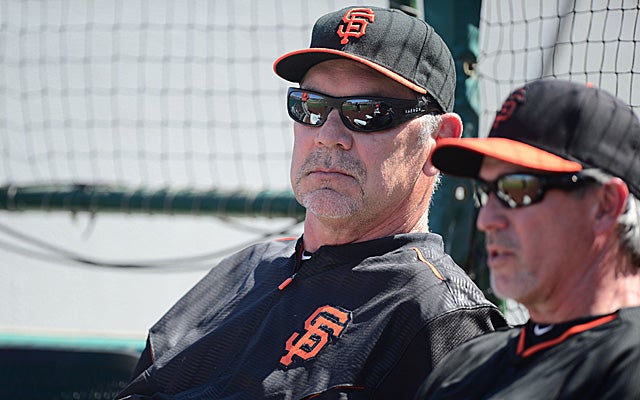
Well, they aren't ready. That's true. Don't forget the entire context of the quote, though, via mercurynews.com:
"I'm just very thankful we're at this point in spring training and not about to open the season," Bochy said. "We're not even close to being ready."
That's different, yeah? Later in that story Bochy mentioned that they weren't doing certain things well, such as hitting balls hard, playing good defense or pitching well. Basically they are bad at everything now, per their astute manager. Notice he didn't mention losses were the problem, though. In fact, he specifically said otherwise to Jon Heyman of CBSSports.com:
“It's not the record. It's how you're playing. And right now, we're just not playing great baseball."
Obviously, there are many reasons for the record not mattering. The most basic way to explain to a casual fan is that in the last several innings of most spring games -- especially early in the "season" -- the regular players are no longer in the game. You'll see the most important relievers getting in during the early innings so they face regulars, for example. You rarely see close to a full lineup of regular big-leaguers. Many of the regular position players are spilt up and alternate days in the lineup. There are multiple "split-squad" games, too.
This generally has been a rule throughout the past several decades, but in order to stick with the whole brevity thing and avoid the dreaded TL;DR tag, we'll go with the two wild-card era in this examination of recent history in regard to spring records.
2012
Here are the spring records of the playoff teams:
Yankees, 18-12
Orioles, 11-13
Tigers, 20-8
Athletics, 15-7
Rangers, 12-17
Nationals, 12-17
Braves, 10-18
Reds, 15-17
Cardinals, 16-9
Giants, 18-15
You'll find a mixed bag like this every season. I've looked before and do this very post every single spring.
Other items of note:
The Blue Jays had the best record in spring at a scorching 24-7. They'd go 73-89 in the regular season. The Astros ended the regular season with a historically-bad 55-107 record. They had a better record (14-17) than nine teams in the spring. The Rays won 90 regular-season games after a 10-16 record. On the other hand, the Indians had the worst spring record (7-22) before an awful regular season (68-94). And we have a few teams that were mediocre in both the spring and regular season. It goes every which way. Just like every year.
2013
Spring records of playoff teams:
Red Sox, 17-17
Rays, 15-17
Tigers, 19-14
Indians, 17-16
A's, 17-13
Braves, 20-15
Cardinals, 16-15
Pirates, 13-18
Reds, 13-20
Dodgers, 13-20
The Pirates actually had the worst record in the Grapefruit League before breaking their professional sports record drought of consecutive losing seasons and getting all the way to 94 regular-season wins.
Other items of note:
The Royals had the best record in the spring at 25-7. They'd go 86-76 in the season that means something. The Mariners (22-11) were second in the Cactus League and went 71-91 in the regular season. The best team in the Grapefruit League was the Orioles (19-9), who would go 85-77 in the regular season and miss the playoffs -- sandwiched between two playoff seasons in which they weren't as good in the spring. Also, this was generally a weird spring in that the majority of the teams were within just a few games of .500 either way.
2014
Spring records of playoff teams:
Orioles, 13-9
Tigers, 15-12
Royals, 12-16
Angels, 18-11
A's, 15-13
Nationals, 15-13
Cardinals, 11-13
Pirates, 15-10
Dodgers, 7-11
Giants, 17-12
Much closer overall this time, but note the Royals after a huge spring in 2013 being pretty bad in 2014 only to make the playoffs (and World Series!) for the first time since 1985. The Dodgers and Cardinals came out just fine, too, after a bad spring.
Other items of note:
The Indians were 20-9 to lead the Cactus League, only to miss the playoffs due in large part to a terrible start. No momentum, huh? The best record in the spring belonged to the Rays (16-7), who would go 77-85 in the regular season. The Phillies, Twins and Rangers were all bad in spring and regular season. The Brewers were 13-18 in the spring before an amazing April kept them in contention until a late-season meltdown. The Marlins were 18-12 before a 77-win regular season.
Again, it's just a mixed bag.
So while there are plenty of things that do matter in spring action -- such as tracking young players, players coming off injury, players on defense at a new position, players using a new swing, pitchers working on a new delivery or new pitch and regulars avoiding injury, etc. -- looking at the standings and drawing any sort of conclusion as to what will happen in the regular season isn't a good idea.
And yet, next year at this time we'll be having the discussion again. That is one thing I can absolutely guarantee.