Padres GM A.J. Preller's experiment has (mostly) failed
Padres GM A.J. Preller boldly remade the Padres' roster and then held course at the deadline. None of it worked.

By
Dayn Perry
•
3 min read

While Padres GM A.J. Preller is, on general principle, to be commended for first his boldness and then his steadfastness, his sweeping experiment hasn't worked. Almost none of it has worked, really.
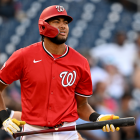
By way of reminder, Preller not long after being hired got to work remaking the Padres' roster with the zeal of the converted. Gone were Yasmani Grandal, Rene Rivera, Everth Cabrera, Carlos Quentin, Seth Smith, Cameron Maybin, Chris Denorfia, Jesse Hahn, and a host of prospects. Brought in were Matt Kemp, James Shields, Justin Upton, Melvin Upton Jr., Craig Kimbrel, Will Middlebrooks, Wil Myers, Derek Norris, and Clint Barmes. The moves were conspicuous, and Preller hogged the winter headlines for quite a while. The fan base was roused, understandably so.
However, Preller's maneuverings, which were designed to position the Padres as a contender in 2015, left the infield in terrible shape, ignored catcher defense in general and pitch-framing in particular, forced the team to make do without a regular center fielder on the roster, and made the lineup far too right-handed. That's to say nothing of the strip-mined farm system. The team got more expensive, but it didn't get all that much better. And, no, this is not post-hoc argument from convenience; the Padres' flaws after Preller was done were obvious to anyone not invested in thinking otherwise.
On July 31 -- the non-waiver trade deadline -- the Padres found themselves four games below .500 and in fourth place. Still and yet, Preller didn't sell off any veterans to genuine contenders. Perhaps lured forward by an accommodating post-deadline stretch of schedule, he held fast and kept his blemished roster together. Well, that stretch of schedule -- 18 straight games against (fellow) losing teams coming out of the deadline -- has come and gone. Over that span, the Padres went 9-9. That's not terrible, but that's very much not seizing the opportunity. Now things get tougher.
To put a finer point on it, the SportsLine Projection Model as of Thursday gave the Padres' a 0.1 percent chance of making the postseason. As such, Preller's decision to stay the course at the non-waiver deadline looks most unwise. Yes, the schedule ahead was filled with losing teams, but the Padres were -- and are -- a member of that particular tribe.
To a limited extent, Preller can pivot this upcoming offseason and ship off a handful of vets for some youngsters, but his most valuable trade chip, Justin Upton, is bound for free agency and won't net him anything more than a compensatory draft pick. All of that is set against the larger reality that the Padres now have an aging pitching staff and, by their standards, an expensive roster. As well, the farm system is now very light on high-ceiling talents. There's also this: even after all the roster churn, even after winning five of their last six, the Padres are on pace to improve upon their 2014 record by ... two games.
Moving forward, San Diego probably lacks the young talent to swing more trades like the ones Preller made this past offseason. Moreover, they likely lack the budget flexibility to make prominent free agent additions or assume more dead-money contracts in trades (for 2016, they'll owe almost $70 million to just four players -- all Preller acquisitions).
To be fair, though, Preller's achieved something both notable and positive in his first season helming the Padres. On his watch -- and surely in large part owing to his many moves -- the Padres' home attendance is up almost 4,000 fans per game on average. That matters, particularly to Preller's bosses. That said, the team's grim mid-term outlook will at some point send that trendline in the other direction.
So circling back to that boldness and steadfastness, those are often good things. When the underlying plan is unsound and short-sighted, though, they're bad things.