Agent's Take: Why Odell Beckham will never be NFL's highest-paid player
Beckham is likely to become the NFL's top-paid WR, but QBs rule the salary landscape
By
Joel Corry
•
7 min read

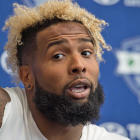
Odell Beckham Jr. set a high bar for his next contract in a video for "Uninterrupted" last week. He said, "I believe that I will be, hopefully not just the highest-paid receiver in the league, but the highest-paid. Period."
The good news for Beckham is John Mara, the Giants president and CEO, subsequently acknowledged that his All-Pro wide receiver deserves a big contract but didn't specify a timetable. Beckham is under contract for the next two years. He is scheduled to make a little more than $1.8 million this season and $8.459 million in 2018 because the Giants picked up their fifth-year option with him. Unlike the Rams' Aaron Donald, who was drafted right after Beckham in first round of the 2014 NFL draft with the 13th overall pick, Beckham isn't forcing the issue for a massive payday through a holdout.
There hasn't been a wide receiver that's had a better first three NFL seasons than Beckham. His 288 receptions, 4,122 receiving yards and 35 touchdown catches in 43 games are tied for first, rank second and tied for fifth all-time to start a career. Randy Moss is the only wide receiver with comparable production. He had 226 receptions for 4,163 yards and 43 touchdowns in 48 games during his first three seasons. Despite performing at a historical level, Beckham's goal is unrealistic. Here's why.
Quarterback is king
A wide receiver becoming the NFL's highest-paid player would be unprecedented for the salary cap era, which began in 1994. Quarterbacks have traditionally been atop the league's salary hierarchy. This isn't going to change in the foreseeable future.
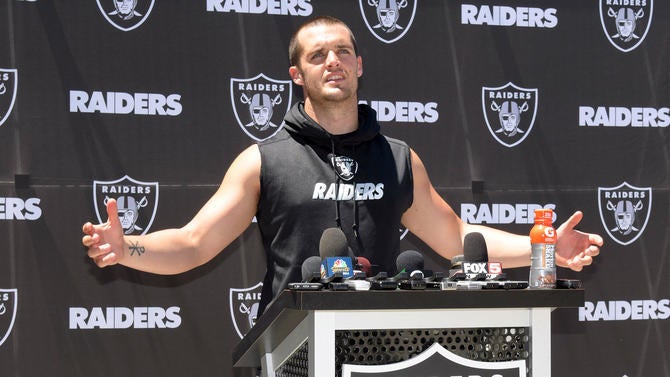
Quarterback salaries are set to explode over the next year. Derek Carr recently became the NFL's first $25 million-per-year player with the five-year, $125.025 million contract extension he received from the Raiders. He could drop to the fifth highest-paid player in the league by the time the 2018 regular season begins.
The Lions would like to extend Matthew Stafford's contract as soon as possible. He contract is set to expire after this season. Any new deal for Stafford is expected to top Carr's.
It's conceivable that Kirk Cousins could command $30 million per year with $100 million in guarantees should he become an unrestricted free agent in 2018. That's because there are more NFL teams than good quarterbacks. Some of the quarterback needy teams (49ers, Browns, Jets, etc.) having an abundance of cap space next offseason may result in a bidding war for Cousins' services because quality quarterbacks in their prime almost never hit the open market.
A Cousins contract would be the starting point for the new deal Aaron Rodgers is expected to sign with the Packers in 2018 when there are two years left on his current contract. The Falcons will likely extend reigning NFL MVP Matt Ryan's contract next year as well since he will be in a contract year.
NFL players are typically paid according to their respective positional markets, the lone exception being players who can consistently pressure opposing quarterbacks. Pass rushers are paid a premium regardless of whether they are 3-4 outside linebackers, 4-3 defensive ends or interior defensive linemen.
Wide receiver in the NFL salary landscape
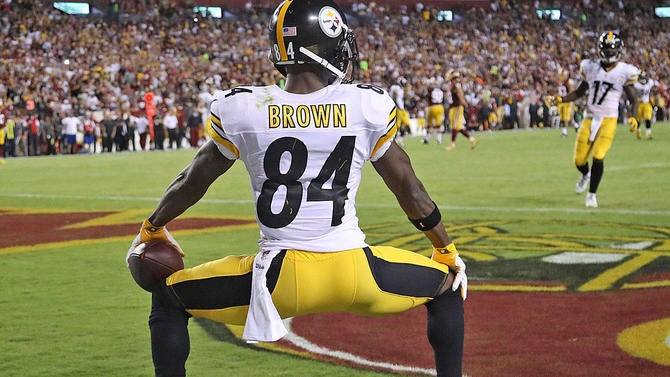
The highest-paid wide receiver is currently Antonio Brown. He reset a stagnant wide receiver market in February when the Steelers gave him a four-year extension averaging $17 million per year.
Beckham isn't going to get a contract averaging almost 50 percent more than Brown's to surpass Carr's. A contract averaging upward to 75 percent more than Brown's would be necessary for Beckham to reach his goal as long as quarterback salaries take a dramatic jump if he signs a new deal next offseason or preseason.
The closest a wide receiver has come to being the NFL's highest-paid player since the end of the lockout in 2011 is Larry Fitzgerald. His seven-year, $113 million extension containing $45 million in guarantees with the Cardinals made him fourth in the league by average yearly salary. Tom Brady and Peyton Manning's $18 million per-year deals were the NFL standard in 2011.
The chart below illustrates where wide receivers have fit in the NFL's salary landscape relative to the highest-paid player post-lockout.
| Year | Highest Paid Player | Average Salary | Highest Paid WR | Average Salary | WR League Rank |
| 2011 | Tom Brady | $18,000,000 | Larry Fitzgerald | $16,142,857 | 4th |
| 2012 | Drew Brees | $20,000,000 | Calvin Johnson | $16,207,143 | 5th |
| 2013 | Aaron Rodgers | $22,000,000 | Calvin Johnson | $16,207,143 | 9th |
| 2014 | Aaron Rodgers | $22,000,000 | Calvin Johnson | $16,207,143 | 14th |
| 2015 | Aaron Rodgers | $22,000,000 | Calvin Johnson | $16,207,143 | 21st |
| 2016 | Andrew Luck | $24,564,000 | A.J. Green | $15,000,000 | 33rd |
| 2017 | Derek Carr | $25,005,000 | Antonio Brown | $17,000,000 | 23rd |
Calvin Johnson, who the Lions took with the second overall pick in the 2007 NFL draft, was the best chance for a wide receiver to become the league's highest-paid player. But even he fell short despite having an extreme amount of leverage thanks to how the rookie contracts for top picks were structured prior to the rookie wage scale being implemented in 2011. The latter years of these contracts typically became unmanageable for teams with highly productive top picks because astronomical salary cap numbers from earning easily achievable salary escalators and incentives paid these players near the top of their positional markets. Some teams, like the Lions, would compound the problem by restructuring rookie contracts for immediate cap relief, which would raise the cap numbers in remaining years.
These factors helped Johnson receive a seven-year, $113.45 million extension in 2012 where $53.25 million was fully guaranteed at signing. It would have been virtually impossible for the Lions to franchise Johnson at over $25 million when his rookie contract expired after the season and lowering his 2012 salary cap number, which was slightly more than $21 million, was a necessity.
Johnson's deal was only a marginal increase over Fitzgerald's. Had Johnson been able to become the highest-paid player, it would have been for just a few days. Peyton Manning signed a five-year contract with the Broncos averaging $19.2 million per year a week after Johnson's extension.
Beckham or any other first-round pick, regardless of his draft position, is never going to have leverage similar to Johnson's thanks to the current CBA's rookie wage scale. The fifth-year option in 2018 for a wide receiver taken inside the top 10 of the 2014 draft is $13.258 million. This figure doesn't create the same urgency for a contract-year extension as Johnson's cap number did in the final year of his rookie deal.
Wide receivers as highest-paid non-quarterback
Beckham being the NFL's highest-paid non-quarterback wouldn't be unchartered territory. Fitzgerald and Johnson both held the distinction. The chart below outlines the evolution of the highest paid non-quarterback since the lockout ended.
| Name | Club | Position | Year | Guarantees | 3-year Compensation | Average salary | Contract Length |
| Larry Fitzgerald | Cardinals | WR | 2011 | $45,000,000 | $45,500,000 | $16,142,857 | 7 Yr Extension |
| Calvin Johnson | Lions | WR | 2012 | $53,250,000 | $51,750,000 | $16,207,143 | 7 Yr Extension |
| Calvin Johnson | Lions | WR | 2013 | $53,250,000 | $51,750,000 | $16,207,143 | 7 Yr Extension |
| J.J. Watt | Texans | DE | 2014 | $51,876,385 | $41,376,385 | $16,666,667 | 6 Yr Extension |
| Ndamukong Suh | Dolphins | DT | 2015 | $59,955,000 | $60,000,000 | $19,062,500 | 6 Years |
| Von Miller | Broncos | OLB | 2016 | $70,000,000 | $61,000,000 | $19,083,333 | 6 Years |
| Von Miller | Broncos | OLB | 2017 | $70,000,000 | $61,000,000 | $19,083,333 | 6 Years |
The $20 million per year non-quarterback is on the horizon. It could be a matter of days before Donald becomes the first. At the minimum, Donald's new deal should establish a new salary benchmark for non-quarterbacks. Raiders defensive end Khalil Mack, who was named NFL Defensive Player of the Year in 2016, will likely break the barrier in 2018 if Donald doesn't beat him to it. Signing Mack to an extension will be a top priority of the Raiders next offseason.
Team salary hierarchy
Becoming the highest paid player on the Giants, let alone the NFL, will be a challenge for Beckham. Eli Manning has that honor at $21 million per year. The four-year, $84 million extension that Manning signed right before the 2015 regular season had a then-NFL record $65 million in overall contract guarantees. The 36-year-old Manning's contract runs through the 2019 season.
Typically, the starting quarterback is at the top of a team's salary hierarchy when he gets a lucrative contract. Ryan Tannehill is the highest-paid player on the Dolphins (by average yearly salary) despite Ndamukong Suh being one of the game's best defensive players. The Chiefs kept Justin Houston's average right under Alex Smith's $17 million per year. Houston was coming off a 2014 season in which he almost broke Michael Strahan's NFL single-season record of 22.5 sacks by posting an NFL-leading 22 sacks when he signed a six-year contract as a franchise player averaging $16,833,333 per year in 2015.
Ben Roethlisberger signed a four-year extension with the Steelers in 2015 for $21.85 million per year. His deal averages almost 30 percent more than Brown's. This is despite Brown easily being the NFL's most-productive pass catcher over the last four seasons. Brown leads the NFL in receptions (481), receiving yards (6,315) and touchdown catches (43) since the start of the 2013 season.
The same dynamic was also true with the Lions before Johnson abruptly retired after the 2015 season. Johnson was arguably one of the five best players in the NFL when healthy but Stafford was the team's highest-paid player.