Remember all that tanking in the NFL talk? Yeah, you can forget about it now
Ultimately, 2018 was a quarterbacking anomaly, a year the likes of which we might not see again, along with tanking

•
7 min read
Travel back with me in time if you will. Let's return to those heady days of late spring just one year ago, back when NFL punditry (me included at times) was falling all over itself to proclaim a new trend in the sport.
Wasn't all that long ago that tanking was supposedly, allegedly, all the rage in pro football. Everybody in the bottom half of the standings was doing it, or about to do it, so the narrative went. The race to the bottom was going to be fiercer than the race to the top, and the hunt for the first-overall pick threatened to obscure other more noble pursuits in the game. The NFL was going to go the way of the NBA and MLB, parity be damned. Tear it down to the splinters to build it back up again.
Wasn't that long ago that conventional wisdom had the Jets – who would actually hang around the periphery of the playoff scene in the mundane AFC until starting quarterback Josh McCown got hurt – going all out to finish 0-16. The Browns, coming off a 1-15 season, couldn't be that far behind (well, we got that part right), and the Bears were fooling themselves that Mike Glennon was going to soothe their considerable deficiencies and Mitchell Trubisky was as raw as they come on the bench. The 49ers would suffer in Kyle Shanahan's first season as a head coach (and that they did until they pulled off the move of the decade to land Jimmy Garoppolo from the Pats) and the Dolphins luring Jay Cutler out of retirement when Ryan Tannehill got hurt again didn't bode well for them. It was a losing bonanza!
You couldn't read an article or turn on the television last offseason without hearing some version of this yarn being spun. It was kinda sorta everywhere. And, as someone who got caught up in it to some extent, I understand why. This truly looked like a league trending to extremes – a small handful of truly elite teams and a shrinking middle class with the legion of the have nots expanding quickly. And there were no shortage of truly awful teams playing in the NFL in 2017, that part was true, led once again by the hapless Browns.
But in hindsight, this storyline was more a moment in time than a glimpse into what was to come. It was more about what turned out to be a once-in-a-generation occurrence – five quarterbacks about to be selected in the first round of the upcoming draft on the heels of a whirlwind of starting quarterback trade and free-agent activity – than it was a portal into how front offices would be rethinking the benefits of losing big for years to come. It was more about the very early stages of what would become months of jockeying for position to land one of these potential golden tickets in the 2018 offseason (free agency/trades and draft) than it was a beacon for how to rebuild a new age winner.
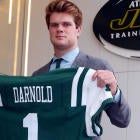
It was about Baker Mayfield and Sam Darnold and Josh Allen and Josh Rosen and Lamar Jackson. That's what was behind all the noise and navel-gazing and think-pieces. Sure, the rise of analytics to some degree had something to do with the narrative, and the Browns essentially buying a draft pick from the Texans in exchange for cap space in the Brock Osweiler transaction provided an intriguing backdrop as well. But let's not kid ourselves; the NFL is as set in its ways as any pro sports league, and while a host of young general managers have brought some new ideas about asset management and player value to the forefront, you aren't going to hear owners pulling a Mark Cuban and rooting for their team to lose anytime soon.
Consider this a mere blip on the NFL timeline. I'd posit that you'll be spared much tanking talk in the months, and years, to come. Look at how many teams addressed their coaching or front office changes this offseason – the Raiders handed the entire organization to old-school-til-he-dies Jon Gruden while the Giants more or less did the same with Dave Gettleman, very much in the same mold. Teams like the Browns and Bears, who have been so bad for so long, opted not to blow up their entire organizations and instead fired only the coach or general manager, and not both.
And one must also weigh what the spoils of tanking might entail this time around. The chatter about next year's quarterback draft class is dire at best. Usually this is the time when the buzz begins to form about the next crop of potential franchise saviors … but that just isn't the case. There are those undercurrents you normally get about why Team X, clearly in need of a new quarterback, didn't move up at the draft to land, because they already have their eye on Quarterback Z in the 2019 draft. Good luck finding any of that rhetoric out there.
If you find a fanbase peddling the equivalent of "Suck for Luck" or "Suck for Sam" or any similar pairings of a verb that equates to tanking with the name of a stud college quarterback, let me know. Would be misguided at best.
It's the exact opposite of a year ago, and it explains the quarterback feeding frenzy of 2018, which began in earnest at midseason when the Patriots finally admitted what was true all along and conceded they couldn't keep Jimmy G and Tom Brady under the salary cap and dealt him to San Francisco for a mere second-round pick. The frenzy was on and the franchises that had amassed quantities of picks from all that recent losing were already starting to box out and throw elbows to get in line to get their guy through trades, draft order or signings.
We couldn't even get to the Super Bowl without Alex Smith already being dealt to the Skins, and guys like Tyrod Taylor (trade), Case Keenum and Sam Bradford, who have all led teams to the playoffs, ended up with new teams as well quickly in free agency, to say nothing of young free agents like AJ McCarron and Teddy Bridgewater and Tom Savage who have some promise as well and moved on to new clubs.
Then we had the Jets and Colts – two teams who heard no shortage of tanking talk themselves – making a trade six weeks before the draft that put New York in better position to land a quarterback of its choosing (who ended up to be Darnold). And the Browns considered no shortage of trade possibilities before using the spoils of their 0-16 season to take Mayfield first overall. And the Bills moved up to get Allen after exploring options for weeks to move up even higher. And the Cardinals jumped up to take Rosen a few picks later. And the Ravens closed out the first round by trading up to pick 32 with the Eagles for Jackson.
It was all about this remarkable upcoming moment in time via quarterbacks – young and old – all the time. Teams could see a higher degree of quarterback movement on the horizon, they had sufficient information on the 2018 draft class to know it was going to be robust with first-round passers (even before Mayfield exploded) and there have been enough quarterbacks drafted in the top half of the draft who have not taken a step forward (Christian Hackenberg, Connor Cook, Landry Jones, Bryce Petty, Paxton Lynch, to name a few) that demand was high and supply actually met it for a change, and that's even with free agents like Drew Brees and McCown and Ryan Fitzpatrick re-signing with their current teams.
But the landscape has greatly changed now, both at the pro and college level. Dramatically changed. Taylor and McCown are the only current starting quarterbacks set to become free agents after this season, and there will hardly be a feeding frenzy for their services. The rest of the market will be filled by guys like Bradford and Joe Flacco and Tannehill, whose contracts are likely to be deemed prohibitive by their present teams barring major reversals in recent heath and/or productivity.
There will be no flurry of activity to land them, no quarterback pot of gold at the end of a loser's rainbow. There will be need to "tank," real or imagined, to land them. Ultimately, 2018 was a quarterbacking anomaly, a year the likes of which we might not see again. The tanking talk will prove to be the same.
Tank for Tyrod? Torpedo for Tannehill? Stink for Sam (Bradford)?
I don't think so. All that tanking talk? It's pretty much tanked.