Tom Brady is nearly unstoppable but here's a plan to try and slow him down
Tom Brady is on a roll right now, and he's releasing the ball quicker and more efficiently than ever. Here's how he's doing it, and how teams might be able to slow or disrupt the Patriots offense.

•
10 min read

Tom Brady has mastered the hyper-precise, quick passing game, and through three games, the Steelers, Bills and Jaguars have had no answers for the Patriots offense.
On passes behind the line of scrimmage and up to 9 yards past the line of scrimmage, take a look at how outrageously efficient -- even with a noticeably larger volume -- Brady has been compared to his top-level quarterback contemporaries:
| Delivering with short passes up to 9 yards (per game) | ||||
| Player | Comp. | Att. | Yards | TD |
| Tom Brady | 25.6 | 32.3 | 220.3 | 2.6 |
| Aaron Rodgers | 16.5 | 19.75 | 121.75 | 1.5 |
| Ben Roethlisberger | 16.4 | 19.2 | 110.8 | 0.4 |
| Carson Palmer | 11 | 15 | 113.25 | 1 |
| Matt Ryan | 17.25 | 22.75 | 142 | 0.75 |
| Peyton Manning | 18.5 | 25.25 | 118.75 | 0.75 |
Brady is quite clearly in his own atmosphere when it comes to accumulating production without having to chuck the ball down the field.
That 77-of-97 passing is nearly an 80 percent completion rate, and his 661 yards on those 97 short throws equates to a relatively stunning 6.8 yards per attempt.
For perspective on Brady's short-passing YPA, the 6.8 is tied with the total YPA of Eli Manning. It's better than the total YPA of Teddy Bridgewater, Cam Netwon, Andrew Luck, and yes, Peyton Manning.
Bonkers.
Conversely, Brady's been rather ineffective on passes beyond 20-plus yards this season and dating back to the start of 2014.
This season, Brady has been accurate on five of 12 "deep" passes -- 41.7 percent, good for 13th out of 32 signal-callers -- for 132 yards with no touchdowns or interceptions. Last year, he went 20 of 60 for 528 yards with five touchdowns and two interceptions on throws of 20 or more yards.
Combined, Brady's deep-pass Accuracy Percentage is 34.7 percent, which would have ranked him 28th out of 38 qualifying quarterbacks in 2014 ... and slightly ahead of Eli Manning's percentage of 33.3.
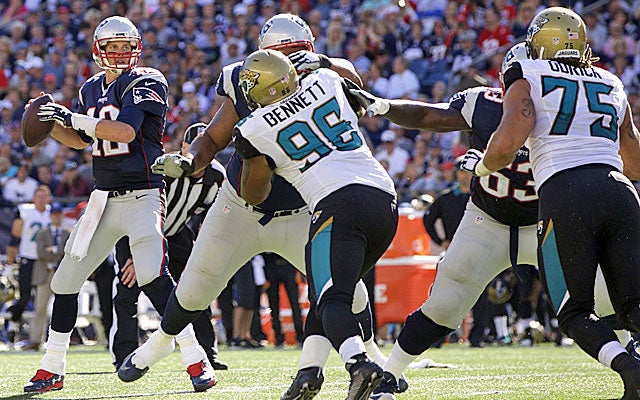
Maybe not entirely surprising but certainly noteworthy, Brady leads the NFL in fastest average time of release.
| Fastest average time of release | ||
| Rank | Quarterback | Seconds to attempt |
| 1 | Tom Brady | 2.04 |
| 2 | Philip Rivers | 2.08 |
| 3 | Eli Manning | 2.14 |
| 4 | Andy Dalton | 2.18 |
| 5 | Peyton Manning | 2.19 |
| 6 | Alex Smith | 2.29 |
| 7 | Matthew Stafford | 2.32 |
| 8 | Matt Ryan | 2.34 |
| T9 | Ryan Mallett | 2.37 |
| T9 | Derek Carr | 2.37 |
Obviously three games is a small sample size, but the 2.04-second average is striking. Last year, Brady's average was 2.34 seconds. In 2013, it was 2.39. The year before that, 2.42.
Spot a trend?
Yep, as he has entered what should be the twilight of his career, Brady's getting rid of the football faster each season.
(If you're wondering about Rivers' effectiveness on those short passes, his per game averages equate to 20 of 25 for 202 yards with one touchdown. Really good, but short of Brady-caliber volume and production.)
The Patriots' short passing game is tremendously logical for a few reasons.
1. It almost automatically negates the opposition's pass-rush
In 2013 and 2014 combined, the Bills registered an NFL-best 111 sacks, and in the two games not against Brady this year, they've amassed 40 QB pressures -- a sack, hit or hurry -- on 40 of 104 dropbacks, good for 38.4 percent.
New England cut that percentage in half during its Week 2 win over Buffalo, and the Bills had Marcell Dareus back from a Week 1 suspension. Brady was pressured on just 12 of 61 dropbacks, or 19.6 percent, en route to his outrageous 466-yard effort.
Among the 30 quarterbacks who've taken at least 50 percent of their respective team's snaps thus far, Brady's pressure rate of 23 is the third-lowest in football.
2. It forces defenders to tackle in space
Wide receiver Julian Edelman has already forced four missed tackles, which puts him on an early pace for 21.
In the 2014 regular season, he forced 13, and in 2013 he forced eight.
Danny Amendola has forced two missed tackles. PFF didn't have him for any missed tackles forced in 2014, and he forced just three in 2013.
While we don't know where on the field or on what type of throws Edelman and Amendola have forced those missed tackles, their respective average depth of targets are 7.2 and 9.2 yards.
For context, Amendola's 9.2 would have ranked 94th out of 115 qualifying receivers in 2014, and Edelman's 7.2 (which is what Amendola averaged last year) would have ranked him 109th out of 115.
Running back Dion Lewis' average depth of target is 3.7, and he's forced a whopping 10 missed tackles on just 15 receptions. which still leads all running backs. Second place in that category -- Falcons runner Devonta Freeman -- has forced nine missed tackles on 17 grabs.
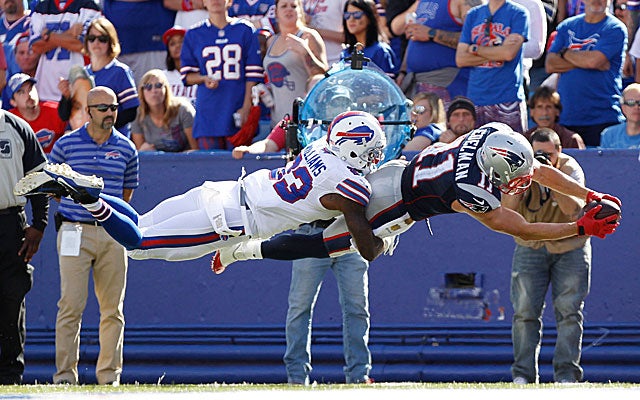
3. It moves the chains and keeps Brady operating at maximum efficiency
While not every Brady pass has been a short one, it's amazing that while only playing three games thus far, the Patriots are still 7th in the NFL in first downs with 88 and 58 of them have come via the pass.
The latter ranks 4th in football and is actually more than the total number of first downs the Rams have accumulated through four contests.
Right now, Brady's average depth of target is 7.5 yards. Last season it was 8.5. In 2013 ... 8.8 and in 2012 it was 9.1. As Brady has been releasing it quicker, he's also been throwing it shorter, and it's paid insane dividends for the New England offense.
Furthermore, Brady's three-game Accuracy Percentage -- which counts drops as completions and subtracts throwaways, spikes, batted passes and times a quarterback is hit as thrown -- is 81.3 percent, which would be his highest AP since at least 2007.
Again, the sample size is likely helping here, but he and his offense have shown absolutely no signs of slowing down heading into Week 5.
Is there a way to slow or disrupt the Patriots' offense?
Without a background as an NFL defensive coordinator, the best advice I can offer would be what only seems to make sense -- defensive backs, linebackers and safeties need to do whatever they can do play tight coverage and get their hands on the Patriots pass-catchers within the first 5 yards.
We all know the Steelers were disastrous with their coverage responsibilities in their season-opening loss to New England, but check some of the large cushion and free, easy releases the Bills and Jaguars were giving the Patriots receivers the past two weeks.
(Not cherry-picking either. Buffalo and Jacksonville defenders played "off" for the overwhelming majority of both games.)
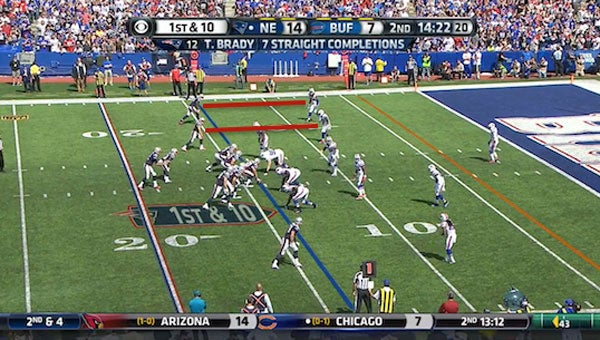
Even when many Bills defensive backs played closer to the line, they instantly went into a "bail" technique and dropped downfield, which essentially invited the short passing game.

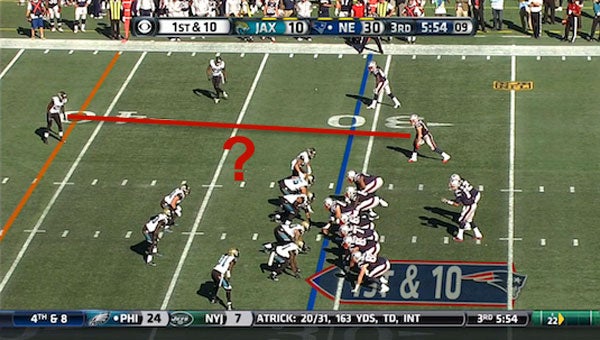
Yeah, the Jaguars' safety was off the screen, with just a sliver of his arm visible a good 13-15 yards away from Edelman in the slot.
The nimble slot receiver has been targeted four times on passes over 20 yards this season, and he's yet to register a catch. During the 2014 regular season, he was targeted on 11 "deep balls" and caught three of them for 103 yards with no touchdowns.
In fairness to the Steelers, Bills and Jaguars defenses -- and many defenses from a season ago -- the Patriots are, to a certain degree, demanding defensive backs to play off.
How so?
By repeatedly sending out four and five receivers -- yes, oftentimes on first and second down -- New England puts opposing teams' linebackers and safeties in uncomfortable coverage situations.
And to allow themselves some semblance of "help" deep, the safeties, even if they're forced into one-on-one coverage, almost "have" to play back 7-10 yards.
See Buffalo safety Corey Graham on this play from Week 2. He realizes he'll have to cover Rob Gronkowski, but he can't totally abandon his deep-coverage responsibilities.
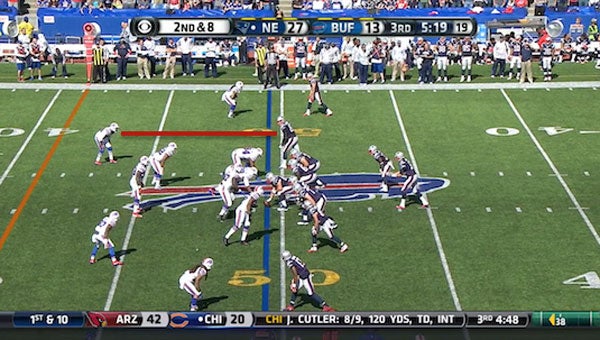
But as indicated by Brady's deep passing struggles, defenses should actually want Brady to test them down the field instead of picking them apart underneath.
Outside of more aggressive, press man defense, and to combat New England's college-like spread, defensive coordinators should mix in zone blitzes to at least attempt to confuse Brady while dropping a defender -- or two -- underneath where the Patriots attack lives.
What's a zone blitz?
There are variations, but it's typically the type of blitz in which a cornerback, safety or linebacker rushes "in place" of a defensive lineman and said defensive linemen "replaces" that atypical defender by dropping into coverage.
Here's a good look at a classic zone blitz. Safety Barry Church rushes from the left, and defensive end Anthony Spencer instantly retreats to his underneath coverage duty (via Dallas Morning News).
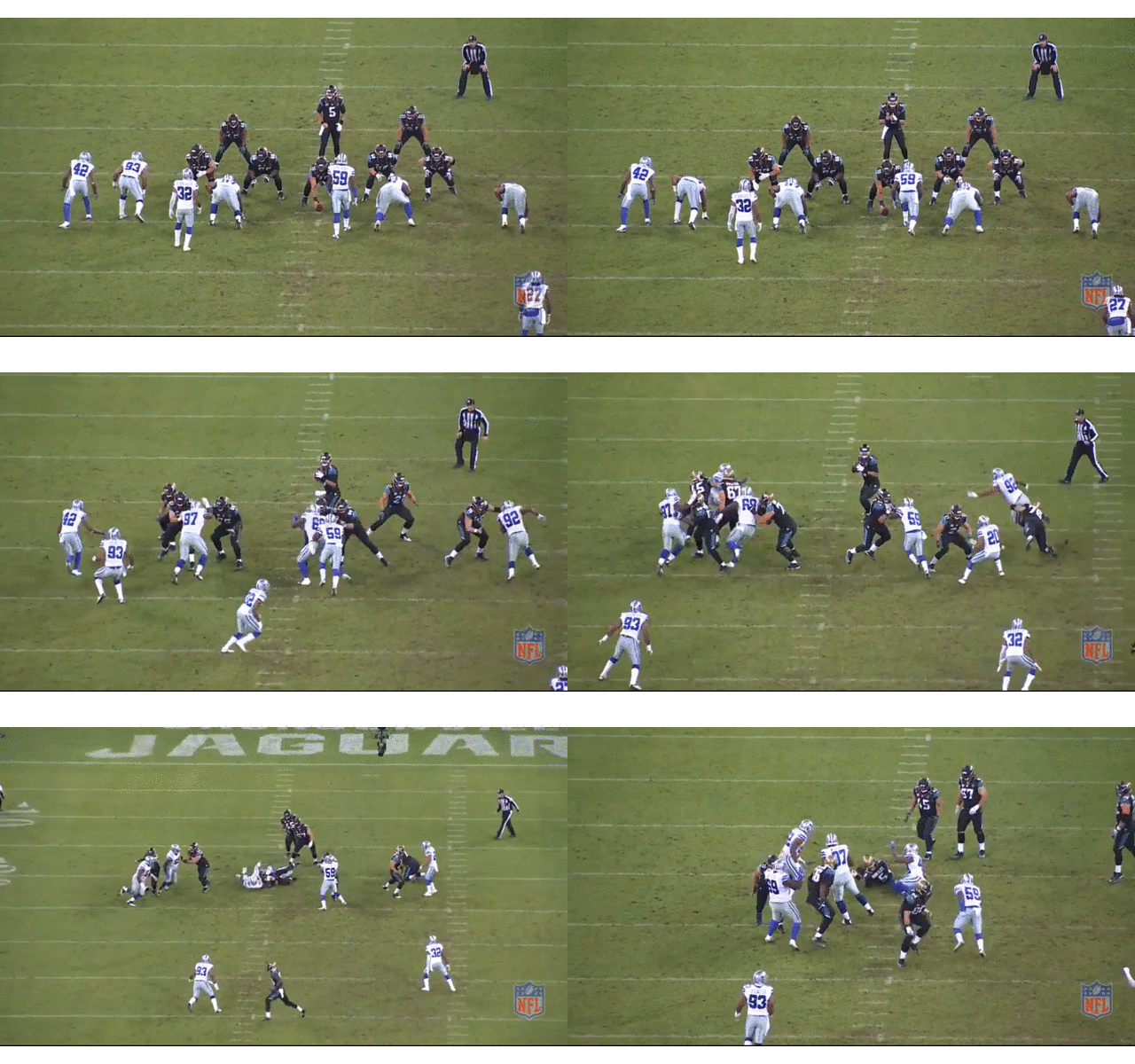
Sometimes with a zone blitz, before the snap, what appears to be a blitz from one side ends with those players -- regardless of position -- dropping into coverage and the blitz actually coming from the opposite side of the line.
Here's a good look at that particular zone blitz executed by the Jets against the Patriots in 2014 (via BuffaloWins.net). You'll notice that Sheldon Richardson, the 2013 Defensive Rookie of the Year, actually drops into the flat and Muhammad Wilkerson barely rushes.
Richardson was occupying the flat area where Brady looked first, and Calvin Pace came untouched from the backside to get the sack.
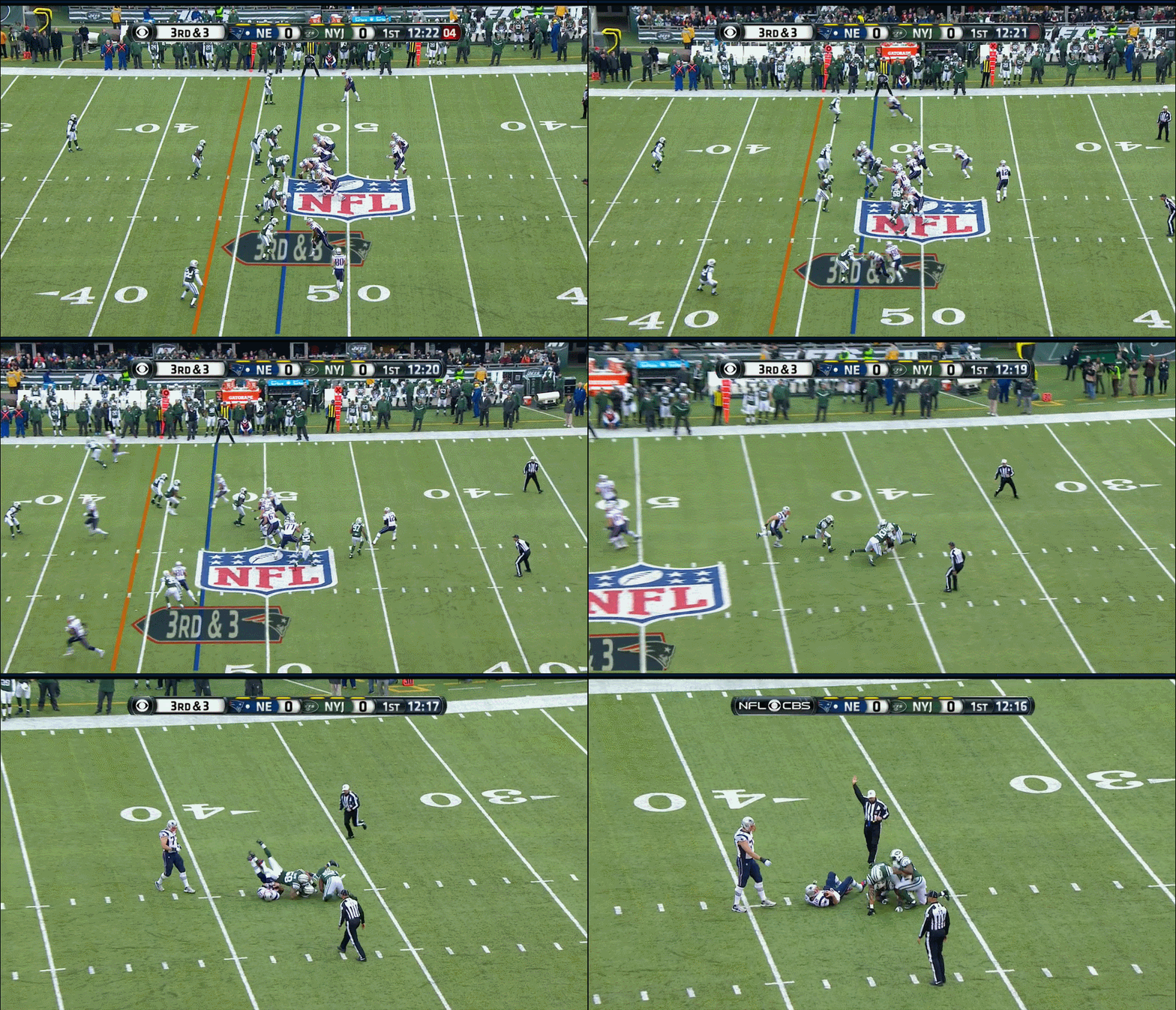
Brady is as well-versed as any quarterback when it comes to properly reacting to blitzes, but the normal response to a blitz is throwing to the area from which the blitzer rushed.
Most zone blitzes defend against that logical response and usually drive signal-callers crazy.
After reading all those outrageous short-passing statistics -- and Brady's relative troubles throwing it deep -- the soft, undisguised zone and off-man coverages seem borderline inside, right?
Defenses have played right into Brady and Belichick's hands to start 2015, and if they continue to give the Patriots everything underneath, the future first-ballot Hall of Famer will gladly take it.
Players like Amendola, Edelman and Lewis -- and even Aaron Dobson and newcomer Keshawn Martin -- will make would-be tacklers miss frequently, and, drive after drive, New England will matriculate the ball down the field and score a ridiculous amount of touchdowns.
Oh yeah, and there's Rob Gronkowski. If he gets a free release off the line of scrimmage and gains steam running down of the middle of the field ... forget about it.
Is there a team on their schedule capable of stopping the Patriots?
The Patriots' next eight games are as follows:
- Sunday at Cowboys
- Oct. 18 at Colts
- Oct. 25 vs. Jets
- Oct. 29 vs. Dolphins
- Nov. 8 vs. Redskins
- Nov. 15 at Giants
- Nov. 23 vs. Bills
- Nov. 29 at Broncos
The Cowboys' defense is in shambles now, at all levels really, and much of that has to do with injuries. Even with the game being played in Dallas, it'll have an incredibly difficult time slowing down the Patriots' offense.
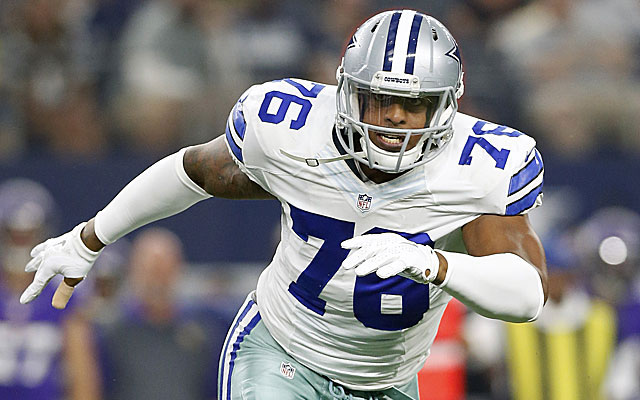
Vontae Davis is a legitimate shutdown cornerback for the Colts, but the rest of their secondary is average at best.
The Jets pose a formidable threat, mainly due to the man-to-man abilities of Antonio Cromartie, slot corner Buster Skrine, and of course, Darrelle Revis. Head coach Todd Bowles has an extensive defensive background, and Gang Green has blitzed on 45 of 102 quarterback dropbacks (44.1 percent) heading into Week 4.
With proper zone blitzes mixed in with close-to-the-line coverage, New York has a legitimate chance to limit New England's extremely well-oiled offensive machine.
Neither the Giants nor the Redskins have the secondary or linebacker talent to guard and stop the Patriots' quick passing game for four quarters, but the Bills -- having learned from their ghastly mistakes in Week 2 -- and definitely the Broncos have the stingy playmakers in the defensive backfield to minimize New England's efficiency when Brady has the ball.
Buffalo and Denver have arguably the two best pass-rushers in football, but the Patriots' quick-striking foundation almost eliminates that.
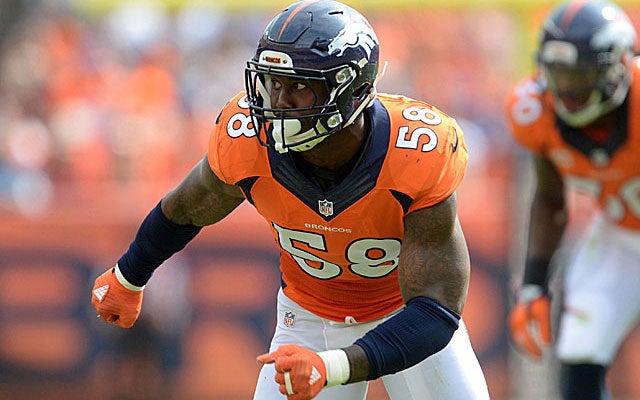
However, Stephon Gilmore, Ronald Darby, Corey Graham, Nickell Robey, Leodis McKelvin for the Bills and especially Chris Harris, Aqib Talib, T.J. Ward and Bradley Roby for the Broncos are talented enough to win in many physical, man-to-man situations on the outside and inside the numbers.
Both of those games in November, and the Jets a month earlier, pose the biggest threats to the Patriots' point-scoring juggernaut.
Will it be easy for any team?
Not at all. Belichick's up-tempo, spread-out, short-passing system puts continuous stress on the defense, and Brady executes it exquisitely.
But based on the numbers and what the Patriots have done offensively through three games, defenses must have the courage to play tight, bump-and-run coverage, sprinkle in some zone blitzes -- yes, that means the best pass-rusher may be asked to drop into a shallow zone -- and ask Brady to beat them over the top.