Why the Bears didn't kick an extra point after scoring with no time left in fourth quarter against Saints
While the TD didn't have any bearing on the outcome of Sunday's wild-card contest, bettors had a stake in a potential point-after attempt

By
Chris Bengel
•
1 min read
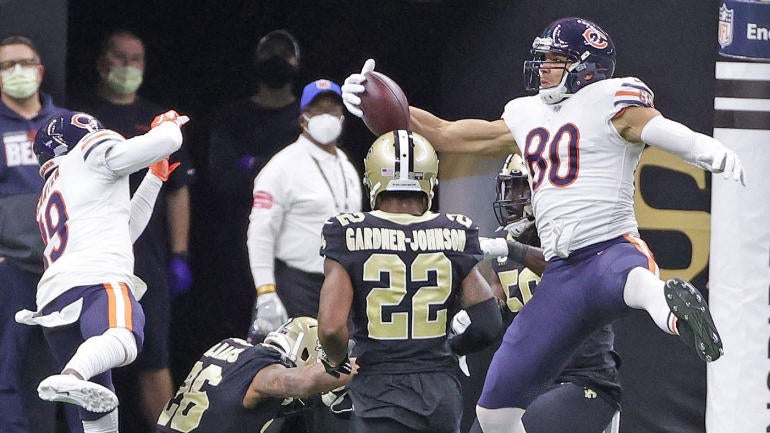
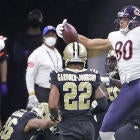
Sunday's wild-card playoff game between the Chicago Bears and New Orleans Saints was well in hand in the final seconds when the Bears were driving down the field. Then Bears quarterback Mitchell Trubisky threw a 19-yard strike to tight end Jimmy Graham to give Chicago its lone touchdown of the contest.
Despite scoring a touchdown, the game was over at 21-9. That is a 9 for the Bears instead of 10 because there was no extra point attempt following the Graham score, which had many fans scratching their heads.
The reason for that is a three-year old rule which states that teams don't have to kick the extra point if a team has a lead of more than two points on the final play.
From Rule 4, Section 8, Article 2, (c) of the NFL Official Rulebook:
"If a touchdown is made on the last play of a period, the Try attempt shall be made (except during a during a sudden-death period, or if a touchdown is scored during a down in which time in the fourth quarter expires, and a successful TRY would not affect the outcome of the game)."
No extension for the extra point since the the differential in points was more than two. I would imagine there are a lot of people happy with this rule.
— Mike Pereira (@MikePereira) January 11, 2021
The rule change was made in 2018 after the Vikings beat the Saints in the playoffs on a Hail Mary with no time left in the game.
Upon catching the impressive touchdown pass, Graham immediately ran off the field and into the locker room. While the touchdown didn't have any bearing on the outcome of Sunday's wild-card contest, many bettors had a huge stake in a potential point-after attempt.
The spread was +11 points at some sportsbooks and +11.5 points at others. Of course, if the Bears would've had to kick the extra point, the Saints very likely would've won 21-10. Or, if the Bears chose to go for two, they would've covered both numbers and won Bears bettors some money.