After exodus, Washington State AD says Pac-12: 'Mismanaged itself on a bunch of different levels'
Washington State is one of four Pac-12 teams left after the latest tidal wave of realignment

•
2 min read
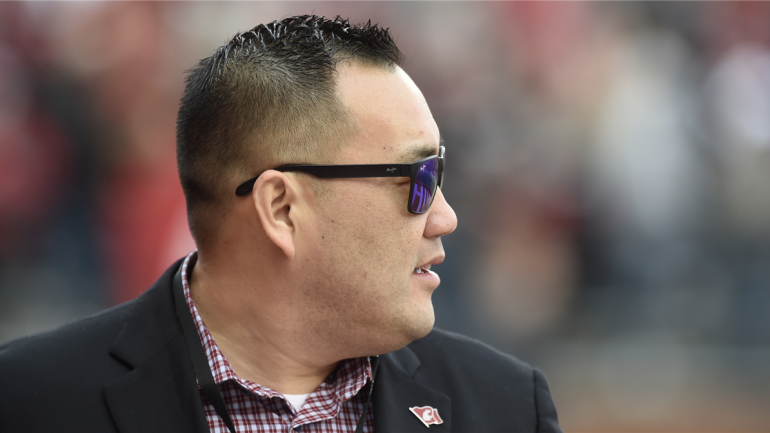
A barrage of mass defections put an end to the Pac-12 as we knew it Friday. When the dust settled, Washington State, Oregon State, California and Stanford were left as the league's only members committed beyond 2024. While those schools are actively looking for a path forward, Washington State athletic director Pat Chun took a little time from his Wednesday press conference to lament on the potential loss of a conference that was long considered one of the cornerstones of college football. He also firmly pointed the finger at who he believes is to blame.
"There's a century of history that has gone by the wayside because this conference has mismanaged itself on a bunch of different levels," Chun said in a press conference Wednesday. "And when you have poor leadership, one of the outcomes is failure. That's what has happened to the Pac-12."
While the broad term "leadership" could be interpreted many ways, most would read Chun's statement as an indictment on the two most recent Pac-12 commissioners Larry Scott and George Kliavkoff. Many consider their inability to close a media rights deal that could compete with the other power conferences as the main catalyst in the departures of Oregon, Washington, Arizona, Arizona State, Utah and Colorado.
Chun also called for better guidance from the top down in college football, painting a grim picture of what the future could look like without it.
"Until there's better leadership as a whole, this is going to continue," Chun said at the press conference. "What happened to the four schools that remain in the Pac-12 is going to be a theme that you see over the course of the next decade unless we get better leadership in college football."
Washington State is exploring several paths going forward, WSU president Kirk Schulz told ESPN. Options include joining the Mountain West outright, a merger between the Pac-12 and other conferences and reviving the Pac-12 with a new lineup. It's not all up to WSU, though. The Cougars likely won't make a move until they know what Stanford and Cal are doing next.
CBS Sports' Dennis Dodd reported ACC schools are in the process of assessing the potential value Stanford, Cal and potentially SMU could add to the conference in the future. Any type of expansion that would reduce the estimated $39.4 million average annual distribution to existing members is considered a "non-starter" among ACC leadership, Yahoo Sports reports.