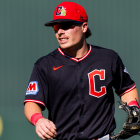
MLB Draft 2023: Three tricks for teams to find their best pick, including avoiding pitching prospects
Not all draft picks are created equal, even before you get to the signing bonus


Major League Baseball's amateur draft is just a hop and a skip away, with this year's event scheduled to kick off on Sunday, July 9, or alongside the onset of the All-Star Break. CBS Sports has been covering the class in a variety of ways in recent weeks, including publishing our final pre-draft rankings and sizing up who the Pittsburgh Pirates may take with the No. 1 selection.
Today, we're going to do something different by breaking down three basic tricks teams employ to draft better. These are not cutting-edge techniques -- anyone who has read the pre-draft rankings knows teams are entertaining newer and more complex strategies than what's laid out below -- but they should serve as an introduction to some advanced draft philosophies.
1. Avoid right-handed prep pitchers in the first round
We've explained the concept of TINSTAAPP ("There is No Such Thing as a Pitching Prospect") elsewhere. In short, it's a nod to how pitchers are far more likely than hitters to get hurt and/or flame out. If there's one group that sentiment applies to above all others, it's right-handed high schoolers.
You don't have to take our word for it, either. We dug up the data.
Consider that between 2000 and 2018, teams drafted 130 prep right-handers in the first or supplemental rounds. Just 15.4% percent of those pitchers have produced at least 10 Wins Above Replacement in their careers, and only 3.8% have cleared 25 WAR. Conversely, 164 collegiate pitchers (and we've excluded junior college pitchers since they're somewhere in between the groups) were selected in those same rounds over that period. Of those pitchers, 16.5% topped 10 WAR and 4.9% cleared 25 WAR.
For some additional context, consider that teams also drafted 33 collegiate first basemen (to pick a position at random) that fit those parameters: 10 of those cleared 10 WAR and all but one of those 10 then toppled 25 WAR. As we've written before: if all else is equal in the first round, take the hitter.
2. Avoid prep catchers, too
If you've read our draft rankings before, you know there hasn't been a high-school catcher selected in the first round who 1) stayed at the position and 2) tallied 10 or more Wins Above Replacement since Joe Mauer in 2001. Travis d'Arnaud comes the closest to clearing those marks, and even he's still more than two wins away despite being in his mid-30s. Maybe one day Bo Naylor or Harry Ford can break the drought. For now, it's not a pretty history.
Just three of the 10 most productive catchers (as judged by WAR) the last few seasons were drafted from the high-school ranks. What's interesting is that none of them were selected in the first or second rounds. J.T. Realmuto was a third-rounder; Danny Jansen was grabbed in round 16; and Jonah Heim was popped in the fourth. For comparison's sake, two of the four collegiate catchers on the list were drafted in the first round: Will Smith and Adley Rutschman; Sean Murphy went in the third and Yan Gomes was a 10th-round pick. The rest of the top 10 catchers were signed as international free agents.
That suggests to us that teams are still not particularly adept at identifying which young backstops will be able to handle the position's rigors. Clubs who aren't willing to spit in the face of fate with the arrogance of an unruly deity, then, are wise to wait until deeper in the draft to take a prep catcher.
3. Age matters
Again, if you've read any of our draft rankings, you've likely noticed how often we credit a player for relative youth, and debit a player for relative seniority. That isn't by accident. Research conducted by Rany Jazayerli more than a decade ago found that extremely young players were apt to return "25% more value than expected by their draft slots," whereas old and very old players (as determined by his criteria) were likely to vastly underperform.
Teams clearly read the article (or came to the same conclusion), and scouts and analysts routinely cite a player's age as a reason they're under- or overrated regardless of their abilities. This effect helped Cam Coller (now of the Cincinnati Reds) rise up boards last summer. It's also responsible for keeping someone like Walker Martin, who played this entire spring as a 19-year-old, outside of the top 10.
Don't get it twisted: teams are willing to make exceptions for special prospects. Both Bobby Witt Jr. and Jordan Lawlar, to state two recent examples, have gone in the top six of their respective drafts despite being on the gray side. That suggests that even now teams aren't always dogmatic about these things.
They probably shouldn't be, either. The draft is many things, but unlike other aspects of baseball, it's not a solved puzzle. Not yet, and probably not ever.