Ranking MLB's three GM openings as Angels, Phillies and Marlins look to fill roles
Three teams have GM openings at the moment, though two others may soon become open as well

By
Mike Axisa
•
13 min read
The 2020-21 MLB offseason is about a week old now. There have been no major moves yet, which is not unusual this early in the hot stove season, plus the expectation is this offseason will move slower than usual as teams get their payrolls in order and wait to get a clear picture of 2021 revenue projections before committing significant dollars.
Also, three teams do not currently have a general manager. Those three teams have interims and/or assistants handling the day-to-day matters at the moment, but they do not have a dedicated head baseball operations executive. That will change sooner rather than later. You can't wait too long to put your front office in place. The offseason will pass you by.
There are only 30 MLB general manager jobs in the world and they're all desirable, but some are more desirable than others for various reasons. We're going to attempt to rank these three openings from most desirable to least desirable. Obviously this is totally subjective. You're welcome to disagree. Let's get to it.
Open jobs
2020-21 MLB offseason: Ranking GM openings
| 1 |  |
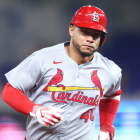
Pros: Lots of money, strong MLB core in place When we did this exercise five years ago, McPhail was with the Phillies as their president of baseball operations. He was soon elevated to team president, the role he holds today. It's unclear how much longer MacPhail, who is under contract through 2021, will be around and how much influence he will have over the baseball operations department. From Scott Lauber of the Philadelphia Inquirer last month:
Candidates to take over as the club's top front office executive, either as general manager or president of baseball operations, will presumably seek clarity regarding MacPhail's role with the team. Are they coming in as the undisputed No. 1 baseball operations person, or will MacPhail still have a say? It's an important question about the team's front office dynamic. Beyond MacPhail possibly looming, this is not a rebuild situation, and whoever comes in will be expected to win right away. The Phillies have the core of a contender (Bryce Harper, Rhys Hoskins, Aaron Nola, Zack Wheeler, etc.), but they haven't been to the postseason since 2011, the second-longest postseason drought in baseball, and they haven't finished above .500 since 2011 as well. Baseball America ranks Philadelphia's farm system the fifth worst in baseball, leaving the organization short on trade chips and internal roster options. It's human nature to want to come in and build the team your own way, even if it means taking a step back and rebuilding. That is not the case with the Phillies. The next general manager will be expected to win immediately. The time for rebuilding is over. That said, the Phillies rank No. 1 here because their roster core is quite strong, and because they have a ton of money. The ability to spend up to the luxury tax threshold (and even above it) exists, and the team only has three players under contract beyond 2022 (Harper, Wheeler, Scott Kingery). They aren't bogged down by long-term deals. They have quite a bit of flexibility, actually:
The farm system isn't great and there will be tremendous pressure to win immediately, but the MLB roster needs a few upgrades rather than an overhaul -- the new general manager will have to deal with J.T Realmuto's free agency right away -- and there is money to be spent. Maybe not as much as before the shutdown, but more relative to other teams with front office openings. Even in a competitive division, that makes this a pretty desirable job, all things considered. | |
| 2 |  |
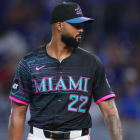
Pros: Improved farm system, young MLB talent, great ballpark The Marlins made the postseason for the first time since 2003 this year and responded by parting ways with longtime front office executive Michael Hill. Hill had been with Miami since 2002 and he held a variety of roles, including general manager and president of baseball operations. The belief is ownership, including Derek Jeter, wanted to bring in their own front office leader no matter how this season played out. "We have a lot of smart baseball minds in our organization, and there are smart baseball minds around the game. We're going to sit down and see what type of person we need in this role," Jeter told the Associated Press last month. "... The roles and the responsibilities have changed since we've gotten here. I think we've done a pretty good job of building each department of baseball operations." Beyond small payrolls -- the Marlins recently picked up Starling Marte's $12.5 million club option and he is currently the only player under contract in 2021 -- the biggest concern here is ownership. Specifically, how much input will Jeter and trusted lieutenant Gary Denbo have into baseball operations? There is some fear they will be meddlesome and take credit for the good moves while blaming others for things that don't work about. Could make for a less than desirable workplace. On the field, the Marlins do have some good young talent, specifically Brian Anderson and Isan Diaz on the position player side and Sixto Sanchez and Sandy Alcantara on the mound. Baseball America says they have the No. 9 farm system in the game, which includes righty Max Meyer, the No. 3 pick in the 2020 draft. Shortstop Jazz Chisholm and outfielder JJ Bleday are top-100 prospects and may not be far from joining the lineup full-time. There's real talent here. You're not walking into a teardown situation. Potential ownership meddling aside, the downside here is the small payroll and the fact the new general manager will be expected to build on this year's success. How realistic is that? The Marlins were essentially a .500 team (31-29) and some of their youngsters (Chisholm, Jesus Sanchez) may not be ready to produce right away. Also, the NL East could be a real tough division in the coming years. This is a good challenge situation. Prove you can win with a small payroll. That's much easier said than done, of course. | |
| 3 |  |
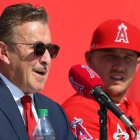
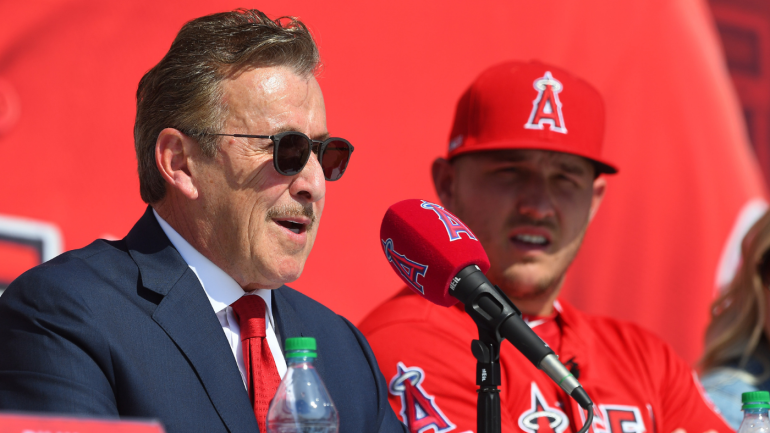
Pros: Lots of money, promising young talent, Mike Trout! The one thing the Angels can offer general manager candidates no other team can is Trout. Take this job and you have the best player in baseball in his prime and locked up to what amounts to a lifetime contract. It is a heck of a lot easier to rebuild a farm system or supplement a roster than it is to have an all-time great at the height of his powers. Having Trout (and the almost equally as awesome Anthony Rendon) is a huge advantage. That said, there are a lot of obvious downsides to the Angels job. Owner Arte Moreno can be overbearing and will get involved in baseball operations decisions -- for example, Moreno stepped in and called off the Joc Pederson/Ross Stripling trade in February because he felt the Dodgers were dragging their feet -- and manager Joe Maddon might be unfireable. Keeping Maddon is not necessarily a bad thing, though the new general manager may not even have the option of bringing in his own manager. Also, you need to win right away. The Angels have wasted way too much of Trout's prime and they want to get over the hump and back into the postseason next year. This isn't a long-term project or a rebuild. The next general manager has no grace period. That person has to win right away, and will have to do it with an owner who can unreasonable and a farm system Baseball America ranks 17th best in the game. There's some talent in the pipeline but not a ton. One other thing to consider: Moreno and the Angels were very aggressive with furloughs this past summer -- they gutted their baseball operations and scouting departments during the shutdown -- and Moreno was reportedly among those pushing to cancel the 2020 draft as a way to cut costs. Does that sound like an appealing workplace? Again, there are only 30 general manager jobs, so someone will take it, but this does not sound like a very employee-friendly organization. There are positives though. Beyond Trout, you have a team that consistently ranks near the top of the league in payroll -- the Angels have had at least a $150 million payroll every year since 2014 -- and Albert Pujols will off the books next offseason, Justin Upton the offseason after that, so there's financial flexibility on the horizon. David Fletcher is a stud, Shohei Ohtani has star potential, and others like Griffin Canning, Luis Rengifo, and Jared Walsh show promise. There's some nice young talent on the roster. How involved will Moreno be? Will there be a power struggle with Maddon similar to the power struggle that existed all those years with Mike Scioscia? What's the workplace culture like? Those are important questions general manager candidates will have to consider before taking this job. You do get Trout and Rendon and that's awesome, and there is more talent on the roster beyond them, but there's much more that goes into making a front office job desirable than the team on the field. | |
Wild cards
The Angels, Marlins, and Phillies are the only three teams with general manager openings at the moment. There could be a fourth opening at pretty much any moment, however, and one other team has a front office situation that is fluid. Here are two wild cards in the current general manager landscape.
2020-21 MLB offseason: Ranking possible GM openings
| |  |
Pros: New owner, great ballpark, lots of money (in theory), talented roster The Wilpons are finally out of the picture and the Mets have new ownership. Lifelong Mets fan and billionaire Steve Cohen was officially approved as new owner of the Mets last Friday, and he is expected to infuse the team with cash right away. Cohen's net worth is north of $10 billion, making him the wealthiest MLB owner by a mile. Among his first orders of business will be building a state-of-the-art analytics department, according to Joe Pantorno or amNY, something that is overdue and sorely needed. It has not happened yet but Cohen is expected to replace general manager Brodie Van Wagenen -- the sale will close within the next week -- whose bad moves (Jarred Kelenic trade, Jed Lowrie signing, etc.) outnumber his good moves (J.D. Davis trade, etc.), and bring in his own people to run the baseball operations. "I can say with certainty that baseball people will be running baseball operations," Cohen said recently, which must be music to Mets fans' ears after years of the Wilpons meddling in baseball decisions. Should Cohen replace Van Wagenen, the next general manager will walk into a situation where he's expected to have money to spend, and fans will love them simply because they aren't part of the old regime. There's also a lot of talent on the roster, starting with the great Jacob deGrom. You also have Pete Alonso, Michael Conforto, Jeff McNeil, Dominic Smith, and others. There are needs on the pitching side, no doubt, and the farm system isn't great (Baseball America ranks it 20th), but the MLB roster is talented. On the downside, you're going to have to win right away. That will be the expectation. And as good as the roster looks on paper, the Mets went 26-34 this year, tied for last place in the NL East. There's work to be done to get this team into October, and they play in what figures to be challenged division, but no matter. Anything less than a postseason berth in 2021, while deGrom is still in his Cy Young prime, will be considered a failure. The pressure to win immediately is very real. Also, we don't know exactly what kind owner Cohen will be. All indications are he will stay out of the way and increase payroll, but we don't know that for certain. It's hard to believe he'll be worse than the Wilpons, but there is a lot of ground between "the Wilpons" and "great owner." We're still waiting to see where Cohen fits on that scale. The next general manager goes in hoping for the best while understanding it's possible they could be saddled with something closer to the worst. If (when?) Cohen cuts tied with Van Wagenen -- Van Wagenen has two years remaining on his contract, it should be noted -- I think the Mets vault right to the top of the general manager openings rankings. Alderson will be team president and oversee business operations, so he won't be a dedicated baseball operations person, meaning the new general manager will have real latitude. Cohen's wallet and the talent on the roster outweigh the negatives for me. This will be the job to get this winter. | |
| |  |
Pros: Talented roster, ownership willing to spend President of baseball operations Dick Williams stepped down last month to focus on other endeavors, and soon thereafter the Reds announced Krall, their general manager, will "assume the lead over our baseball operations." What that means exactly is unclear. Is Krall now doing his job in addition to Williams' job? Or is he being elevated to Williams' job and will appoint someone else to handle the day-to-day baseball operations? "I'm going to answer to (owner) Bob (Castellini) now instead of Dick," Krall told reporters, including MLB.com's Mark Sheldon, last month. "Not a ton (changes) from a day-to-day standpoint. Just will be more of the head of the department and the person who will make the final decision for this department to take to Bob." Regardless of Krall's title, the Reds lost an important voice in their baseball operations department last month, and they may look to replace Williams at some point. Now that Krall is the head baseball operations person, it stands to reason anyone brought in to help out will work under him. It would be similar to the president of baseball operations/general manager arrangement, except Krall currently has the general manager title. That could change. If the Reds do decide to bring in someone to assist Krall, this is a pretty desirable job. Ownership wants to win and is willing to spend money (Nick Castellanos, Mike Moustakas, etc.), and the MLB roster is quite good. Luis Castillo and Sonny Gray are a great rotation 1-2 punch and the lineup features Eugenio Suarez, Joey Votto, Jesse Winker, and others in addition to Castellanos and Moustakas. They need bullpen help and maybe another bat or two, but you're not starting from scratch. On the downside, the next general manager will need to win right away, and you know you're going to have to report to Krall. You're not coming in as the No. 1 baseball operations executive. Your best case scenario is No. 2 in the department. The farm system isn't great (Baseball America ranks it 25th) and I'm not sure how much higher payroll can go, realistically. Pre-shutdown, Cincinnati's projected $166 million full season payroll was poised to be a franchise record. Payroll may be maxed out already, limiting possible moves. If Krall and the Reds do seek another baseball operations executive to essentially replace Williams, I would slot this job between the Phillies and Marlins in terms of desirability. They're ready to win and they have money, but whomever they bring in won't be in charge, and it's unclear how much financial wiggle room they have following the shutdown. The roster is talented though. It's just ... complicated. | |