UFC's International Fight Week carries a cursed history despite downplay from Daniel Cormier
It will be a bigger surprise if both headliners make it to Saturday night in Las Vegas

•
6 min read
In the eight years since UFC has positioned a fight card during the first weekend in July and the sixth since it has rolled out a multi-day celebration known as International Fight Week that takes place every year in Las Vegas, MMA fans have come to expect seeing one of the biggest cards of the year.
Unfortunately, those same fans have also come to expect last-minute changes to a few of the biggest names on the card because of injuries and weight issues -- something that has felt like an epidemic for UFC in 2018 as a whole. But specific to the annual International Fight Week cards, the numbers do backup an unsettling trend.
Every year since UFC first promoted a big fight during Independence Day weekend in 2010, either the main event or co-main bout that was originally scheduled failed to come off. In a few dramatic cases that were well-publicized, the biggest fight on the card fell apart just days before (including the day of last year).
Can't get enough UFC? Subscribe to my podcast In This Corner with Brian Campbell where we break down everything you need to know in the Octagon.
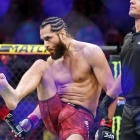
Is that grounds for labeling IFW as a cursed week for UFC? Daniel Cormier (20-1, 1 NC), who moves up in weight on Saturday to challenge for heavyweight king Stipe Miocic's belt in the main event of UFC 226 at T-Mobile Arena, doesn't think so.
Cormier, 39, the UFC's light heavyweight champion, also has little worry about history repeating itself against Miocic (18-2).
"I think that's just part of life," Cormier told CBS Sports. "Things are up and down and I don't anticipate anything like that happening this time. Stipe is a pro, I'm a pro and we are just going to go out there and fight. I just hope that over the course of these last [two weeks] guys are smart and train accordingly to avoid any injuries. And as long as we don't get injured, we will be locked in that Octagon going at it."
Whether or not you're willing to support the idea that the fight date is cursed, the consistent issues with fights coming apart is at least coincidental.
UFC 213 (2017): Women's bantamweight champion Amanda Nunes pulled out of a scheduled main event rematch against Valentina Shevchenko just hours before following complications due to a difficult weight cut. A scheduled Robbie Lawler-Donald Cerrone was also postponed due to a Cerrone injury.
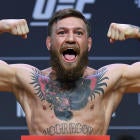
UFC 200 (2016): Two days before the landmark card, interim light heavyweight champion Jon Jones tested positive for a pair of banned substances to cancel his unification rematch with Cormier (who fought Anderson Silva instead). The original main event, a Conor McGregor-Nate Diaz rematch, was also postponed three months earlier after McGregor refused to fly in from Iceland for a news conference and subsequently "retired" over Twitter. (Adding insult to injury, Brock Lesnar also tested positive for steroids after his decision win over Mark Hunt.)
UFC 189 (2015): Featherweight champion Jose Aldo withdrew from a marquee showdown against McGregor with just two weeks to go because of a rib injury. McGregor defeated late-replacement Chad Mendes for the interim 145-pound title.
UFC 175 (2014): Curiously held on Friday night thanks to "The Ultimate Fighter" finale taking place on Saturday, the original headliner of TUF coaches Wanderlei Silva and Chael Sonnen capitalizing on the buzz of their gym brawl never came to be under the UFC banner. Silva failed to submit a fight application to Las Vegas and then refused random drug testing, which brought an end to his UFC career. After Vitor Belfort was announced as the late replacement, Sonnen then failed a random drug test of his own to signal both a retirement from fighting and, like Silva, the end of his UFC run.
UFC 162 (2013): Top featherweight contenders Ricardo Lamas and Chang Sung Jung were supposed to meet in the co-main event supporting Anderson Silva's middleweight title defense against Chris Weidman in their first meeting. Instead, Jung pulled out due to injury and Lamas was given a title shot one month later against Aldo at UFC 163.
UFC 148 (2012): The UFC's first International Fight Week, headlined by the much-anticipated Anderson Silva rematch against Sonnen, also saw its co-main fall apart when bantamweight champion Dominick Cruz tore his ACL, canceling a trilogy bout with fellow TUF coach Urijah Faber. Renan Barao was named the replacement and an interim title fight against Faber was booked for UFC 149 instead.
UFC 132 (2011): A rematch between BJ Penn and Jon Fitch that was expected to challenge for the co-main event slot behind Cruz's bantamweight title rematch with Faber was shelved months before thanks to injuries to both. The bout was originally booked to produce the next contender for Georges St-Pierre's 170-pound title.
UFC 116 (2010): Most will remember this loaded card for the dramatic Brock Lesnar-Shane Carwin heavyweight unification bout and the co-main event of middleweights Chris Leben and Yoshihiro Akiyama that shared fight of the night honors. But Akiyama's original opponent, Wanderlei Silva, pulled out due to a pair of injuries just weeks before.
And 2018's version has already gone under its own small change with Yancy Medeiros withdrawing from his bout with Mike Perry because of a rib injury. Paul Felder will step in to replace the Hawaiian can keep the card at 12 fights.
Cormier certainly knows firsthand what it's like to have an International Fight Week bout that he prepared months for fall apart in the blink of an eye. (In fact, Cormier's emotional reaction to UFC president Dana White telling him the news ahead of UFC 200 is about as memorable a moment as "UFC Embedded" has produced.)
Two years later, however, Cormier downplayed just how emotional the toll of Jones being pulled from the fight actually was on him. Even with the almost pro wrestling 180-degree turn pulled by the fans who cheered Cormier as almost a "baby face" in the build-up opposite Jones and then booed him as the "heel" during his non-title victory over Anderson Silva.
"I didn't really think of it in terms of the emotions," Cormier said. "I just think it was a different fight. To go from a guy who was young, athletic, gifted and in shape in Jones to Anderson, who pretty much got off the couch and wasn't necessary at his best, it really did kind of change the way you approached the fight. It made it a little bit difficult.
"In terms of good guy or bad guy, that didn't really bother me all that much. I really didn't think of that too much when I was fighting Anderson. I think I became the bad guy more in the Anderson Silva fight because of the approach I took to just make it easy instead of standing and trading with him."
Cormier largely used his size advantage to lay on Silva, who took the fight on 48 hours' notice and weighed in at just 198.5 pounds for the 205-pound limit bout, and control the three rounds with his wrestling. As the crowd became increasingly irritated by the lack of action, Silva finally gave the Las Vegas faithful reason to cheer in the final round when he caught Cormier with a kick to the body.
"It hurt a ton, it hurt real bad," Cormier admitted. "He did a good job pointing his toe when he did that kick. But that's Anderson Silva. He's one of the greatest strikers of all-time. He's going to find shots and I'm just lucky that was the only one he found over the course of 15 minutes. But it was real good, it was real high-level technic and it did hurt."
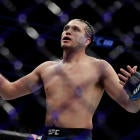
While Cormier's glowingly optimistic words regarding whether IFW is actually cursed are understandable considering what's at stake for him against Miocic, here's to hoping this negative streak can be snapped and both Miocic-Cormier and the featherweight title bout between Max Holloway and Brian Ortega go off without a hitch.