Jerry Jones' trade for star edge rusher won Cowboys Super Bowls in 1990s ... so why did he just give one away?
Charles Haley changed the fortunes of two franchises. Will the Parsons trade have a similar impact?

By
Bryan DeArdo
•
5 min read
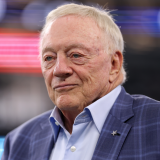
Jerry Jones was quick to compare the trade of Pro Bowl linebacker Micah Parsons to the Packers to the Cowboys' similarly shocking trade of Herschel Walker to the Vikings more than 35 years ago. While Jones isn't wrong, another historic trade that includes Jones might be even more similar.
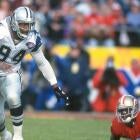
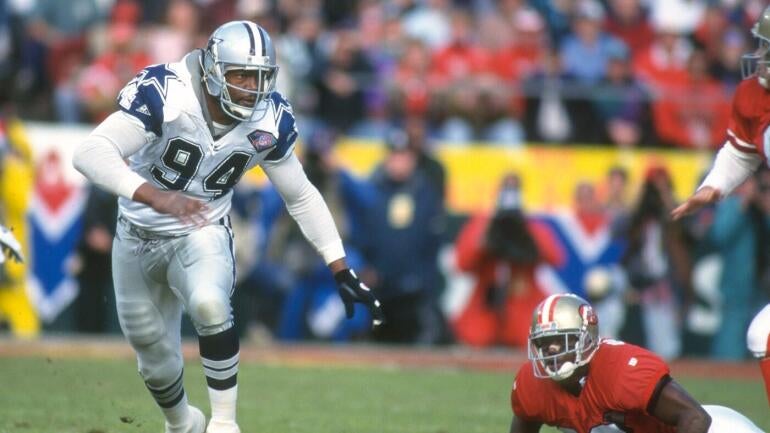
Just before the 1992 season, the Cowboys received an unexpected phone call from the 49ers, who wanted to see if the Cowboys would be interested in trading for Charles Haley, the immensely talented pass rusher who had run out his welcome in San Francisco. Jimmy Johnson, the Dallas head coach at the time, had Jones call then-49ers owner Eddie DeBartolo Jr. to get more information on Haley. Specifically, Johnson wanted to know if Haley was smart, one of his main values in player acquisition.
While Haley proved to be an enigma as far as his personality, he was indeed smart. He was also, according to Johnson, the final piece in the Cowboys' championship puzzle.
Dallas, a 1-15 team three years earlier, made the playoffs for the first time under Johnson in 1991. But it was still considered too young to compete for a title in 1992. That, however, changed when the Cowboys acquired Haley, who was a three-time Pro Bowler, two-time Super Bowl champion and the 1990 UPI Defensive Player of the Year during his six seasons with the 49ers.
The 49ers' president and CEO at the time was Carmen Policy, who was is his second year on the job after spending a decade as as the team's vice president and council to DeBartolo. While he never played a down for San Francisco, there aren't many people more affiliated with the 49ers' dynasty than Policy, who fittingly has a prominent role in the new Netflix documentary chronicling the 1990s Cowboys.
Policy played an integral role in the 49ers' Super Bowl wins during the 1980s, but he faced a herculean challenge as the 1990s began. He knew he had the unenviable task of eventually replacing so many of the pillars who made the 49ers' dynasty -- future Pro Football Hall of Famers like quarterback Joe Montana, safety Ronnie Lott and versatile halfback Roger Craig, just to name a few.
It wasn't easy, but Policy did yeoman's work in keeping the 49ers in the NFL's upper echelon in the early 1990s. He handled the extremely difficult transition from Montana to Steve Young better than anyone could. He also helped replenish the 49ers' aging roster with new blood, such as running back Ricky Watters, future Hall of Fame defensive lineman Bryant Young and perennial Pro Bowl defensive back Merton Hanks.
While most of what Policy touched turned to gold, his one big mistake proved to be a fatal one.
While he clearly couldn't have known it at the time, his decision to trade Haley to the Cowboys shifted the balance of the power in the NFL from San Francisco (which had wrestled it away from the Cowboys in 1981 by virtue of Dwight Clark's "The Catch") back to Dallas.
Haley's impact on both franchises was two-fold. Haley pushed the young Cowboys while showing them what it took to be a championship-caliber team. When it was time to face the 49ers, Haley was hellbent on showing them that trading him was a mistake they would dearly regret.
"God gave me an opportunity to show them that I'm not easy to replace," Haley said in the Netflix doc.
And boy, did the 49ers live to regret that decision. With Haley in tow, the 49ers defeated the Cowboys in consecutive NFC title games en route to winning back-to-back Super Bowl titles. Haley contributed to both Cowboys' wins. His pressure of Young in the 1992 NFC title game forced Young to leave the pocket early on a critical third-down play. The 49ers missed a field goal on the next play. The Cowboys won the game and went on to win their first Super Bowl of the Jones-Johnson era.
A year later, when the two teams met in the NFC title game once again, Haley (who constantly received double teams by the 49ers) recorded one of the Cowboys' four sacks of Young in a game that was never in doubt.
"Trading Charles Haley to the Dallas Cowboys," 49ers Hall of Fame wideout Jerry Rice said in the doc. "I still say today, that was the worst mistake we ever made."
Desperate to shift the balance of power back to San Francisco, Policy turned over the 49ers' roster in 1994. San Francisco signed several notable players that included former Cowboys linebacker Ken Norton Jr. (who became the first player to win three straight Super Bowls) and Deion Sanders, the future Hall of Fame cornerback who proved to be the difference-maker when the 49ers and Cowboys faced off once again with a trip to the Super Bowl at stake.
Sanders (the NFL's Defensive Player of the Year that season) intercepted Cowboys quarterback Troy Aikman and made a big pass breakup on a pass intended for Michael Irvin in the 49ers' 38-28 win that deprived the Cowboys a chance at becoming the first team to win three straight Super Bowls. The 49ers won their fifth Super Bowl two weeks later.
"Revenge is best served with the tip of a cold knife," Policy said in the doc with a laugh.
Now, let's flash forward over 30 years to Thursday night, when Jones made the stunning decision to trade his defensive phenom -- Parsons -- to the Green Bay Packers in exchange for two future first-round picks and defensive tackle Kenny Clark. Jones trading one of the NFL's best defensive players -- 33 years after acquiring Haley -- is ironic enough. The fact that he traded him to Policy's son, new Packers president and CEO Ed Policy, is simply icing on the cake.
The 54-year-old Policy recently took the reins from Mark Murphy, whose 18-year-run as Packers president and CEO included winning the franchise's most recent Super Bowl title at the end of the 2010 season. But as successful as Murphy's run was, he and the Packers often received criticism for not doing more in the offseason, especially on the free agency market. That's another reason why this trade is so fascinating.
Policy decided to do something very un-Packer like by trading two future first-round picks in exchange for a player who makes Green Bay a legitimate threat to the defending champion Eagles. By making this deal, Policy is displaying the boldness his father showed when he overturned the 49ers roster after they once again came up short against Dallas in the 1993 conference title game.
Carmen Policy's decision back then resulted in a Super Bowl title while somewhat softening the blow of the Haley trade two years earlier. Ed Policy's monster acquisition of Parsons could have a similar ending.
If that ends up being the case, it'll add another feather to the Policy family's cap while at the same time putting another black mark on Jones' legacy in Dallas.