Bills at Cowboys: Time, how to watch, live stream, odds, pick, what to know about Thanksgiving Day showdown
The Bills and Cowboys clash in a key game for each team's playoff hopes

By
Jared Dubin
•
9 min read
The marquee game of the NFL's 2019 Thanksgiving day slate sees the Dallas Cowboys host the Buffalo Bills. Dallas leads the NFC East with a 6-5 record, while Buffalo currently controls the No. 5 seed in the AFC at 8-3. The Cowboys are coming off a dispiriting loss to Buffalo's division rivals, while the Bills are fresh off a victory over the Broncos.
The Cowboys have yet to defeat a team with a winning record this season, and would surely like to change that in what figures to be a widely-watched and widely-discussed game. The Bills, meanwhile, just keep chugging along and stacking wins, extending their wild-card lead.
Brady Quinn and Ryan Wilson broke this game down with Will Brinson on Wednesday's Pick Six podcast. You can listen below, and be sure to subscribe on your favorite podcast platform:
Let's break down the matchup.
How to watch
Date: Thursday, Nov. 28 | Time: 4:30 p.m. ET
Location: AT&T Stadium (Arlington, Texas)
TV: CBS | Stream: CBS All Access
Follow: CBS Sports App
When the Cowboys have the ball
The No. 1 thing to know about the Bills' defense is that they want you to run the ball. Buffalo has dropped an eighth man down into the box on only 0.4 percent of defensive snaps, the lowest rate in the NFL. Sean McDermott and his staff are willing to let you grind out runs of four to five yards all the way down the field if that's what you really want to do, because they would rather ensure they make it as difficult as possible for you to complete passes, and specifically to complete passes down the field.
The strategy has worked incredibly well for the Bills thus far this season. Buffalo has allowed the NFL's third-fewest yards and points, and ranks ninth in the league in defensive efficiency, per Football Outsiders' DVOA, despite having the 26th-ranked unit against the run. That's because their pass defense is exceptional.
Buffalo opponents have completed only 61.3 percent of their passes, eighth-lowest in the league; and that's despite the fact that the average throw against the Buffalo defense has traveled only 6.8 yards in the air, third-shortest in the NFL. The Bills have allowed the third-fewest completed air yards in the league and they've allowed the fourth-fewest yards after the catch. Their opponents have averaged just 6.0 yards per attempt, third-lowest in the league. They also have the NFL's second-lowest touchdown rate (1.9 percent) and third-lowest passer rating (76.8).
The star of the pass defense is third-year cornerback Tre'Davious White, who belongs in the conversation for the title of best non-Stephon Gilmore cornerback in the league. White has allowed a 51.5 passer rating on throws in his direction this season, per Pro Football Focus, with just 445 yards, no touchdowns, and four interceptions on 65 intended passes. White primarily played on the left side of the defense during the early part of the season, but in recent weeks has been shadowing No. 1 wideouts more often. It's likely he travels with Amari Cooper in this game, as Gilmore did last Sunday. Cooper is still playing through injury, and though he has been able to work over other corners around the league, he's likely to find a tougher time against White -- even at Jerry World, where he has been far more effective throughout his Cowboys career.
That said, Dallas will likely find it easier to throw against Buffalo's other corners, particularly Levi Wallace on the outside. Wallace has allowed a 109.6 rating on throws in his direction, which ranks 96th out of 130 corners who have played at least 100 snaps in coverage. He's likely to be tasked with guarding Michael Gallup for much of the day, and Gallup has succeeded against corners who are far more effective than Wallace. The matchup of Randall Cobb and Taron Johnson on the inside will be key for the Dallas pass offense as well. Cobb has played extremely well in recent weeks, while Johnson has been beatable but not a liability in coverage from the slot.
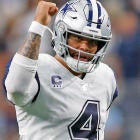
Considering the difficulties Cooper is likely to face, it's of paramount importance that the Cowboys get Gallup and Cobb going, because they don't want to have to depend on their tight ends and running backs to carry the passing game. Prescott is willing to spread the ball around, but for reasons passing understanding, Dallas prefers to utilize its two less explosive players at those positions, with Jason Witten (77.0 percent) and Ezekiel Elliott (83.3 percent) seeing far higher snap rate than Blake Jarwin (38.4 percent) and Tony Pollard (17.5 percent) despite the latter two being superior receiving options.
The Cowboys talked up Pollard as an Alvin Kamara-like complement to Elliott throughout the offseason, but he had just seven targets in nine games until getting eight (with seven catches for 54 yards and a score) over the past two weeks. Jarwin has also been a far more effective receiver than Witten, averaging 2.05 yards per route run and 12.6 yards per reception to the veteran's 1.20 per route and 9.0 per catch. Dallas seems to consider Witten more reliable, even though he dropped more passes last week than Jarwin has all season.
All of that said, the Cowboys seem pretty likely to come out and try to Establish The Run in this game, given that (a) Jerry Jones went on TV and said that's what they're going to do; (b) there is a belief in some circles that they lost to the Patriots because of an over-reliance on passing in sloppy conditions; (c) the Bills also have a seemingly below-average run defense; and (d) that is Jason Garrett's strong preference anyway.
Elliott has not been quite as effective running the ball this season as he has in the past, however, with an average of 4.3 yards per carry compared to 4.7 in his first three seasons. He also has just seven runs of more than 15 yards (and only one of more than 20 yards) all year, compared to 25 of them last season. It's tempting to blame the offensive line rather than Elliott given his prodigious skill, but that's not supported by evidence. The Cowboys rank second in the league in Football Outsiders' Adjusted Line Yards, third in power success, and first in the percentage of runs stopped at or behind the line of scrimmage. They rank 27th in open-field yards per carry, and much of that can seemingly be traced to Elliott's inability to break tackles and gain additional yards: he ranks 25th in Pro Football Focus' elusive rating among the 32 backs with at least 100 carries. (Pollard ranks third among 52 backs with 50 carries or more. He has 17 broken tackles on 67 total touches compared to Elliott's 33 on 247 touches.)
When the Bills have the ball
The question that will likely determine the outcome of this game is whether the Bills can find enough avenues to offensive success to overcome the likely muted performance their defense will force out of the Dallas offense. The opportunities for Buffalo will be there. The Cowboys' defense has regressed pretty significantly from last season, ranking 19th in DVOA overall, and 18th against both the run and the pass.
The Bills have been effective running the ball throughout the season, but have become even more so since handing the lead back job to Singletary. The rookie has 64 carries for 318 yards (4.97 per carry) in the past four games, gaining at least 75 against each of Washington, Miami, and Denver. Their offensive line ranks third in Adjusted Line Yards, but they have not been so great in power situations and have often seen their runs stopped at or behind the line of scrimmage. The Dallas defense has been about average in stopping runs, but has improved a bit since the arrival of Michael Bennett to complement Maliek Collins on the interior.
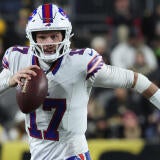
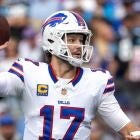
Dallas has done a solid job of getting pressure on opposing quarterbacks this season, ranking eighth in pressure rate, but they have been only average at concerting their pressure into sacks. Given Josh Allen's excellent mobility, it'll be important for Demarcus Lawrence and Robert Quinn to box him into the pocket and not allow him to escape outside, where he can do a lot of damage running the ball downfield himself.
Quinn will be primarily rushing against left tackle Dion Dawkins, while Lawrence will tangle with rookie Cody Ford. Quinn has been the better pass rusher of the two this year, but Lawrence has done a strong job against the pass and is one of the few Cowboys who has been incredible against the run. Dallas gets pretty good pressure on the inside from Bennett and Collins, and it's likely they have the better matchups in the passing game, going up against center Mitch Morse and guards Quinton Spain and Jon Feliciano. Again, though, Allen has the ability to make teams who get pressure but not sacks pay with his legs, and that's especially valuable against a team like Dallas.
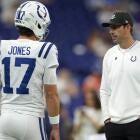
The Cowboys tend to go all out to prevent big plays down the field with their zone-heavy defense, but John Brown is one of the few receivers who can break those types of plays no matter what due to his ridiculous speed. Dallas plays sides with cornerbacks Byron Jones (defense's left) and Chidobe Awuzie (defense's right), with the latter ranking among the more burnable cornerbacks in the NFL this season. Dallas opponents have targeted Awuzie 150 percent more often than Jones (60 targets to 40) this season, and with good reason.
The best ways to beat Dallas in the passing game this season, though, have been with throws to running backs and tight ends. Their defense encourages and accepts checkdowns, counting on the linebackers and safeties to rally to the ball and prevent yardage after the catch. That worked extremely well for them last year, when Jaylon Smith and Leighton Vander Esch looked like two of the best linebackers in the entire league. It hasn't worked quite as well this season, when they have been merely good as opposed to great. It's also been typically easy to pick on safety Jeff Heath in coverage, last week's monster hit on Jakobi Meyers notwithstanding.
The issue for Buffalo here is that Allen is not the kind of quarterback who is all that willing to take those checkdown throws. Only 26 percent of his passes have been thrown to tight ends or running backs, and even then, 10 percent of those throws have traveled more than 20 yards in the air. Dawson Knox and Devin Singletary are better receiving threats than Tyler Kroft and Frank Gore, who began the season with the hold on those jobs, so perhaps Allen will be willing to target those guys more often in a matchup like this.
The passing game matchup likely to draw the most attention during the broadcast of this game (only on CBS!) is Cole Beasley against Jourdan Lewis in the slot. That's because Beasley played his entire career until this year for the Cowboys, and he has been among the former Cowboys most willing to criticize the organization, and specifically the offense. After a midseason lull where he caught only 11 passes for 91 yards in four games, Beasley has come on in recent weeks, nabbing 14 passes for 188 yards and a score in Buffalo's past three contests. Throws to Beasley tend to be of the short checkdown variety, though, and those throws are also less likely to move the chains and not necessarily inside their quarterback's wheelhouse.
If Allen is willing to take the throws in front of him rather than forcing the issue downfield, the opportunities for success will be there. If he reverts to the types of things he did last season, those opportunities will dry up quickly and the Cowboys might actually force some turnovers for a change.
Prediction: Cowboys 20, Bills 17