Fantasy Football 2023: Projected Strength of Schedule for RBs sees big years for J.K. Dobbins, Dameon Pierce
You won't care about schedules for elite guys, but what about less obvious RBs?

By
Dave Richard
•
5 min read
I've always believed that Fantasy Football is all about the matchups, and I've always hated the concept of Strength of Schedule. But one day about four years ago, I thought about what it would take to make a Strength of Schedule that would be beneficial to Fantasy managers.
Obviously it meant analyzing defenses. Because, hello, defenses are what make the matchups.
But it had to be more than that. It meant having to dig into every single defensive player, how they fit into the defensive scheme they're playing in, who they're playing for, who's backing them up, how each team defends certain positions, and so on.
That seemed like a lot of work.
But I tried it. And it wasn't perfect, it did help.
In the years since I've perfected the process, and while injuries and surprising play -- both in a good way and in a bad way -- will alter how defenses do, I like the concept of what I've built: The Projected Strength of Schedule (or PSoS) for every position on every team. At minimum, it will give you a potential tiebreaker when debating between two players in your drafts. At most, it's a warning sign to avoid certain position groups across the league.
If you're reading this, you're on the page that breaks down the PSoS for running backs. You'll find out about the players who have easy projected schedules, difficult projected schedules, and everyone in between. If you're interested in the methodology behind these numbers, you should read this.
For now, here's a look at how each offense's running backs rank in terms of PSoS, with 1 being the easiest and 32 being the toughest. There's a table for the whole season, the first four weeks of the season (who might get off to a hot start?!) and Weeks 15 through 17 (Fantasy playoffs).
I'll highlight some players after these ranks so please remember to scroll all the way through.
Season-long PSoS for RBs
| GB | 1 | CAR | 17 |
| CHI | 2 | LAC | 18 |
| NO | 3 | MIN | 19 |
| ATL | 4 | TB | 20 |
| HOU | 5 | JAX | 21 |
| LV | 6 | LAR | 22 |
| BAL | 7 | SEA | 23 |
| CLE | 8 | DAL | 24 |
| SF | 9 | NYJ | 25 |
| KC | 10 | NE | 26 |
| DEN | 11 | PHI | 27 |
| TEN | 12 | WAS | 28 |
| CIN | 13 | ARI | 29 |
| IND | 14 | BUF | 30 |
| DET | 15 | MIA | 31 |
| PIT | 16 | NYG | 32 |
Weeks 1-4 PSoS for RBs
| SF | 1 | PIT | 17 |
| JAX | 2 | GB | 18 |
| KC | 3 | CAR | 19 |
| WAS | 4 | MIA | 20 |
| ATL | 5 | NYG | 21 |
| LV | 6 | BUF | 22 |
| BAL | 7 | MIN | 23 |
| LAC | 8 | CIN | 24 |
| IND | 9 | TB | 25 |
| DAL | 10 | LAR | 26 |
| DET | 11 | CLE | 27 |
| DEN | 12 | TEN | 27 |
| SEA | 12 | PHI | 29 |
| HOU | 14 | NYJ | 30 |
| CHI | 15 | ARI | 31 |
| NO | 16 | NE | 31 |
Weeks 15-17 PSoS for RBs
| TEN | 1 | MIN | 17 |
| PHI | 2 | TB | 18 |
| CHI | 3 | DEN | 19 |
| CLE | 4 | SEA | 20 |
| ATL | 5 | DAL | 21 |
| IND | 6 | DET | 22 |
| LV | 7 | KC | 23 |
| LAC | 8 | NYJ | 24 |
| CAR | 9 | LAR | 25 |
| SF | 10 | JAX | 26 |
| PIT | 11 | BAL | 27 |
| CIN | 12 | WAS | 28 |
| HOU | 13 | BUF | 29 |
| GB | 14 | NYG | 30 |
| NO | 15 | ARI | 31 |
| NE | 16 | MIA | 32 |
Biggest winners
J.K. Dobbins, Ravens: In the first 12 weeks of the season, the Ravens will see the Bengals twice. Those games represent Dobbins' toughest matchups until things get a little trickier with the Rams, 49ers and Dolphins near the end of the Fantasy postseason. Injuries and his role in the passing game remain notable concerns, but the Ravens have one of the easiest projected run schedules and Dobbins should take advantage.
Aaron Jones and A.J. Dillon, Packers: Green Bay's schedule is great -- the Packers have the best defense in the NFC North, the NFC South only has one defense to be feared, and the AFC West has its own run defense issues. Mesh this with a likely change in how the Packers offense will operate with Jordan Love under center, and there's room for these backs to improve on the 2,492 total yards and 14 total touchdowns they combined for last year. Just watch out for Dillon sniping touchdowns from Jones again.
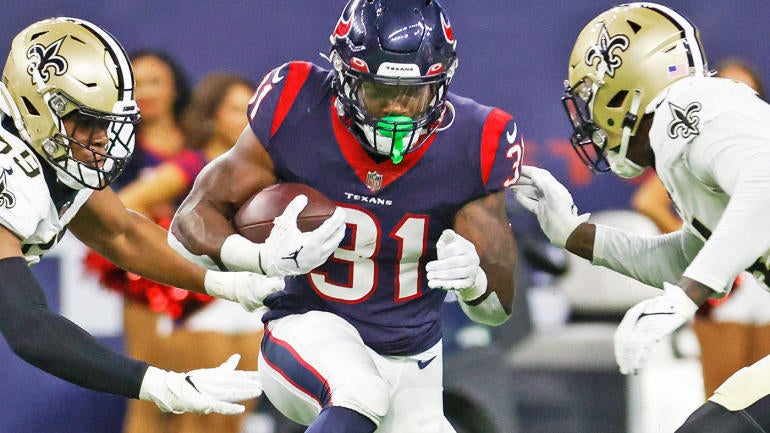
Dameon Pierce, Texans: Lest we forget that Pierce averaged 88.8 total yards per game from Week 2 through Week 13 last year on a team without a quality passing offense. Pierce might lose some work to Devin Singletary, but he's the more explosive of the two and should get help in two ways: from an offense that can at least threaten to throw the ball with C.J. Stroud, and from a schedule that features only four projected top run defenses.
Biggest losers
Rhamondre Stevenson, Patriots: The run defense projections put the Dolphins, Bills and Jets all in the top 11 versus running backs one year after Stevenson scored zero touchdowns and had one game with over 100 total yards against those AFC East rivals (receptions saved his bacon in PPR). On top of those six matchups Stevenson will also match up with top 10 projected run defenses in the Eagles, Cowboys, Saints and Commanders. His first favorable matchup comes in Week 6 against the Raiders. If he's not dominating targets out of the backfield, and if he's not a world-beater, you might be disappointed with Stevenson's output.
Kenneth Walker, Seahawks: The Seahawks will face the 10th-worst projected run defense schedule in 2023, which in and of itself isn't super. But their end-of-season workload is dastardly, complete with a 49ers-Cowboys-49ers-Eagles run between Weeks 12 and 15. Four of Seattle's final six games are on the road, including their road trip to Arizona, which is an easy matchup but part of Week 18 action. Stockpile that with the Seahawks' other offensive moves and it's beginning to feel like an underwhelming second season for Walker.
Damien Harris, Bills: It's already bad news that Harris joined a Bills offense that's averaged seven rushing touchdowns per season by its entire RB group since Josh Allen joined the team. The schedule is another haymaker: Buffalo has the third-toughest projected run defense schedule complete with 11 games against top 12 projected units. When you look for No. 3 running backs, maybe think twice about going with Harris.
Don't draft them, trade for them
Cam Akers, Rams: The guy was a Fantasy savior late last year but he beat up on bad run defenses. The Niners, Bengals and Eagles -- three of his first five opponents -- are not projected to be bad run defenses. In fact, only five of Akers' 17 games, if he plays that many, are against top-10 projected easy run defenses.
James Conner, Cardinals: This year Conner starts off against the Commanders, Cowboys, 49ers and Bengals over the first five weeks of the year. He got off to a slow start in 2022 before getting hurt, and the same thing could happen here.
Draft them, then consider selling high
Brian Robinson, Commanders: The Cardinals have one of the worst defenses on paper, and the Broncos unit is nowhere near as dangerous as it was a couple of seasons ago. It's enough for Robinson to have favorable game scripts to begin the season -- just don't expect it to last given their NFC East competition.
Samaje Perine, Broncos: It goes without saying Perine would be a must-start if Javonte Williams isn't ready for September ball. But the Broncos' matchups against Raiders, Commanders, Dolphins and Bears all present a runway for Perine to shine, even if he's splitting reps. Specifically covering running backs out of the backfield figures to be an issue for Las Vegas, Miami and Chicago. Perine can take advantage.
This article appears in the CBS Sports/Beckett Sports 2023 Fantasy Football Magazine. Pick up your copy at newsstands in mid-August.