The Twins' hopes of being a part of the 2014 playoff fray have been officially snuffed out. Now let's lay to rest a long and not very successful season in Minnesota ...
What went right
Obviously, very little. But ... Brian Dozier turned in a strong age-27 season. Danny Santana was outstanding in somewhat limited action. Kennys Vargas showed pop in even more limited action. Joe Mauer put up excellent numbers after returning from injury, and they got All-Star catcher Kurt Suzuki locked up through at least 2016.
As a unit, the Twins' offense managed to rank sixth in the AL in runs scored, which is commendable considering the run-suppressing tendencies of Target Field. If it's any consolation, the Twins' current run differential suggests their record should be about five games better than it is.
On the pitching side, Phil Hughes showed some of the best command in the game and authored a useful season. Closer Glen Perkins was once again effective in his role.
Bonuses: They hosted the All-Star Game, and they had a higher payroll than the Mets and Cubs!
What went wrong
The rotation, other than Hughes, was an absolute mess. Marquee free agent addition Ricky Nolasco (signed to a four-year, $49-million pact with an option for 2018) pitched to a 5.64 ERA and lost more than a month to a lingering elbow strain. In all, the Twins presently rank last in the AL with a starters' ERA of 5.10 (yes, worse than the Rangers). In a field like Target and in a year like 2014, in which the average AL ERA is 3.83, that's a "feat" of sorts.
Mauer missed 34 games with an abdominal strain and struggled early in the season. Suzuki has a .632 OPS since the break. Jason Kubel hit so poorly he was DFA'd by June. The middle-relief corps was decidedly middling, and the Twins graded out as one of the worst defensive teams in all of baseball per advanced measures like Defensive Efficiency Rating and Ultimate Zone Rating. In only one month -- April -- did they manage a winning record, and that was with a mark of 12-11. Since the break, they're 18-34. Oddity: The Twins went 0-10 this season against the Angels and Dodgers.
Elsewhere, elite prospects and standard-bearers for the future Miguel Sano and Byron Buxton each suffered serious injuries, which, obviously, hindered their development.
MVP
Dozier. He provided plus defense at second base and put up an OPS+ of 111. As well, he became the rare middle infielder to join the 20-20 club, and at this writing he's played in all but four games.
LVP
Considering the money involved, it's Nolasco. To be fair, the elbow injury mentioned above troubled him for most of the season, and that no doubt played a primary role in his struggles. The reality, though, is that he gave up 89 runs in 140 1/3 innings.
Free agents to be
None, although they hold an option on Jared Burton.
Game plan heading into the offseason
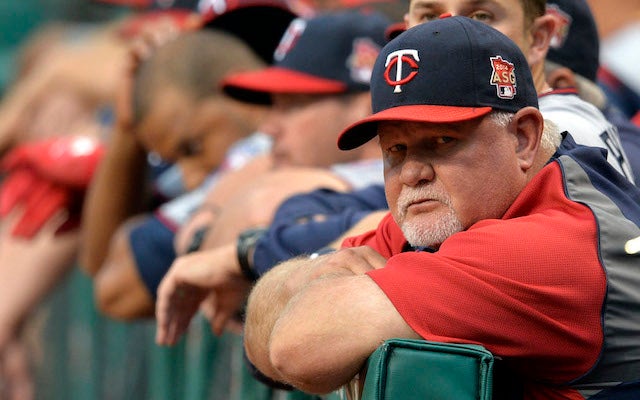
Will stalwart manager Ron Gardenhire survive the winter? There's speculation that he won't after what's on pace to be a fourth straight season of 90 or more losses. As noted above, there's not a lot of payroll coming off the books, and it remains to be seen whether the Twins will spend money as they did last offseason. So low-cost rotation flyers are certainly in order, as the team's starting pitching has been a commode fire for some time now. What they need is a bat-misser or three, which they don't have in part because of the pitch-to-contact organizational philosophy that prevailed for a long time. The problem, of course, is that it's not easy for a last-place team with the Twins' resources to scare up frontline pitching from outside their own system. Beyond that, the hope is that the young talent in Minnesota and in the upper rungs of the system begins to realize potentials.
Ridiculously premature prediction for 2015
Gardenhire opens the season as Twins manager but doesn't make it to the end. Mauer bounces back, and Sano, after a May call-up, contends for Rookie of the Year honors. The rotation remains among the worst in baseball. The Twins avoid 90 losses but finish in last in the AL Central.