2026 NFL Draft: Our analysts debate the biggest ranking gaps, from Ty Simpson to Rueben Bain Jr.
CBS Sports draft analysts explain why some of their prospect rankings are wildly different

By
Josh Edwards
•
17 min read
The collegiate football season has concluded for most prospects eligible for the 2026 NFL Draft, meaning there are no more games left to be played. However, several key checkpoints remain between now and April, including the NFL Scouting Combine, medical evaluations, team interviews, all-star games, etc.
Ahead of the Jan. 5 draft declaration deadline (Jan. 23 for prospects participating in the College Football Playoff), fellow CBS Sports draft analysts Mike Renner, Ryan Wilson and I compared our rankings and identified several players with significant discrepancies.
For 10 notable prospects, one analyst defended a high ranking while another offered a dissenting point of view. The debate includes a former five-star recruit making his first collegiate starts at one of college football's most illustrious programs.
The 2026 NFL Draft will take place April 23–25 in Pittsburgh. More draft coverage can be found at CBSSports.com, including weekly mock drafts and regular updates on eligible prospects.


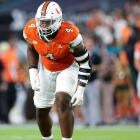
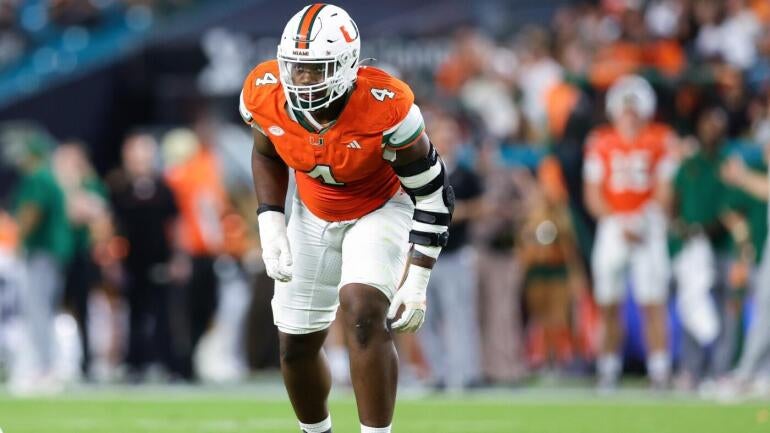
- Renner's ranking: No. 3 overall
- Edwards' ranking: No. 15 overall
Renner: "One of the things that makes scouting so fun -- and so difficult -- is that there is no one way to skin a cat at any position in the NFL. An All-Pro wide receiver can be 5-feet-9 or 6-feet-5. An All-Pro tackle can be 375 or 295 pounds. An All-Pro quarterback can run a 4.4- or a 5.4-second 40-yard dash. While there are archetypes for each position, elite players can and will always break those molds.
"Rueben Bain Jr. is the definition of a mold-breaker. That's because he has one trump-card trait that's arguably the best I've ever scouted for a defensive end: play strength. Bain may not be the biggest or the fastest, but he is the strongest. He manhandles opposing offensive tackles en route to the quarterback play after play. His limited length and defensive tackle–esque frame don't really worry me when he wins like that."
Edwards: "Bain is going to be a polarizing player through the pre-draft process. He weighs roughly the same as Myles Garrett but does not possess the ideal length. Even beyond his 6-foot-3 frame, his arm length is just over 30 inches. His power has been evident in a few national games, such as Notre Dame and, more recently, Texas A&M, but the consistency has not been there when he could not simply overpower his foe.
"That said, the league has shown more willingness to overlook historical trends, specifically at edge rusher -- Nik Bonitto, Jalon Walker, etc. -- and reaped benefits. I like Bain, who seems to have great intangibles, but have some concerns about valuing him in the top 10 overall."


- Edwards: No. 4 overall
- Wilson: No. 21 overall
Edwards: "The evaluation begins with the requisite size of a player capable of making an impact in the NFL. Those finding success in the NFL are doing so through their ability to play in space, nuanced route running and creating yards after the catch. Jordyn Tyson will threaten vertically before snapping off a comeback. He will press a defender's blind side before crossing him over like his NBA brother, Cavaliers guard Jaylon Tyson.
"The scary part is the injury history. After tearing multiple ligaments as a freshman, he has dealt with collarbone and, more recently, soft-tissue injuries. The medical checks at the NFL combine will be important for him, but it's hard not to love the player."
Wilson: "Tyson is a smooth, explosive and productive receiver who eats up cushions, threatens defenses at all three levels and consistently makes difficult catches look routine. His ability to separate on in-breaking routes, win late on downfield routes and finish through contact is all over his tape.
"But the difference between top-five certainty and a bottom-half-of-the-first-round wideout is all about the details. Tyson has missed time due to injuries over the last two seasons, and availability is a big part of being a top-five cornerstone of the franchise. Plus, while he flashes short-area quickness and wiggle -- especially for a bigger receiver -- scouts would still like to see him play with more physicality, especially against man-press coverage.
"For a team picking in the bottom half of the first round, Tyson represents a high-upside steal -- a polished receiver with game-winning instincts who just needs to prove he can withstand the rigors of a full professional season. Put another way: When looking at recent WRs taken early in the draft, does Tyson compare to Julio Jones (sixth overall, 2011), Malik Nabers (sixth overall, 2024) or Ja'Marr Chase (fifth overall, 2021)?"
Wilson's 2026 NFL mock draft 4.0: Cowboys beef up the trenches as the Steelers look for help at WR
Ryan Wilson



- Renner: No. 7 overall
- Wilson: No. 49 overall
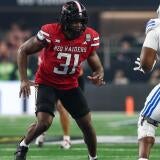
Renner: "Offensive tackle is as traits-based a position as exists on the football field. The blend of size, length and athleticism it takes to simply meet the NFL threshold for the position is astounding. The ones who have it often jump off the tape immediately. That's Trevor Goosby, the player who possesses easily the best physical tools of anyone in this tackle class.
"What he doesn't have that others do is experience. After making spot starts for NFL draftees Kelvin Banks Jr. and Cameron Williams last year, Goosby took over full time on the left side this fall as a redshirt sophomore. What I loved about his play this fall and why I have him No. 7 overall is that he improved by leaps and bounds as the season progressed. He was not the same player in Week 1 against Ohio State that he was against Texas A&M at the end of the season.
"So while Goosby may not have as clean a tackle profile as previous OT1s, it's what he can be in the future that will get him drafted, not what he has been in college. When you have an elite, all-around physical skill set like Goosby does, what he could be is special in the NFL."
Wilson: "Goosby's tape tells a story of big-time upside still catching up to consistency. The physical tools jump off the tape -- a huge frame, long arms, high-end athleticism -- and there are moments where everything lines up. When he plays from a solid base and syncs his feet with his hands, pass rushers stall out.
"But the through line of his evaluation is that he's still learning how to play the position. Against smarter, more technical rushers, his rawness shows more frequently. He can play too high at times, get grabby and struggle to re-anchor when his initial set isn't clean, especially around the edge. The ability is there to recover, but the technique isn't yet automatic.
"As a run blocker, he flashes the ability to be dominant not only at the point of attack but on second-level blocks. Goosby's ceiling is obvious given his athleticism, and while I wouldn't be surprised to see him find his way into the first round, he's more Josh Conerly than, say, Penei Sewell when it comes to a finished product coming out of college."


- Edwards: No. 7 overall
- Wilson: No. 31 overall
Edwards: "A year ago, I was stubborn in my belief that Will Johnson was one of the best prospects in the draft despite how his final season played out. He has proven to be a quality player for Arizona as a rookie.
"Jermod McCoy missed all of this season, but his presence among my top 10 overall is more a statement of an overall lack of confidence in the class as a whole. When McCoy last played, he displayed the size, man-coverage and zone-coverage abilities, and ball production that often translate to success in the NFL. I'd rather stick to my priors on a prospect I do believe in than make concessions for others who have not displayed the same blue-chip potential."
Wilson: "McCoy is a bottom-half-of-the-first-round player for me because his profile comes with real strengths -- and meaningful questions. At his best, McCoy is physical, disciplined and competitive. He's comfortable playing on an island, stays in phase on vertical routes, and shows legitimate ball skills, especially in the red zone and when driving on throws in front of him. He tackles with purpose, fights through blocks, and plays the run like a defender who takes pride in it.
"But the difference between top-seven certainty and late–first-round value comes down to projection and risk. McCoy isn't a pure burner, and evaluators are curious how fast he really is. (This is the point where I acknowledge Josh noting above that he -- along with the rest of us -- overthought it with Will Johnson, who went in Round 2 but played like a first-rounder for much of his rookie season. Part of his draft-day fall had to do with concerns about his speed, though he never looked "slow" on tape. One key difference, though, is that Johnson, while dealing with turf toe during his final college season, didn't miss extended time recovering from a torn ACL.)
"And unlike Johnson -- who was the No. 1 player on my big board heading into the 2024 season because of how complete his 2023 tape was -- McCoy's last meaningful action in 2024 showed a young DB who gave too much cushion at times, allowing easy-access throws. He also showed confusion handling switch releases and motion in zone looks -- issues he can recover from, but not ones that disappear automatically, especially since he didn't play a single snap in 2025 after suffering a torn ACL in January.
"McCoy looks every bit the part of a starting NFL corner with scheme versatility and toughness. But he comes with questions -- and that's why he makes more sense as a team's mid-to-late first-round swing, not an early franchise-defining pick."

- Wilson: No. 8 overall
- Edwards: No. 68 overall
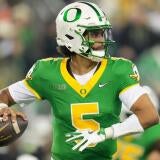
Wilson: "Ty Simpson is a top-10 pick, in part because of the position he plays, but mostly because of the way he plays it. The game slows down for him in ways it usually doesn't for college quarterbacks in their first year as starters. And while the first half of the season was better than the second, Simpson battled a back injury that affected his ability to push the ball down the field. He consistently showed poise beyond his experience -- standing tall in the pocket, making throws without panicking or forcing the issue.
"What separates Simpson isn't just arm talent; it's how clearly he understands what defenses are trying to do. He sees leverage, trusts windows before they fully open and consistently takes what the defense gives him. When protection breaks down, it doesn't turn into chaos -- he subtly moves in the pocket, keeps his eyes downfield and turns dead plays into manageable gains. And while he has struggled -- historically, at times -- with deep throws, he did show improvement against Oklahoma in the playoff, and those struggles may be a function of the injury he suffered earlier in the season."
Edwards: "Charles Dickens once told the Tale of Two Cities, but for Simpson, it is the tale of two seasons. For a month, maybe a month-plus, there was not a better quarterback in the country. He was making good decisions with the football and putting his pass catchers in a position to make plays. However, during the second half of the season, his accuracy dipped precipitously, specifically under pressure.
"Through the first seven games, he had a 0.39 EPA per dropback, according to TruMedia. In those games, he threw for 18 touchdowns and one interception. Over the most recent seven games, he posted a -0.05 EPA, with 10 touchdowns and four interceptions. The reason that line drawn in the sand holds so much significance is that it represents essentially Simpson's entire body of work. He had zero starts before this season.
"That's not to say Simpson won't be a great player in time, but top-10 overall is too rich right now."


- Renner: No. 16 overall
- Wilson: No. 85 overall
Renner: "Kayden McDonald has some of the best tape against the run for a nose tackle I've seen in my decade-plus of scouting. His ability to control blocks one-on-one, anchor against double teams and range down the line of scrimmage is nothing short of elite in every regard.
"I'll admit you're not getting much of a penetrator as a pass rusher. That said, playing the run at that position is growing in value with the advent of lighter boxes across the NFL. In a weaker class overall, I have McDonald at No. 16 because I know he can be a sure thing."
Wilson: "McDonald's impact is clear, just narrowly defined; he's one of the most reliable run defenders in this class -- maybe even the best. He is consistently stout at the point of attack, absorbs double teams and clogs interior lanes in a way that makes life difficult for opposing offenses. His strength, leverage and hand usage show up snap after snap, and his ability to stack, shed and finish against the run is all over the tape.
"On passing downs, however, he's still growing. McDonald plays hard through the whistle, but that effort doesn't translate into consistent pressure. His pass-rush plan is limited, relying heavily on a bull rush that flashes occasionally but doesn't regularly collapse the pocket or allow him to disengage. The production reflects that limitation, with modest pressure and sack numbers despite heavy usage across multiple alignments.
"That gap between elite run defense and limited pass-rush value matters when projecting draft range. Interior defenders taken in the top 16 usually collapse the pocket as well as control the run. In fact, in the past two drafts, Walter Nolen and Byron Murphy were both taken No. 16 overall, and both were dominant against the run and the pass. McDonald's run-stopping ability certainly makes him valuable, but that value is better realized on Day 2 than in the middle of Round 1."
College Football Playoff picks: Predictions against the spread, odds, betting lines for quarterfinal bowls
David Cobb


- Wilson: No. 19 overall
- Renner: No. 40 overall
Wilson: "Denzel Boston looks like a mid–first-round pick because his game shows up everywhere -- in every role and in big moments. At 6-feet-4 and over 200 pounds, he plays with the balance and movement skills of a smaller receiver, especially after the catch, where defenders routinely bounce off him or miss entirely. That shows up not just on deep shots, but in the quick game, shallow crossers and tunnel screens, where he turns routine touches into explosive plays.
"Boston isn't just a vertical threat -- he's efficient and reliable. He finds space against zone, wins through contact against man coverage and consistently works back to the football. His size allows him to box out defenders on contested catches, while his short-area quickness helps him create separation at the top of routes. Over multiple games in 2025, he produced without drops or fumbles, handled heavy target volume and added value as a punt returner.
"What separates him even more is how complete he is. He blocks with intention, lines up all over the formation and stresses defenses before and after the snap. Boston doesn't need schemed touches to impact a game -- he creates problems on his own, and that, along with his ability in the punt-return game, translates cleanly to Sundays."
Renner: "Obviously, mid first versus early second isn't a huge difference in valuation, but where I think we see him differently is his dynamism.
"I think Boston can be an outstanding possession receiver at the next level, but without much more, those types of receivers tend to go early Day 2. I don't think you'll get much from him after the catch, and I see him as an inconsistent downfield separator given how easily defenders can get hands on him.
"I also wouldn't hang my hat on his return ability -- it's really one 78-yard touchdown against UC Davis and 5.7 yards per return over the rest of his career."


- Renner: No. 26 overall
- Edwards: No. 109 overall
Renner: "I'm generally not a fan of using a first-round pick on a linebacker. That said, there is one type of linebacker who can provide that kind of value in Round 1: jumbo hybrid defenders who bridge the gap between defensive end and off-ball linebacker, with the ability to win one-on-one as blitzers while still moving fluidly in coverage.
"That's precisely what I believe Jake Golday can be in the NFL. He started his career as an edge rusher at Central Arkansas before transferring to Cincinnati and moving off-ball. The 6-foot-4, 240-pounder is so athletically gifted that over the past two seasons with the Bearcats, he played 501 snaps as an overhang defender, according to PFF -- similar to what would be considered a slot corner role in the NFL.
"That level of physical ability, combined with the upward trajectory he's shown from a lowly recruited prospect to a productive Big 12 linebacker, has me buying in."
Edwards: "Golday is all about role and how a team would use him. He's a bigger, physical player who was primarily used in space, as Mike described. I personally thought he looked a bit stiff in that role, but if he's pigeonholed into playing in the box, that's not the best use of his skill set either. The box exposure wasn't there, and there are concerns about his ability to get off blocks and fit run gaps. If he's used more often as a spot rusher, that role actually fits his skill set better.
"I have a high bar that an off-ball linebacker must clear for top-50 consideration."

- Edwards: No. 28 overall
- Renner: No. 93 overall
Edwards: "Germie Bernard does everything well. He's just a good football player. The argument is going to be that he doesn't have a defining trait that allows him to become a go-to option in the NFL. However, there's value in knowing a player's limitations and exactly what a team is going to get from him. If he's placed in a complementary role, he could thrive and become a missing piece in an offense.
"Admittedly, teams are going to be more comfortable taking that type of player on Day 2. His passion on the field suggests he won't settle for failure in the NFL, and I'm betting on the intangibles."
Renner: "I don't think we see Bernard's ability all that differently; this is more a difference in valuation. I think Bernard is one of the highest-floor receivers in the draft class. He has reliable hands and can make plays after the catch.
"He's just not much of a downfield threat, with limited explosiveness and speed. His catch rate on targets 10-plus yards downfield this year was 48.1%. That limitation is what dropped him down my board."


- Edwards: No. 29 overall
- Wilson: No. 181 overall
Edwards: "The Chris Bell argument is multilayered. First, the player. At 6-foot-2, he has a filled-out frame that allows him to be physical through his routes. Bell is a fluid player who has shown marginal improvement as a route runner, which is reflected in his collegiate production.
"Quarterback play was not a strength of Louisville's program this season, and yet the Mississippi native accounted for nearly 1,000 receiving yards on 72 catches. Among that second tier of receivers, Bell is one with the potential to become something more.
"Where the argument begins to tilt a bit in Wilson's favor is the torn ACL he suffered in late November. Bell is not going to be taken No. 29 overall as a result of that injury. The reality is that he will probably land somewhere between where Wilson and I currently have him graded."
Wilson: "Bell projects as a Day 3 pick for me rather than a bottom-of-the-first-round option because the production doesn't fully match the translatable traits. Bell put up big numbers in 2025 and showed he can be a reliable target, but how he accumulated those yards matters. Much of his success was built on volume and schemed touches rather than consistent separation or explosive wins. On tape, he looks more like a big-bodied possession receiver than a coverage-tilting difference-maker.
"Bell relies too often on body catches and doesn't consistently threaten defenses vertically. It takes him time to reach top speed, his routes can round at the stem, and he doesn't consistently separate against tight coverage. After the catch, he too often went down on first contact rather than running through arm tackles. His best trait -- back-shoulder catches -- shows real feel and timing, but it's a narrow lane on which to hang a first-round grade.
"Add in a late-season ACL tear and limited impact as a blocker, and the profile shifts further. Bell can help an offense, just not in a way that justifies first-round investment. When you look at wideouts drafted near the bottom of the first round, Bell isn't in the same conversation as Brandon Aiyuk (25th overall, 2020), Calvin Ridley (26th overall, 2018) or Tee Higgins (33rd overall, 2020), but closer to N'Keal Harry (32nd overall, 2019), Deebo Samuel (36th overall, 2019) or Ja'Lynn Polk (37th overall, 2024).
"All that said, I've been wrong before. I thought Rashee Rice was more of a late Day 2 or early Day 3 player at SMU, and he's easily exceeded that projection early in his NFL career."