MLB offseason grades (so far): Why most of the league deserves an incomplete, plus the only team to get an 'A'
Only four of CBS Sports' top 10 free agents have signed so far this winter

We've dipped our toes into the new year, which means it's a fitting occasion to assess the 2025-26 Major League Baseball offseason thus far.
"Thus far" is emphasized because a quick perusal of this winter's free agent tracker will reveal that an abundance of big names are still on the board and looking for work -- names like Kyle Tucker, Alex Bregman, Bo Bichette, Framber Valdez, and Cody Bellinger, among others. That's to say nothing of the notable trades that may yet come to pass this offseason.
Even so, this is a checkpoint of sorts, and to acknowledge it we're here to pass out offseason grades. These won't be the final grades, of course, as a number of headline-grabbing player and team pairings are still yet to come. That means an implied "incomplete" grade for a number of aspiring contenders with roster holes. Still, the freedom to pass premature judgment is an important freedom, and we're here to exercise it. If you like, think of these as progress reports instead of report cards, but grades will be handed out just the same. Whether a team forges a "D" into a "B" before their parents sign it in triplicate is up to them and their moral compass.
Now assume the position, MLB squadrons, and receive your offseason grades thus far.
Arizona Diamondbacks: B-
Thus far, the Snakes haven't suffered any notable losses as they look to rebound from a disappointing 82-loss season in 2025. As well, they've re-upped with rotation stalwart Merrill Kelly and also added Michael Soroka to that rotation mix. Yes, the Ketel Marte trade rumors continue to swirl, but thus far lead decision-maker Mike Hazen has wisely held off on dealing one of his core producers. There's still work to be done, though. They need more upside at the front of the rotation and it may be unwise to commit to Jordan Lawlar as the regular third baseman.
(Sacramento) Athletics: C+
The Tyler Soderstrom extension was a tidy piece of business and Jeff McNeil came so cheap in a trade that it might as well have been a free-agent signing. The No. 1 priority this offseason had to be improving the pitching staff, both the rotation and bullpen, and so far all the A's have done on that front is sign reliever Mark Leiter Jr. to a low-cost one-year contract. This team is two or three more good arms away from making noise in the wild-card race. They should be a little more aggressive.
Atlanta Braves: C
Rebound performances in the lineup and better health in the rotation will probably determine Atlanta's fate in 2026. That said, the addition of Mike Yastrzemski as the bigger half of a left-field platoon was a sound one and Robert Suarez as a high-leverage setup man from the right side was a good targeted strike. The big question is whether the re-signing of Ha-Seong Kim, who hasn't been himself since shoulder surgery, is enough to fill the gaping void at shortstop. This team badly needed Bo Bichette.
Baltimore Orioles: B+
I can't go all the way to an A just yet because they still need a frontline starter. The O's have had a great offseason though. Pete Alonso and Taylor Ward bring needed right-handed power. Getting Zach Eflin back for $10 million is a nice roll of the dice. Ryan Helsley and Andrew Kittredge beef up the bullpen. I don't love Shane Baz, especially at that price, but pitchers with much lower ceilings will be moved this winter. Get an ace (Framber Valdez?) and it's an A offseason for a team that needs an A offseason.
Boston Red Sox: B+
Similar to the Orioles, the Red Sox are thisclose to an A, but I can't go there without a top-end starter. Sonny Gray is an upgrade over Lucas Giolito and Johan Oviedo has breakout potential, though it's still Garrett Crochet and a bunch of guys, not capital-G Guys. Willson Contreras is a great get at first base. It's one of my favorite pickups of the offseason. It feels like there's another move coming on the infield too. I don't know if that's re-signing Alex Bregman, trading for Isaac Paredes, or what. It does feel like Boston isn't done yet though.

Chicago Cubs: C-
The Cubs have added needed depth to the bullpen and that certainly helps the 2026 cause. However, they appear to be roundly uninterested in bringing back Kyle Tucker, the best free agent on the market, and they've yet to add that desired stabilizer to the rotation. The willingness of the Ricketts to invest in payroll at levels even approaching market appropriateness is always to be doubted and that's probably driving the Cubs' lack of a major addition thus far.

Chicago White Sox: A
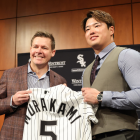
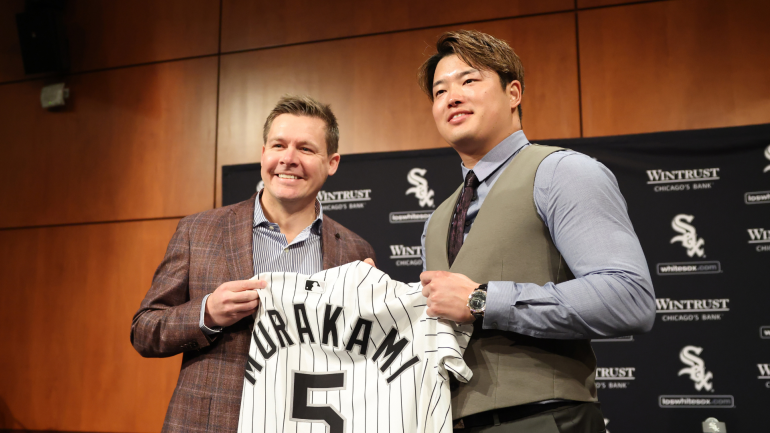
Will the White Sox contend in 2026? No, almost certainly not, but I love the swings they've taken this offseason. Landing Munetaka Murakami on a two-year, $34 million contract is a great move. High upside if it works, low downside if it doesn't. It's a short-term deal and it's not like he's blocking a prospect at third (or first) base. Gambling on a 26-year-old with this much power is something every rebuilding team should try to do every offseason. I don't love the Anthony Kay or Sean Newcomb signings as much as the Murakami deal, but someone has to throw innings for this team, you know? The seemingly inevitable Luis Robert Jr. trade could swing this grade to an A+ if they nail the return, or a B if it underwhelms.

Cincinnati Reds: D
The Reds last season snuck into the playoffs despite an offense that ranked 26th in MLB in OPS+. So in that sense it's good that they've addressed the outfield with a pair of additions (JJ Bleday and Dane Myers), but those additions don't figure to move the needle much. As well, useful contributors like Austin Hays, Nick Martinez, and Miguel Andujar are free agents and thus may not be back in Cincy. They haven't done nearly enough to afford contention against next season.

Cleveland Guardians: C
Other than picking up a few relievers (Shawn Armstrong, Connor Brogdon, Colin Holderman, Rule 5 Draft pick Payton Pallette), the Guardians haven't had much of an offseason. They also haven't lost anyone significant off last year's team, so I guess they're improved? Cleveland really needs another bat, particularly in the outfield, and I'm not sure they're going to get it.

Colorado Rockies: B
The Rockies haven't done anything of note this offseason insofar as the roster is concerned and that will most likely continue to be the case. What they needed more than anything, though, was to get away from the insular and antiquated operating philosophy that pushed the Rockies to their current depths. They did that by hiring Paul DePodesta as the new lead decision-maker back in November. DePodesta isn't exactly an up-and-comer, but he's drastically more contemporary-minded than the Colorado status quo he displaces. For making this woefully belated change, and even taking into account DePodesta's time away from baseball and possible limitations, the Rockies get high marks. That says as much about how they got here as it does about where they're going.

Detroit Tigers: B-
Well, they haven't traded Tarik Skubal (yet), so score one for common sense. The rest of the offseason has been bringing Gleyber Torres back on the qualifying offer and tinkering with the pitching staff (Drew Anderson, Kenley Jansen, re-signed Kyle Finnegan) and not much else. Let's go with a B- for the time being. The AL Central is winnable and I wish the Tigers were more aggressive than they've been, especially since Skubal's not guaranteed to be around after 2026. Why aren't they in on Kyle Tucker, exactly?
Houston Astros: B
The Astros paid a hefty price prospects-wise for Mike Burrows and I'm intrigued by righty Ryan Weiss, who was excellent in Korea last year. The big move is, obviously, Tatsuya Imai on a three-year contract with opt outs. Houston dumped Mauricio Dubón, Luis Garcia, Chas McCormick, and Ramón Urías, then reinvested that money in Imai. That's a win in my book. I expect the Astros to do something to unclog their infield at some point, though I don't think it's a "problem." I say keep everyone unless you get blown away with a trade offer. Those positional logjams tend to take care of themselves.
Kansas City Royals: B
Trading a lefty reliever (Angel Zerpa) for Isaac Collins, then flipping Jonathan Bowlan for a better lefty reliever (Matt Strahm) was a nice little series of moves. They picked up Nick Mears in the process too. Lane Thomas was a sensible if not boring pickup, though I can't say I understand keeping Jonathan India. The best move the Royals have made this winter is locking up Maikel Garcia to a five-year extension. That bought them an extra year of control with a club option for another after that.
Los Angeles Angels: C
Picking up a bunch of guys who were at their best two or three years ago is the perfect Angels offseason. Getting potentially four years of Grayson Rodriguez for one year of Taylor Ward was a great upside play with the caveat that Rodriguez hasn't been healthy in a year and a half. Their other pickups (Vaughn Grissom, Alek Manoah, Drew Pomeranz, Jordan Romano, Kirby Yates) have at least a little upside, and if things work out, the Angels will have five more credible big leaguers. That's good, I guess.
Los Angeles Dodgers: B
The addition of closer Edwin Díaz on a three-year contract gives the champs an upgrade over the outgoing Kirby Yates, who inked with the Angels. Obviously, the Dodgers with their star-power top of the lineup and loaded rotation don't necessarily need to do a lot this winter, but another big bat at a corner outfield spot and an upgrade at second would significantly improve their chances of pulling off the three-peat. The best ownership in MLB paired with the aggressive Andrew Friedman means they're probably not done.
Miami Marlins: C
They got potentially good value on the Pete Fairbanks signing, but the story of the Miami offseason will be to what extent they trade from their rotation depth and how well they do in those trades. To be sure, you can make the case that the Marlins should hang on to Sandy Alcantara and Edward Cabrera and try to contend for a wild-card spot given that Cabrera isn't eligible for free agency until after the 2028 season and Alcantara is potentially controllable through 2027, but that requires a level of commitment from ownership that hasn't been in evidence.

Milwaukee Brewers: B+
Sometimes, it's the moves you don't make. In the Brewers' case, they have not to date traded away ace Freddy Peralta, despite rumors and speculation. To be sure, there's no excuse for a contending team to trade away a frontline starter who's owed a mere $8 million for the upcoming season, and the Brewers as back-to-back NL Central champs are certainly contenders. Still, Mark Attanasio's declining willingness to invest in the roster makes such a thing possible. Bonus points for extending a qualifying offer to the excellent-when-healthy Brandon Woodruff, who accepted that offer and thus will return.
Minnesota Twins: F
The Twins weren't expected to do much this offseason and they've done even less than that. Minor trades for a new reliever (Eric Orze) and a new backup catcher (Alex Jackson) and one major-league free-agent signing (Josh Bell). That's it. The Twins have neither meaningfully improved the 2026 team nor their long-term outlook, so, yeah, you get an F. I wouldn't rule out a Pablo López and/or Joe Ryan trade between now and Opening Day no matter what the front office/ownership says.
New York Mets: C+
Yes, the Mets did a reasonable job of replacing the outgoing Pete Alonso and Edwin Díaz with, respectively, Jorge Polanco (assuming he can stay healthy) and rebound candidate Devin Williams. However, the most vocal corners of the fan base are going to take some convincing on that front. Otherwise, the Marcus Semien addition significantly upgrades the defense at second base without giving back much on offense to the departed incumbent Jeff McNeil. The Mets still need to add to the front of the rotation, and left and center field may need upgrades as well. That's a lot to do and the hope in Queens is that David Stearns is just getting started.
New York Yankees: D
It has been a slow offseason for the entire league and especially for the Yankees. Getting center fielder Trent Grisham back on the qualifying offer is a good move despite the complaints from the masses. Otherwise the Yankees have re-signed a few depth players (Paul Blackburn, Amed Rosario, Ryan Yarbrough) and made a Rule 5 Draft pick (Cade Winquest), and that's it. It seems like the Yankees are waiting for Cody Bellinger's decision before moving on to other matters. There is plenty of time left this offseason for that D to become a B or even an A, but there are needs all over the roster (particularly pitching). It's getting to be go time, Yankees.

Philadelphia Phillies: C+
Bringing back Kyle Schwarber, the most abundant power source on the free-agent market, was an obvious win, but there's more work to do in Philly if they're going to repeat as champs in the tough NL East. Most critically, they need to address the catcher position. There's not much help to be had on the market outside of incumbent JT Realmuto, so the path of least resistance is bringing him back. As well, a reunion with free-agent lefty Ranger Suárez is advisable even with the Phillies' rotation depth. The outfield corners badly need attention too. It's hard to get a C when your winter to date consists of retaining Schwarber, but the Phillies still have a number of serious needs.

Pittsburgh Pirates: B-
Look, the Pirates probably haven't nudged themselves into contention, even given the low bar for relevance thanks to the expanded postseason field. However, they have taken steps to improve the lacking offense. The trade addition of Brandon Lowe adds power to the middle infield and he immediately gives them All-Star potential in the lineup. The free-agent addition of Ryan O'Hearn, however, is all together less inspiring. He's a useful enough hitter overall, but he doesn't promise much in the way of power at roles -- first base and DH -- that demand it. It's also a lot to pay for his modest value. There's more to do, but at least Pittsburgh is trying by the subterranean standards set by owner Bob Nutting.

San Diego Padres: C-
Reuniting with Michael King was sorely needed, but the loss of Dylan Cease to the Blue Jays renders the rotation quite thin. There's little starting pitching depth in the system and the back end looks like a real trouble spot heading into 2026. The lineup is also aging in spots, and there's a lot riding on Sung-Mun Song's ability to hit MLB pitching. With a thinned-out farm system and questionable commitment from ownership, AJ Preller may be limited in what he can do to address those holes.

San Francisco Giants: D
Their biggest addition of the winter thus far has been Adrian Houser. He has his uses, but adding a fourth starter to a .500 roster probably isn't enough to make the Giants relevant in the exacting NL West. Second base in particular cries out for help. Brandon Lowe is already off the trade market and it seems unlikely that the D-backs will part with Ketel Marte, especially to a division rival. That puts a lot of pressure on Buster Posey to pull off a trade for Brendan Donovan of the Cardinals. Then comes the matter of finding a new right fielder.
Seattle Mariners: B+
I'm the high man on lefty Jose Ferrer and the low man on prospect Harry Ford, so I love that trade. Re-signing Josh Naylor for five years and $95 million when the (several years older) Pete Alonso and Kyle Schwarber got 1.5 times the money is a great move. Rob Refsnyder is a great platoon option too. The Mariners must do something at third base though. Yes, I know top prospect Colt Emerson is coming, but the AL West and the American League in general is there for the taking. Go get a third baseman and take it.
St. Louis Cardinals: B
New president of baseball operations Chaim Bloom had a dual mandate this offseason: rebuild the organization's pitching reserves and shed payroll. He's done both with the trades of Sonny Gray and Willson Contreras to the Red Sox. The work isn't complete, though, as he needs to nail the Brendan Donovan trade return (Donovan is the St. Louis trade piece most likely to fetch a major return). As well, he needs to find a way to move decline-phase Nolan Arenado in order to make infield space for younger talents. Ultimately, the Cardinals' offseason will in part be defined by what's to come, but so far goals are being met. What keeps them from a higher grade is the lack of interest in contending in 2026.
Tampa Bay Rays: B
As always, the Rays toed the line between contending and rebuilding. Steven Matz and Cedric Mullins are win-now free-agent signings and the Brandon Lowe and Shane Baz trades were win-later moves. Tampa got a haul for Baz in particular, including what amounts to three late first-round picks: Cade Bodine (No. 30 pick in 2025), Slater de Brun (No. 37 pick in 2025), and a Competitive Balance pick (currently No. 33 in 2026). That trade seems to have reset the trade market for controllable starters. Other teams with arms to peddle began asking for the moon after the Baz deal.
Texas Rangers: C
Texas traded long-term financial pain for short-term on-field gain with the Marcus Semien/Brandon Nimmo swap. Their catcher search led them to a two-year deal for Danny Jansen and Chris Martin is back in the bullpen as well. Tyler Alexander and Alexis Díaz add depth to a pitching staff that could still use another arm or three. The Rangers have done about as much as they could do this winter given their reported financial constraints.
Toronto Blue Jays: B+
Did they overpay for Dylan Cease? Yeah, maybe, but at the end of the day, they got the player and improved their rotation. I like the Cody Ponce signing and am curious to see what they do with Kazuma Okamoto. Third base is the only real spot for him and his defense is regarded as just OK, and Toronto prioritizes defense. As long as he hits, they'll live with the glove. Tyler Rogers brings funk to a bullpen loaded with power arms. If the Blue Jays re-sign Bo Bichette and/or sign Kyle Tucker, this becomes an A+ offseason.
Washington Nationals: B+
Little is expected of the Nats as they emerge from a largely failed rebuild -- failed despite nailing the return in the 2022 Juan Soto trade -- only to enter into another rebuild. Still, there's cause for hope in that the Nationals have a new front office and a new manager after long tenures for Mike Rizzo and Dave Martinez. On the former point, new POBO Paul Toboni brings youth and the capacity to modernize, and that Nats sorely need modernization. Elsewhere, getting Harry Ford and his upside in the Jose A. Ferrer trade with Seattle was a nifty move.